
NCAA Division I: Structure, History, and Role in U.S. College Sports
Overview of NCAA Division I — the highest tier of U.S. college sports — covering its structure, subdivisions, history, scholarships, competitions, and how it differs from Divisions II and III.
NCAA Division I is the top competitive level for college sports sanctioned by the NCAA in the United States. Member institutions typically operate larger athletic departments, invest more in facilities and staff, and offer more federally regulated athletic aid than schools in lower divisions. Division I programs are best known for high-profile team sports such as football and men’s and women’s basketball, though the division sponsors many other varsity sports.
Image gallery
2 Images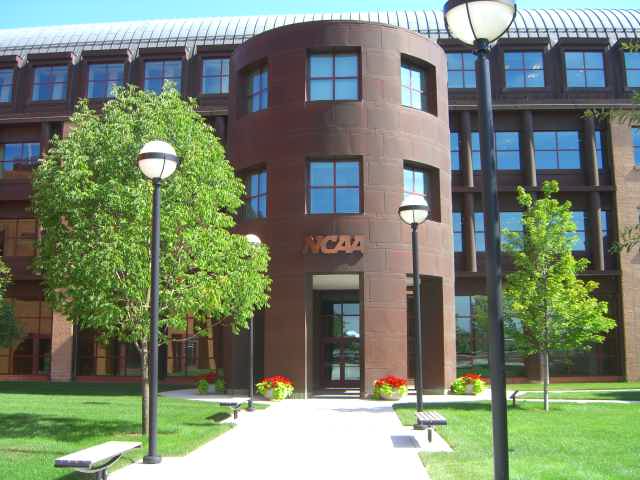

Structure and competition
Division I is organized into conferences that coordinate regular-season schedules and conference championships and determine automatic qualifiers for national tournaments. Football-playing members are commonly grouped into two subdivisions: the Football Bowl Subdivision (FBS) and the Football Championship Subdivision (FCS). FBS programs compete in bowl games and a limited playoff system for a national champion, while FCS uses a broader playoff bracket. Non-football Division I members compete for championships through NCAA-run tournaments such as the annual basketball championship known colloquially as "March Madness." Institutions must meet minimum standards for sports sponsored, attendance, and financial aid to maintain Division I status.
Membership, scholarships, and finances
Compared with Division II and Division III, Division I schools often have the largest operating budgets and extensive support services for student-athletes. Budgets vary widely among institutions and conferences, with some programs generating substantial revenue from media rights and ticket sales while others operate on modest means. Division I institutions may offer full and partial athletic scholarships, a key distinction from Division III, which does not award athletics-based aid. Financial resources and budgeting priorities (budgets) directly affect recruiting, travel, and facility quality.
History and development
The NCAA reorganized its membership into numerical divisions in the early 1970s, creating clearer separations among institutions by size, scope of athletics programs, and scholarship practice. Later refinements introduced subdivisions for football competition (originally known as I-A and I-AA, later renamed FBS and FCS). Over time Division I grew in visibility through television contracts, national tournaments, and expanded postseason play. Recent decades have also seen legal and policy changes affecting athlete compensation, health and safety, and conference realignment.
Importance, controversies, and notable distinctions
- Major events: The Division I men’s basketball tournament is one of the most-watched college sports events and a significant revenue driver for the NCAA and member schools.
- Amateurism and compensation: Debates over athlete pay, scholarship limits, and Name, Image, and Likeness (NIL) rights have reshaped how student-athletes participate and earn benefits while maintaining eligibility.
- Regulation differences: Division I sets specific rules for minimum sports sponsorship, scholarship counts, and recruiting; these standards differ from those in lower divisions.
For prospective student-athletes, administrators, and fans, Division I represents the highest exposure and most competitive environment in U.S. college sports. It continues to evolve in response to legal, financial, and cultural pressures, while remaining the primary platform for collegiate athletics that feed professional leagues, engage large fan bases, and generate significant media attention.
Learn more from institutional and governing sources such as the NCAA and individual conferences: college sports overview, NCAA information, and regional or conference pages at United States-based outlets. For comparisons with other levels see resources on Division II and Division III; for financial context refer to materials on budgets and scholarship policy at athletic scholarships.
Questions and answers
Q: What is NCAA Division I?
A: NCAA Division I is the top level of college sports in the National Collegiate Athletic Association (NCAA) in the United States.
Q: What are the characteristics of schools in Division I?
A: Schools in Division I generally have the largest budgets, best facilities, and offer the most athletic scholarships to their students compared to Divisions II and III.
Q: What is the main difference between Division I and Divisions II and III?
A: The main difference between Division I and Divisions II and III is the level of funding, facilities, and athletic scholarships offered.
Q: What is the purpose of the sports conferences in Division I?
A: The sports conferences in Division I help organize competitions between teams and provide a structure for the athletic programs.
Q: Are all sports included in Division I?
A: Yes, all types of sports are included in Division I, including but not limited to football, basketball, baseball, and softball.
Q: How many sports conferences are in Division I?
A: The number of sports conferences in Division I varies, but there are currently over 30 conferences in Division I.
Q: Can schools move between different divisions?
A: Yes, schools can move between different divisions if they meet the requirements and go through the NCAA's reclassification process.
Related articles
Author
AlegsaOnline.com NCAA Division I: Structure, History, and Role in U.S. College Sports Leandro Alegsa
URL: https://en.alegsaonline.com/art/68903