
Naval Criminal Investigative Service (NCIS)
The civilian federal law‑enforcement and counterintelligence agency supporting the U.S. Navy and Marine Corps, handling criminal investigations, counterterrorism, forensics and protective operations worldwide.
The Naval Criminal Investigative Service (NCIS) is the primary civilian law enforcement and counterintelligence agency that serves the United States Department of the Navy. It conducts criminal and national‑security investigations involving members of the United States Navy and the U.S. Marine Corps and their families, installations and assets. NCIS works under civilian leadership and cooperates with military commands, other federal agencies and foreign partners to protect naval personnel and information. For official context see the Department of the Navy: Department of the Navy.
Image gallery
10 Images


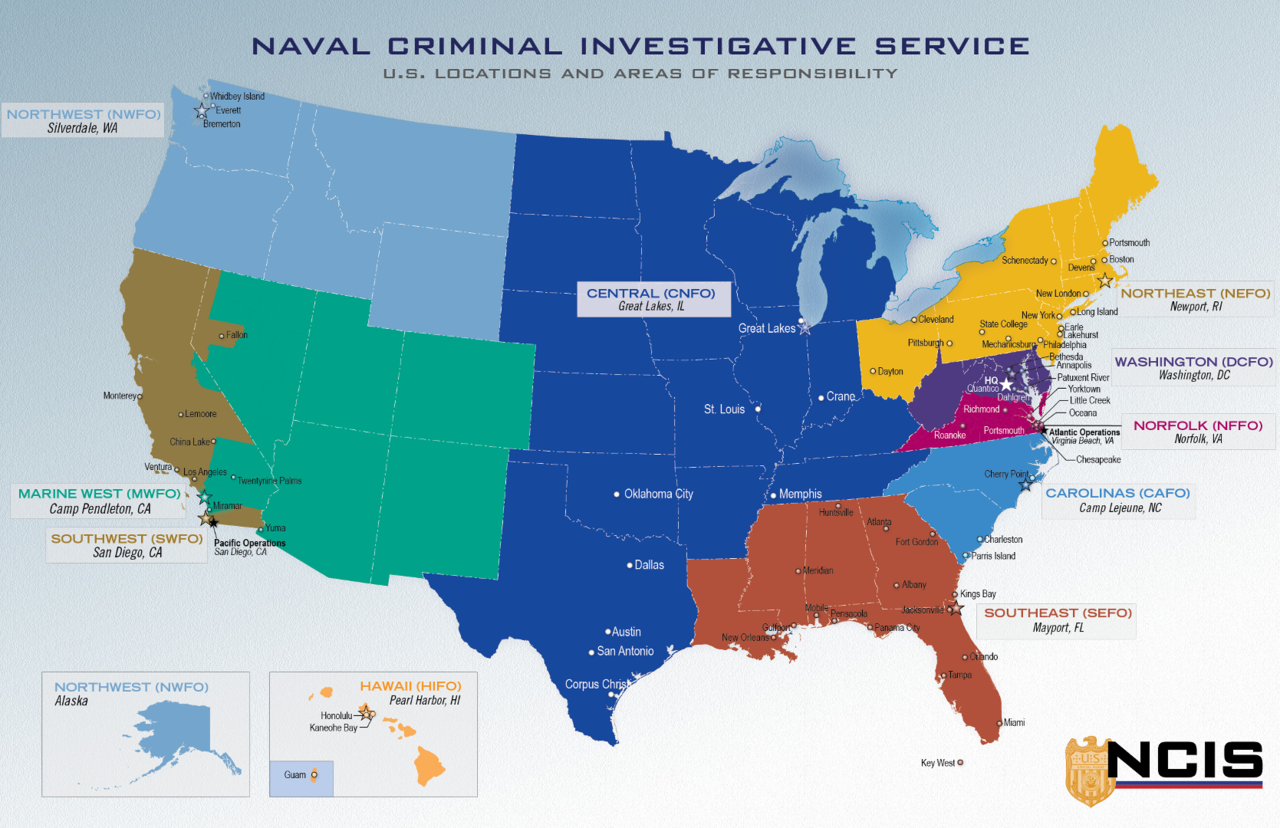


Primary responsibilities
NCIS has a broad portfolio that blends traditional criminal investigation with intelligence and protective duties. Its core responsibilities include:
- Investigating felony crimes and major misconduct affecting Navy and Marine Corps personnel and property, including violent crimes, fraud and sexual assault — matters often described as crimes: related criminal matters.
- Conducting counterintelligence and counterterrorism investigations to detect espionage, insider threats and terrorist plots that could affect naval operations.
- Providing forensic science and technical exploitation, including cyber forensics, to support prosecutions and security assessments.
- Offering protective service details and security planning for senior leaders, visiting dignitaries and sensitive events.
Organization and operations
NCIS is a civilian agency with special agents, intelligence analysts, forensic examiners and support staff. Agents are trained in federal criminal investigative techniques, surveillance, interviewing, and often work alongside military law enforcement in garrison and deployed environments. NCIS maintains field offices and resident agencies on bases and at overseas sites to ensure global coverage for Navy and Marine Corps forces whether ashore, afloat or in combat zones. It also maintains laboratory and technical capacities to examine physical evidence, digital devices and materials.
History and development
NCIS evolved from earlier naval investigative organizations. Reorganized in the late 20th century to enhance civilian oversight and integrate counterintelligence capabilities, it consolidated criminal and national security responsibilities previously split among separate offices. The change aimed to provide independent, professional investigations while preserving cooperation with military commanders.
Notable distinctions and public profile
Unlike military police, NCIS special agents are civilian federal investigators with jurisdiction over certain offenses affecting Navy and Marine Corps communities. Their work frequently intersects with other federal agencies on terrorism, cybercrime and espionage cases. NCIS is also widely recognized in popular culture through a long‑running fictional television series that borrows the agency’s name while dramatizing and fictionalizing investigative work.
NCIS supports both the U.S. Navy (U.S. Navy) and the U.S. Marine Corps (U.S. Marine Corps) by combining criminal investigation, forensic science and intelligence to protect personnel, operations and classified information worldwide.
Questions and answers
Q: What is the primary law enforcement agency of the United States Department of the Navy?
A: The primary law enforcement agency of the United States Department of the Navy is the Naval Criminal Investigative Service (NCIS).
Q: What kind of activities does NCIS investigate?
A: NCIS investigates activities concerning crimes against or by United States Navy and U.S. Marine Corps personnel.
Q: What are some additional tasks that NCIS is responsible for?
A: NCIS is also responsible for national security, counter-intelligence, and counter-terrorism cases.
Q: What is the Naval Investigative Service (NIS)?
A: The Naval Investigative Service (NIS) was the predecessor organization to NCIS.
Q: When did NCIS become the successor organization to NIS?
A: NCIS became the successor organization to NIS at some point in the past.
Q: Is NCIS only responsible for investigating crimes committed by Navy personnel?
A: No, NCIS is responsible for investigating both crimes committed by and crimes against United States Navy and U.S. Marine Corps personnel.
Q: What does DON stand for?
A: DON stands for the United States Department of the Navy.
Related articles
Author
AlegsaOnline.com Naval Criminal Investigative Service (NCIS) Leandro Alegsa
URL: https://en.alegsaonline.com/art/68831
Sources
- commons.wikimedia.org : Naval Criminal Investigative Service
- smithsonianmag.com : "What Is It Really Like to Work at the NCIS?"
- ncis.navy.mil : "1966: Naval Investigative Service Established"
- ncisa.wildapricot.org : "NCIS Naval Criminal Investigative Service"
- ncis.navy.mil : "Early 1990s: Naval Criminal Investigative Service"
- ausn.org : "The Naval Criminal Investigative Service: Flexible, Adaptable, Expeditionary Support for the Naval Commander"