
Nature Coast (Florida) — overview, environment, and cultural regions
Coastal region of northwestern Florida known for undeveloped shorelines, springs, estuaries and wildlife. Encompasses parts of the Big Bend and several Gulf counties with mixed cultural and economic ties.
Overview
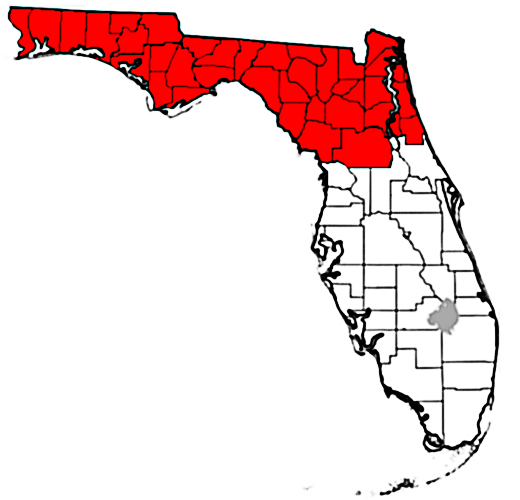
The Nature Coast is a loosely defined region along Florida's Gulf of Mexico shore that emphasizes natural landscapes, wildlife and low-density development. It generally corresponds with the Big Bend area of Florida and is promoted as a destination for outdoor recreation, quiet beaches and ecological tourism rather than high-rise development or dense urban growth. Local definitions vary, but the name highlights the area's focus on conservation and rural character.
Image gallery
2 Images
Geography and ecosystems
The region includes a mosaic of habitats: tidal estuaries, salt marshes and mangroves along the coast; freshwater springs, rivers and swamps inland; and barrier islands and small coastal communities. These environments support diverse wildlife — including wading birds, shorebirds, dolphins and manatees — and sustain important fisheries and shellfish beds. Large tracts of state and federal conservation lands and wildlife refuges help preserve this natural heritage.
Counties and boundaries
There is no single legal boundary for the Nature Coast. Commonly cited counties associated with the region include:
- Citrus County
- Dixie County
- Hernando County
- Jefferson County
- Pasco County
- Levy County
- Taylor County
- Wakulla County
Some of these lie squarely within the Big Bend shoreline; others are transitional zones where local identity overlaps with neighboring regions. For example, the southernmost parts of the area have economic and commuter ties to the Tampa Bay metropolitan area, and Pasco County is sometimes associated with Florida's Sun Coast.
History and cultural notes
The Nature Coast's human history includes indigenous settlements, maritime industries such as fishing and oystering, and small agricultural communities. Culturally the northern sections retain elements of the Deep South in language, foodways and traditions, while southern fringes show increasing suburban and metropolitan influence. The term "Nature Coast" emerged as a tourism and marketing label to promote conservation-minded recreation and to distinguish the area from more heavily developed parts of Florida.
Activities and significance
Visitors and residents are drawn by activities that depend on intact natural systems: boating, kayaking, spring and river swimming, wildlife viewing (notably manatee and birdwatching), recreational fishing, and scalloping and shellfishing in permitted areas. Conservation and sustainable tourism are important locally because they support economies that would be harmed by shoreline overdevelopment.
Practical distinctions
- Official tourism and county agencies may use different boundaries; always consult local resources for parks, permits and regulations — for example, an official visitor site is available at regional information.
- Protected areas, state parks and wildlife refuges anchor much of the region's appeal and provide access points for recreation and education.
Understanding the Nature Coast means recognizing it as a collection of coastal and near-coastal communities that prize ecological values, outdoor recreation and a quieter pace of life, even as development pressures and regional connections alter its character over time.
Questions and answers
Q: What is the Nature Coast?
A: The Nature Coast is a region of the U.S. state of Florida.
Q: What counties does the Nature Coast include?
A: The Nature Coast includes Citrus, Dixie, Hernando, Jefferson County, Pasco County, Levy County, Taylor County, and Wakulla County counties.
Q: How would you describe the culture of the Nature Coast?
A: The Nature Coast is southern culturally, with the Deep South culture reaching to Levy County with the lower southern end (Pasco, Hernando, and sometimes Citrus county) often considered part of the Tampa Bay Metropolian Area.
Q: Which counties are considered part of the Tampa Bay Metropolitan Area?
A: The lower southern end of the Nature Coast, including Pasco, Hernando, and sometimes Citrus county, are often considered part of the Tampa Bay Metropolian Area.
Q: What is Pasco County sometimes considered part of?
A: Pasco County is sometimes considered part of the Sun Coast.
Q: What are the geographical boundaries of the Nature Coast?
A: The Nature Coast is made up of the Big Bend (Florida) area of the western coast.
Q: What types of wildlife are found in the Nature Coast?
A: The text does not provide information about wildlife in the Nature Coast.
Related articles
Author
AlegsaOnline.com Nature Coast (Florida) — overview, environment, and cultural regions Leandro Alegsa
URL: https://en.alegsaonline.com/art/68791