
At bat (baseball): definition, rules, and statistical use
An at bat is a baseball statistic used to compute batting measures. This article defines an at bat, lists exceptions, explains its role in statistics, and contrasts it with a plate appearance.
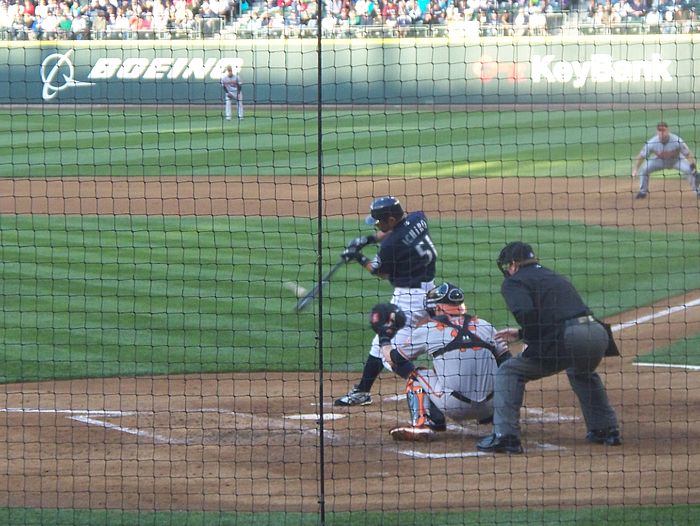
Overview
In the sport of baseball, an "at bat" (commonly abbreviated AB) is a formal counting unit used in offensive statistics. It records most times a batter completes a turn facing a pitcher and is the denominator for several key measures of hitting performance, including batting average, and contributes to calculations of on-base and slugging percentages. An at bat is narrower than a plate appearance: every at bat is a plate appearance, but not every plate appearance qualifies as an at bat.
Image gallery
1 Image
Definition and primary characteristics
When a batter steps into the batter's box and faces a pitcher, that confrontation will typically be recorded as an at bat unless a specific exception applies. An at bat is charged anytime the batter reaches one of the usual outcomes that result from batting (for example, a hit, an error that allows reach, or a fielder's choice) or makes an out via strikeout, groundout, flyout, or other routine means. Statistically, at bats are important because they reflect opportunities to produce hits or make outs and are used to estimate a player's batting skill over time.
Common exceptions — when a plate appearance is not an at bat
- Base on balls (walk): if the batter is awarded first base on four balls, no at bat is recorded; see base on balls.
- Hit by pitch: batters awarded first base after being struck by a pitched ball are not charged with an at bat.
- Sacrifice plays: a sacrifice bunt or a sacrifice fly removes the plate appearance from at bat statistics to avoid penalizing productive plays that advance runners.
- Interference or obstruction: if the batter is awarded first base because of defensive interference or obstruction (commonly catcher interference), no at bat is charged; see interference.
- Inning end: when the inning ends while the batter is still batting (for instance, the third out is made on a runner elsewhere), that confrontation is not counted as an at bat; the batter will return with a fresh count in the next inning; see inning and third out.
- Substitution: if a pinch-hitter or replacement finishes the plate appearance, the original batter does not receive an at bat for the incomplete turn unless specific scoring rules assign it.
Official rules and wording
Major League Baseball spells out the treatment of at bats in its official rules. Section 10.02.a.1 lists the conditions under which a player is not charged with a time at bat, including sacrifice hits, walks, hit-by-pitches, and awards of first base for interference or obstruction. Those provisions ensure consistency across scorekeeping and preserve the statistical meaning of an at bat as an opportunity to earn a hit or make a conventional out. For the formal rule text, consult the league rules reference at official rules.
Statistical role and examples
At bats figure directly into common batting metrics. Batting average is calculated as hits divided by at bats (H ÷ AB). Because walks and sacrifices are excluded from at bats, a player who walks frequently can have a higher on-base percentage relative to batting average. For example, a player with 100 plate appearances, 20 walks, 10 hits, and other outcomes would have fewer than 100 at bats; only the plate appearances that count as at bats would be used in the batting average denominator. Slugging percentage also uses at bats to weight total bases per opportunity.
Practical distinctions and notable points
Understanding the difference between plate appearances and at bats is useful for interpreting stat lines. Plate appearances record every completed turn at-bat including walks, sacrifices, and hit-by-pitch events; at bats exclude those exceptions. Scorekeepers and statisticians must apply the rules accurately because a misclassified at bat alters a player’s average and historical comparability. Additionally, specific scoring situations, such as catcher interference or a batter replaced during an at bat, have nuanced treatments that are codified in scoring guidelines and sometimes clarified in official rulings or interpretations.
Further reading
For background on how at bats interact with other batting statistics and examples of scorekeeping scenarios, see resources on batting measures and official scoring guidelines at batting statistics and the general sport rules at baseball resources. Additional scoring situations and clarifications are available through league materials and scoring manuals linked at interference rules, game structure, and official interpretations at official rules. For a primer on walks and related consequences, consult base on balls descriptions. See also discussions of the third out and inning-ending plays at third out guidance.
Questions and answers
Q: What is an at bat in baseball?
A: An at bat in baseball is a statistic used to measure certain performance metrics, such as batting average, on base percentage, and slugging percentage. It is a more narrow definition of a plate appearance.
Q: When does a batter start with an at bat?
A: A batter starts with an at bat every time he faces a pitcher.
Q: What are the cases when the batter gets "no time at bat"?
A: The batter gets "no time at bat" when he receives a base on balls (BB), is hit by a pitch (HBP), hits a sacrifice fly or sacrifice hit (also known as sacrifice bunt), is awarded first base due to interference or obstruction usually by the catcher, or if the inning ends while he is still at bat (due to the third out being made by a runner caught stealing, for example).
Q: How does Major League Baseball define an at-bat?
A: Major League Baseball defines an at-bat as "Number of times batted, except that no time at bat shall be charged when a player: (1) hits a sacrifice bunt or sacrifice fly; (2) is awarded first base on four called balls; (3) is hit by a pitched ball; or (4) is awarded first base because of interference or obstruction..."
Q: Is there any situation where the batter will come back up to have another turn in the same inning after having no time recorded for his current turn?
A: Yes. If the inning ends while he was still up to bat due to the third out being made by another runner caught stealing, then he will come back up again in the next inning but without any balls and strikes against him.
Q: Does replacing one hitter with another count as having no time recorded for that particular turn?
A: Yes. If one hitter is replaced with another before their turn has been completed then they will not have any time recorded for that particular turn unless they were replaced with two strikes and their replacement struck out.
Tags
Related articles
Author
AlegsaOnline.com At bat (baseball): definition, rules, and statistical use Leandro Alegsa
URL: https://en.alegsaonline.com/art/6871
Sources
- mlb.mlb.com : "Rule 10.01: The Rules of Scoring"