
National Stock Exchange of India (NSE)
Leading Indian securities exchange based in Mumbai, the NSE operates electronic trading across equities, derivatives, debt and ETFs and manages the NIFTY benchmark family for domestic and international investors.
Overview
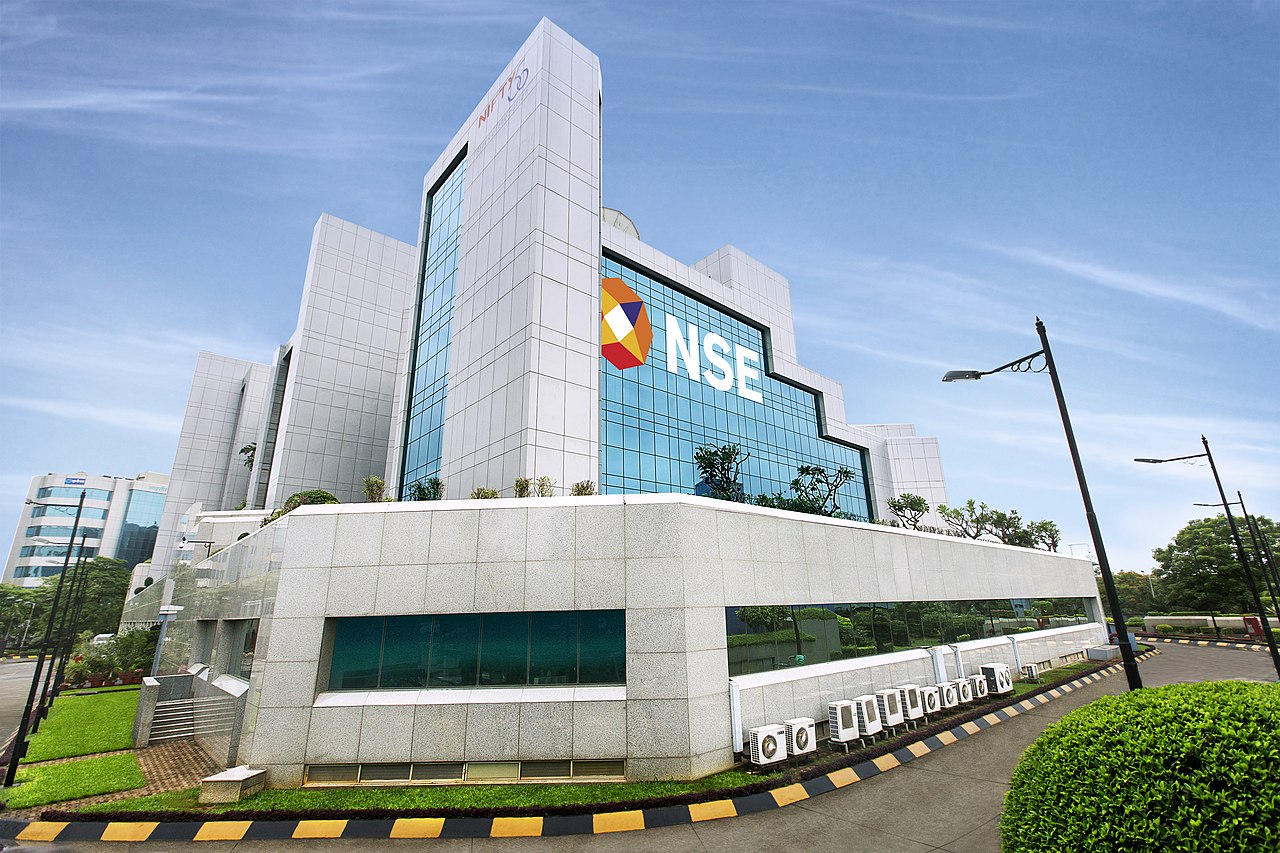
The National Stock Exchange of India, commonly known as the NSE, is a principal securities exchange based in Mumbai. It was created in the early 1990s to modernize India’s trading infrastructure and widen access to capital markets through an electronic, screen‑based trading system. The exchange supports trading in equities, derivatives, debt securities and exchange‑traded products, and provides market data, clearing and settlement services to a broad set of participants. For official documents, market reports and announcements see the exchange portal at official site.
Image gallery
5 Images



History and development
The NSE was established as part of financial sector reforms aimed at improving transparency, efficiency and competitiveness in Indian capital markets. It began operations in the mid‑1990s and quickly introduced automated order matching and electronic dissemination of prices, replacing many floor‑based practices then common. One of its most recognisable contributions is the NIFTY family of indices, with the NIFTY 50 becoming a widely used benchmark for Indian equity performance and a reference for derivatives and indexed funds.
Structure, ownership and regulation
The exchange was promoted by a consortium of leading financial institutions, banks, insurance companies and other market intermediaries. It operates under a corporate governance framework that separates ownership from management and is subject to oversight by national financial regulators. Membership comprises broker‑dealers, institutional trading members and clearing participants who must meet capital, conduct and risk‑management standards set by the regulator and the exchange.
Markets and key products
- Equities: Continuous cash market trading in listed companies with electronic matching and market‑making in certain segments.
- Derivatives: Futures and options on indices (notably NIFTY 50) and on individual securities, used for hedging and speculative strategies.
- Fixed income: Platforms for government and corporate bond trading and related instruments.
- Exchange‑traded products: ETFs and other indexed products that enable passive exposure to segments of the market.
- Market information and clearing: Real‑time data feeds, clearing, settlement and risk controls to support orderly markets.
Technology and connectivity
The NSE’s early adoption of electronic trading architecture allowed it to extend market access across India. In the 2000s the exchange reported wide connectivity to trading terminals and nodes in hundreds of cities, reducing geographic frictions and supporting retail and institutional participation. Its trading systems, order routing and matching engines are continually updated; technical descriptions and system guides are available through the exchange’s documentation and technical pages such as the trading system overview.
Indices and benchmarks
The NIFTY 50 is the exchange’s flagship benchmark index and is used as an underlying for many derivative contracts, index funds and ETFs. The NSE maintains a family of indices covering broad market cap segments, sectoral indices and thematic benchmarks that are referenced by portfolio managers, fund sponsors and retail products.
Role and significance
By providing transparent price discovery, standardized contracts and deep liquidity in many segments, the NSE plays a central role in India’s financial infrastructure. It is widely regarded as the largest exchange in India by trading volume and one of the principal venues in Asia in terms of transaction activity and market access. Comparative studies and historical rankings provide perspective on its position in global and regional markets, for example in global rankings and market comparatives.
Participants and access
Participants include retail investors, mutual funds, pension funds, broker‑dealers, proprietary traders and foreign institutional investors accessing the market through approved channels. Clearing members and custodians play an important role in settlement, and intermediaries such as banks and brokerages facilitate client access and onboarding processes. For data on volumes and trade activity consult industry summaries and comparative tables on trading volumes.
Regional context and further reading
Within South Asia the NSE is an important market infrastructure and a reference point for regional comparisons and cross‑border investment flows; for regional market overviews see analyses covering South Asia. Authoritative resources, exchange rules, annual reports and technical manuals are maintained by the exchange and regulators and are the primary sources for detailed procedures, listing requirements and operational notices available via the exchange portal at official site and related institutional pages.
Practical matters
Individuals and institutions seeking to trade or list on the NSE should consult official rulebooks and participant guides, engage registered intermediaries and review risk disclosures. For background on institutional relationships and market partners see materials referencing the promoting institutions such as major financial institutions, banks and insurance sector participants.
Limitations and developments
The exchange has continually evolved its regulatory compliance, market surveillance and technology to address operational risks, market integrity concerns and changing investor needs. Ongoing reforms, supervisory updates and enhancements to transparency and participant protections are part of its development trajectory; analysts often review these changes in periodic market reports and comparative studies.
Additional resources
For official data, listings, market calendars and manuals consult the exchange’s main portal at official site, and for comparative or historical context refer to industry reports and independent rankings such as those summarised on global rankings and trading statistics pages at trading volumes.
Questions and answers
Q: Where is the National Stock Exchange of India Limited (NSE) located?
A: The NSE is based in Mumbai, India.
Q: What is the size of NSE in comparison to other stock exchanges in the world?
A: The NSE is the biggest stock exchange in India and the third largest in the world in terms of transactions.
Q: Who owns NSE?
A: NSE is owned by a group of leading financial institutions, banks, insurance companies and other financial intermediaries in India.
Q: Are the ownership and management of NSE operated as separate groups?
A: Yes, the ownership and management of NSE operate as separate groups.
Q: How many cities does the NSE VSAT terminals cover across India?
A: As of 2006, the NSE VSAT terminals cover more than 1500 cities across India.
Q: What was the total market capitalization of NSE in July 2007?
A: The total market capitalization of NSE in July 2007 was 42,74,509 crore INR, making it the second-largest stock market in South Asia in terms of market-capitalization.
Q: Is the NSE publicly or privately traded?
A: The information given in the text doesn't provide any information on whether the NSE is publicly or privately traded.
Related articles
Author
AlegsaOnline.com National Stock Exchange of India (NSE) Leandro Alegsa
URL: https://en.alegsaonline.com/art/68704
Sources
- ia.rediff.com : ia.rediff.com/money/2006/jul/25quiz.htm
- geocities.com : geocities.com/kstability/student/illiquid/illiquid2.html
- nse-india.com : nse-india.com/content/us/us_factsfigures.htm
- nseindia.com : NSE annual survey