
National Museum of the Marine Corps
The National Museum of the Marine Corps in Quantico, Virginia, presents the history, traditions, and artifacts of the U.S. Marine Corps through galleries, exhibits, education programs, and public events. Free admission.
The National Museum of the Marine Corps preserves and interprets the history, traditions, and service of the United States Marine Corps. Located near the Marine Corps base at Quantico, Virginia, the museum offers a chronological and thematic presentation of Marine Corps history from colonial roots to the present day, with artifacts, multimedia displays and educational programs designed for a broad public audience. Admission is free, and the site functions as both a memorial and an active cultural resource for veterans, families, students and visitors.
Image gallery
9 Images




Overview and mission
The museum was established as the official historical museum of the United States Marine Corps to present the Corps’ story in context—illustrating how organization, training, doctrine and individual Marines shaped American military history. Exhibits combine objects, oral histories, photographs and interpretive media to convey the experiences of Marines in combat and peacetime. The facility supports research, public outreach and ceremonial observances that honor Marine heritage.
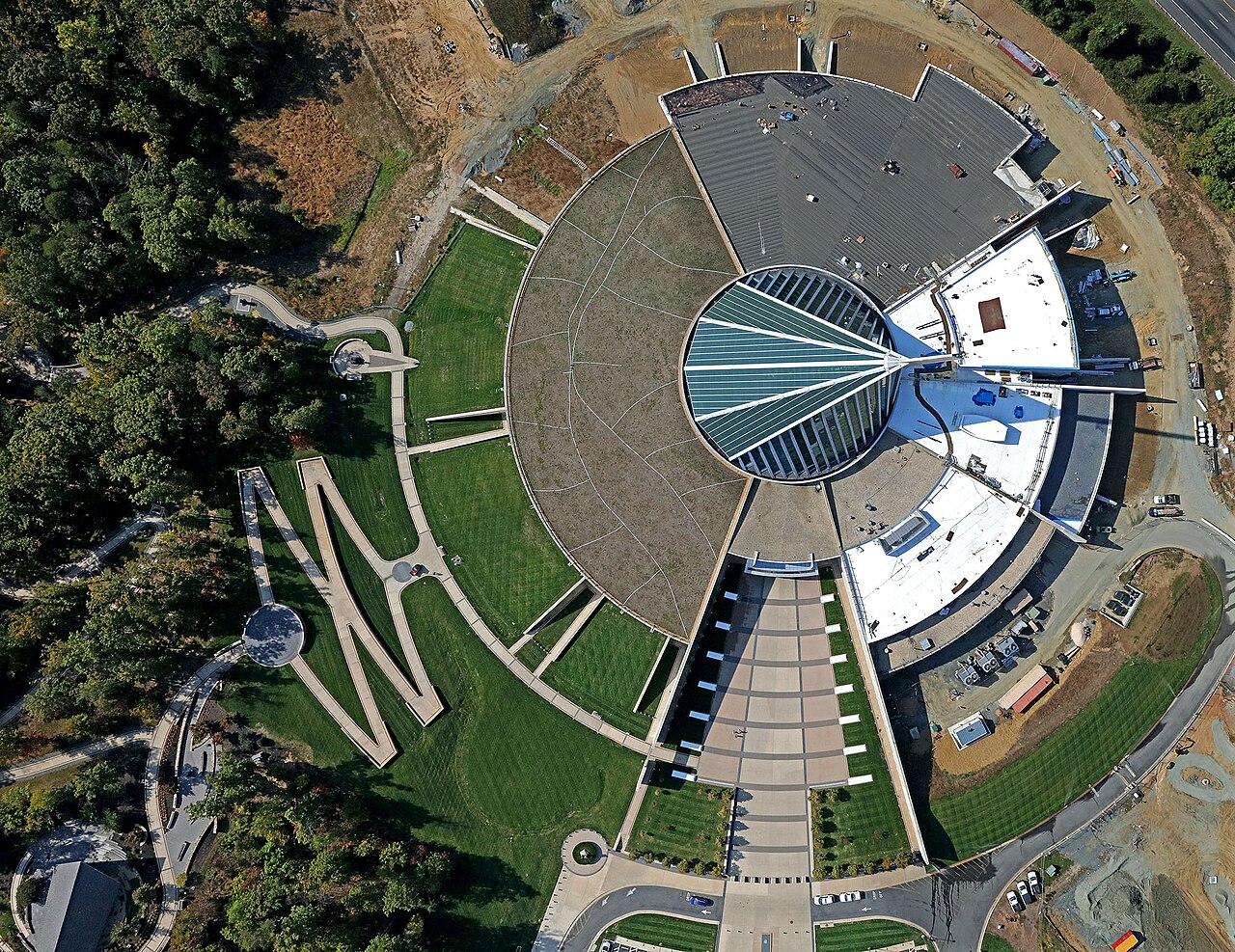
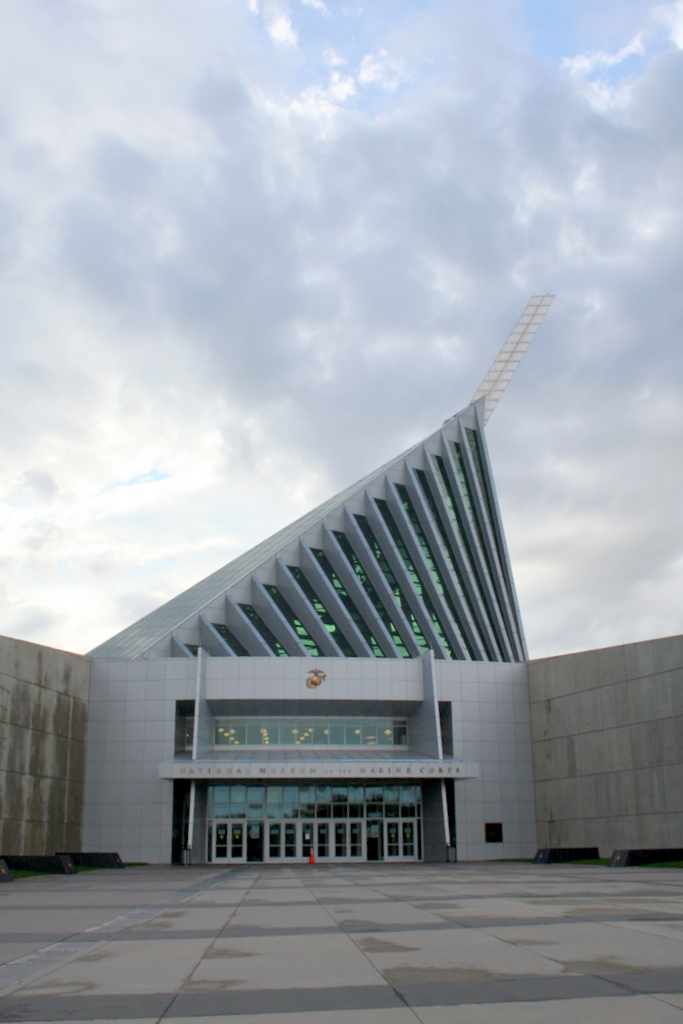
Site, architecture and setting
Situated adjacent to the Marine Corps base at Quantico, Virginia, the museum occupies a distinctive building designed to evoke architectural motifs associated with the Corps’ values and history. The campus includes interior galleries and outdoor spaces for memorials and public events. Its placement near a major training installation connects the museum’s interpretive mission with active military life and community remembrance.
Collections and exhibits
The museum’s holdings encompass a wide range of artifacts and media that document Marine service across eras. On display are uniforms, personal equipment, weapons, vehicles and aircraft, as well as works of art, models and large-scale dioramas. Exhibits are organized to highlight:
- Early origins and development of the Corps
- Major conflicts and campaigns, including World Wars, Korea, Vietnam and recent operations
- Marine Corps culture, training, and leadership
- Individual stories and personal collections that illustrate daily life and sacrifice
Interpretive methods include immersive environments, hands-on components for younger audiences, and artifacts presented with documentary context so visitors can trace technological and doctrinal change over time.
History, funding and partnerships
The museum opened to the public with a grand ceremony on November 10, 2006, and has since become a major destination for those interested in American military history. It was developed through a public–private partnership: the Marine Corps collaborated with the Marine Corps Heritage Foundation and other supporters to create and operate the institution. The Foundation led fundraising for construction, while the Marine Corps invested in exhibit development; the completed building was subsequently donated to the Corps for long‑term stewardship. The site attracts a large annual audience and serves both educational and commemorative roles.
Programs, education and public engagement
Beyond static displays, the museum runs school programs, lectures, rotating exhibits and commemorative events that connect historical study to contemporary issues. Curators and educators work to foster historical literacy, encourage preservation of personal and family histories, and provide resources for scholars and the general public. Special exhibitions and traveling displays extend the museum's reach beyond its campus through loans and partnerships with other institutions; the Marine Corps Heritage Foundation continues to support outreach and programming.
Visitors planning a trip often combine a museum visit with nearby memorials and military landmarks. For more information on collections and programs, visitors can consult foundation materials and official resources maintained in support of the museum and its mission. The museum remains a focal point for honoring Marine service and for interpreting how the Corps has influenced American history and society.
Questions and answers
Q: What is the National Museum of the Marine Corps?
A: The National Museum of the Marine Corps is the historical museum of the United States Marine Corps.
Q: Where is the National Museum of the Marine Corps located?
A: The National Museum of the Marine Corps is located in Quantico, Virginia.
Q: Is the National Museum of the Marine Corps open to the public?
A: Yes, the National Museum of the Marine Corps is open to the public.
Q: Does the National Museum of the Marine Corps charge admission fees?
A: No, the National Museum of the Marine Corps offers free admission to the public.
Q: When did the National Museum of the Marine Corps have its grand opening?
A: The National Museum of the Marine Corps had its grand opening on November 10, 2006.
Q: Who manages the museum operation of the National Museum of the Marine Corps?
A: The Marine Corps Heritage Foundation manages the museum operation of the National Museum of the Marine Corps.
Q: How much did it cost to build the National Museum of the Marine Corps?
A: The Foundation raised $60 million to build the building, while the Marine Corps spent $30 million to build the museum's exhibits and displays.
Related articles
Author
AlegsaOnline.com National Museum of the Marine Corps Leandro Alegsa
URL: https://en.alegsaonline.com/art/68665
Sources
- defense.gov : "Defense.gov News Article: Marine Corps Museum Attracts Half-million Visitors in 2008"
- usmcmuseum.com : "FAQs"
- georgewbush-whitehouse.archives.gov : "President's remarks at the dedication of the National Museum of the Marine Corps"
- usmcmuseum.com : "Leatherneck Gallery"
- hqinet001.hqmc.usmc.mil : "Marine Corps History and Museum Division"
- hqinet001.hqmc.usmc.mil : "Marine Corps Air-Ground Museum"
- usmcmuseum.com : "Museum Expansion"
- usmcmuseum.com : "Marine Corps Heritage Foundation Dedicates Semper Fidelis Memorial Park"
- americanheritage.com : Richard F. Snow
- washingtontimes.com : "Worship in the woods"
- usmcmuseum.com : "National Museum of the Marine Corps : Education"