
National Library of Israel
The National Library of Israel (NLI) is Israel's principal repository for Jewish, Israeli and related cultural heritage, located on the Hebrew University campus in Givat Ram, Jerusalem.
Overview
The National Library of Israel (NLI), previously known as the Jewish National and University Library, is the central archival and bibliographic institution preserving the written and audiovisual heritage of the State of Israel and global Jewish culture. The library operates on the campus of the Hebrew University in the Givat Ram neighborhood of Jerusalem (Givat Ram), and it is often identified by its Hebrew title, הספרייה הלאומית. As a national library, it combines the responsibilities of a research library, a public cultural institution, and a legal-deposit repository.
Image gallery
9 Images


Collections and holdings
The NLI's collections span manuscripts, printed books, archival documents, periodicals, maps, posters, photographs, sound recordings and born-digital materials. Strengths include Jewish and Hebrew manuscripts, medieval and early modern Hebrew printing, rabbinic literature, and archives of public figures and cultural movements. In addition to physical holdings, the library maintains extensive digitized resources and an online catalog to broaden global access.
- Rare manuscripts and codices, including medieval and early modern Hebrew texts
- Early printed books and incunabula in Hebrew and other languages
- Personal and organizational archives documenting Zionist, Israeli and Jewish communities
- Maps, posters, photographs, audio-visual recordings and ephemera
History and development
The institution traces its origins to cultural and educational initiatives associated with the emergence of modern Jewish scholarship and the establishment of higher education in the region. Over time it evolved from a university-affiliated library into the state’s national library, adopting broader responsibilities for collecting, preserving and describing materials that reflect the diversity of Jewish and Israeli life. Its historical names and administrative arrangements reflect this evolution from a primarily academic collection to a national institution.
Building, digitization and access
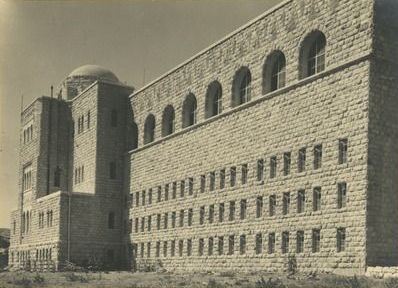
The NLI occupies purpose-built facilities on the Hebrew University campus in Givat Ram that combine conservation laboratories, reading rooms and exhibition spaces with modern digital services. Digitization programs and online projects have made significant portions of the collections available to researchers worldwide; the library runs searchable digital archives and supports efforts to preserve born-digital cultural materials. As a legal-deposit and copyright library, it also plays a role in national bibliographic control and long-term digital stewardship.
Services, research and public role
Services include reader access to special collections, interlibrary cooperation, scholarly fellowships, exhibitions, educational programs and outreach. The library supports academic research across disciplines including Jewish studies, history, linguistics, musicology and cultural studies, and serves as a center for curatorial display and public engagement with textual heritage.
Significance and distinctions
The National Library of Israel is a primary institution for the preservation and interpretation of Jewish and Israeli written culture. It acts as a national memory institution: preserving rare and everyday documents alike, enabling scholarly inquiry, and presenting heritage to the public through exhibitions and digital access. Its affiliations with academic and cultural partners, both in Israel and internationally, help place its collections in wider research and educational contexts.
For more information about holdings, services and visiting policies, consult the library's official resources and online catalogic portals via the institutional links above.
Questions and answers
Q: What is the National Library of Israel?
A: The National Library of Israel is the national library of the state of Israel.
Q: What was the National Library of Israel known as previously?
A: The National Library of Israel was known as the Jewish National and University Library (JNUL) before.
Q: Where is the National Library of Israel located?
A: The National Library of Israel is located on the campus of Hebrew University of Jerusalem in Givat Ram.
Q: What is the full form of NLI?
A: The full form of NLI is the National Library of Israel.
Q: Can the general public access the National Library of Israel?
A: Yes, the general public can access the National Library of Israel.
Q: Is the National Library of Israel only for Israeli citizens?
A: No, the National Library of Israel is not only for Israeli citizens. It is open for anyone who is interested in its resources.
Q: Are the Hebrew University of Jerusalem and the National Library of Israel in the same location?
A: Yes, the Hebrew University of Jerusalem and the National Library of Israel are located on the same campus in Givat Ram.
Related articles
Author
AlegsaOnline.com National Library of Israel Leandro Alegsa
URL: https://en.alegsaonline.com/art/68649