
National Gallery, London — overview, collection, building, and significance
National Gallery in Trafalgar Square, London: major Western European painting collection, highlights, building history, visiting information, conservation and cultural role.
Overview
The National Gallery sits at the heart of London in England, and houses one of the world's most important collections of Western European paintings. Founded in the early 19th century, it brings together masterworks spanning medieval devotional panels to late 19th-century landscapes and portraits. The gallery is a public institution whose permanent collection is displayed free of charge, while some temporary exhibitions require tickets.
Image gallery
10 Images





Collection and highlights
The gallery's holdings cover the development of European painting, emphasising quality and historical breadth rather than a single national school. Among the early and Renaissance treasures are works by Duccio, Masaccio and Giorgione. Major names from the High Renaissance and Baroque are present as well, including paintings associated with Leonardo, Michelangelo and Caravaggio. Later highlights include Dutch and Flemish masters, French Impressionists and Symbolists such as artists related to Redon.
Building, site and architecture
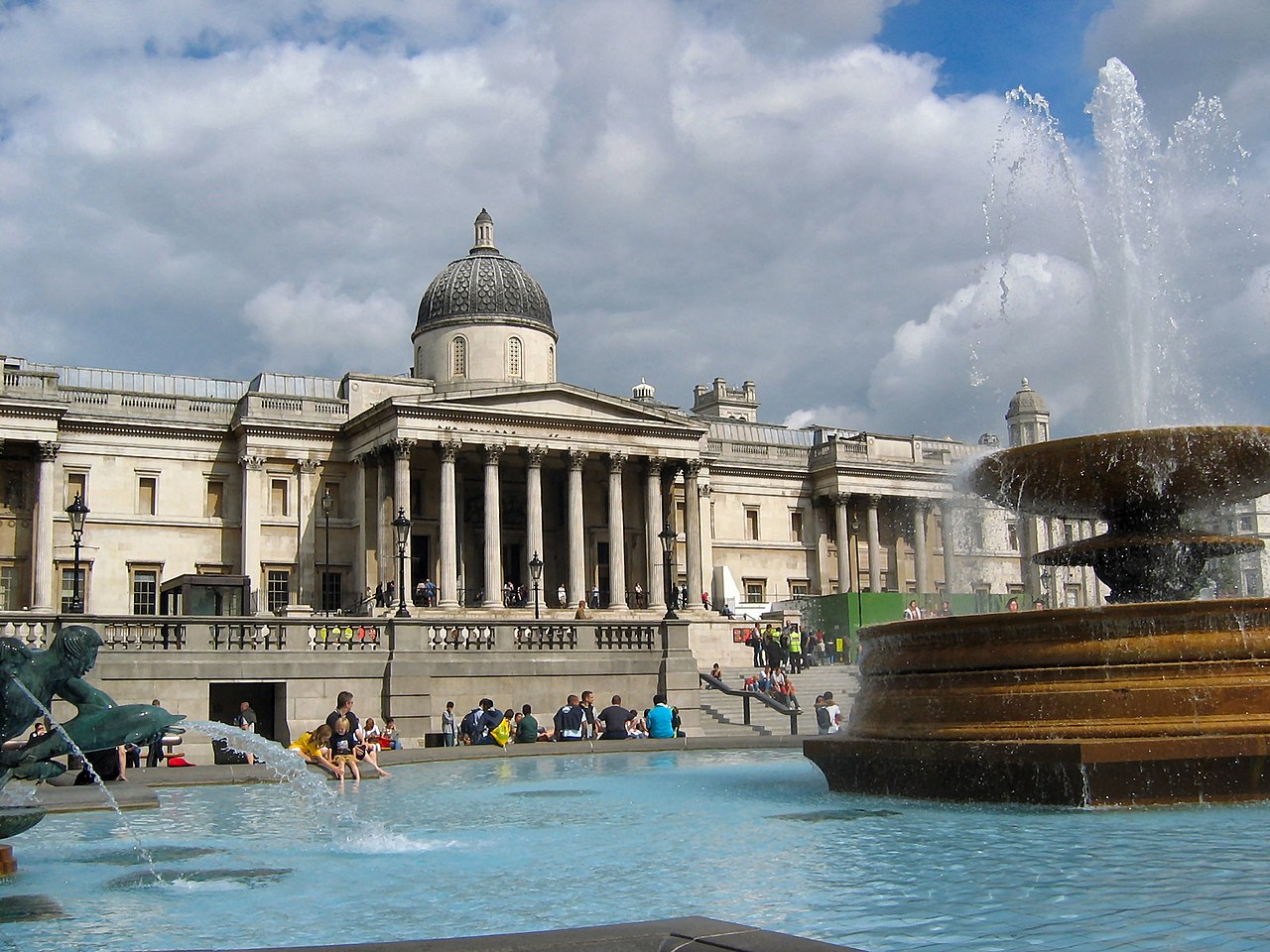
The National Gallery's classical façade faces Trafalgar Square, one of the capital's busiest public spaces. The main structure is a pale limestone building with a broad portico resembling an Ancient Greek temple and a notable central dome referenced in many guidebooks (central dome). Over time the complex has grown with purpose-built wings added to house additional galleries, conservation labs and study centres.
History and development
The institution began with a government purchase of a private collection and expanded through acquisitions, donations and state support. Its role evolved from a picture gallery to a centre for public education, research and conservation. Successive directors and curators have built the collection through selective purchases of rare or exemplary works, making the gallery particularly strong in painting schools that are otherwise represented only in a few places.
Visiting, learning and conservation
Visitors come for masterpieces, thematic rooms and educational programmes. On-site facilities typically include galleries grouped by period or school, temporary exhibition galleries, a library or study room and conservation studios where specialists care for fragile paintings. Practical visiting details — opening hours, accessibility and tickets for special exhibitions — are provided by the gallery's official channels and on-site information.
Importance and notable distinctions
- Art-historical value: The National Gallery preserves seminal works that illustrate stylistic changes from medieval to modern painting.
- Public access: As a national collection, it emphasises education and broad public access to cultural heritage.
- Research and conservation: The gallery is a centre for technical study and conservation of oil paintings, contributing to scholarship worldwide.
For readers seeking further information about exhibitions, collections or research resources, the gallery provides online and on-site guides and outreach programmes; contact and visitor information are available through its official pages and notices displayed at the museum entrance.
Additional references and detailed artist pages may be consulted by following institutional guides and catalogues, or by using authoritative museum resources and scholarly publications linked by major cultural institutions.
Visit location · Country context · Duccio · Masaccio · Leonardo · Giorgione · Michelangelo · Caravaggio · Redon · Trafalgar Square · central dome · Ancient Greek
Questions and answers
Q: What is The National Gallery, London?
A: The National Gallery, London is an art gallery in London, England.
Q: What makes The National Gallery unique?
A: The National Gallery has many paintings of high quality and rare paintings by famous artists.
Q: Where is The National Gallery located?
A: The National Gallery is located on Trafalgar Square in London, which is a busy tourist place.
Q: What is the architecture of The National Gallery?
A: The National Gallery is a grand building made of pale grey limestone with a central dome and a large Classical style porch (portico) like an Ancient Greek temple.
Q: What is The Sainsbury Wing?
A: The Sainsbury Wing is a large new building located on the left side of The National Gallery.
Q: Which famous artists have rare paintings displayed in The National Gallery?
A: The rare paintings in The National Gallery include works by Duccio, Masaccio, Uccello, Piero della Francesca, Leonardo, Giorgione, Michelangelo, Caravaggio, Vermeer, Chardin, Klimt, Rousseau, and Redon.
Q: Is The National Gallery the largest gallery in the world?
A: No, although there are bigger galleries, The National Gallery is known for its high-quality and rare collection of European paintings.
Related articles
Author
AlegsaOnline.com National Gallery, London — overview, collection, building, and significance Leandro Alegsa
URL: https://en.alegsaonline.com/art/68601