
Nation of Islam
African American religious movement founded in 1930 that blends Islamic themes and Black nationalist ideas, emphasizing self-reliance, discipline, community institutions and economic development.
The Nation of Islam is a religious and social movement that emerged in the United States in the early 20th century. It combines elements drawn from Islamic terminology with a program of Black empowerment and communal self-help. Observers describe it as both a faith-based organization and a political-cultural movement; supporters point to its programs for education, business development and moral reform, while critics have charged it with separatist rhetoric and contentious statements by some leaders. For a general overview see religious movement.
Image gallery
10 Images


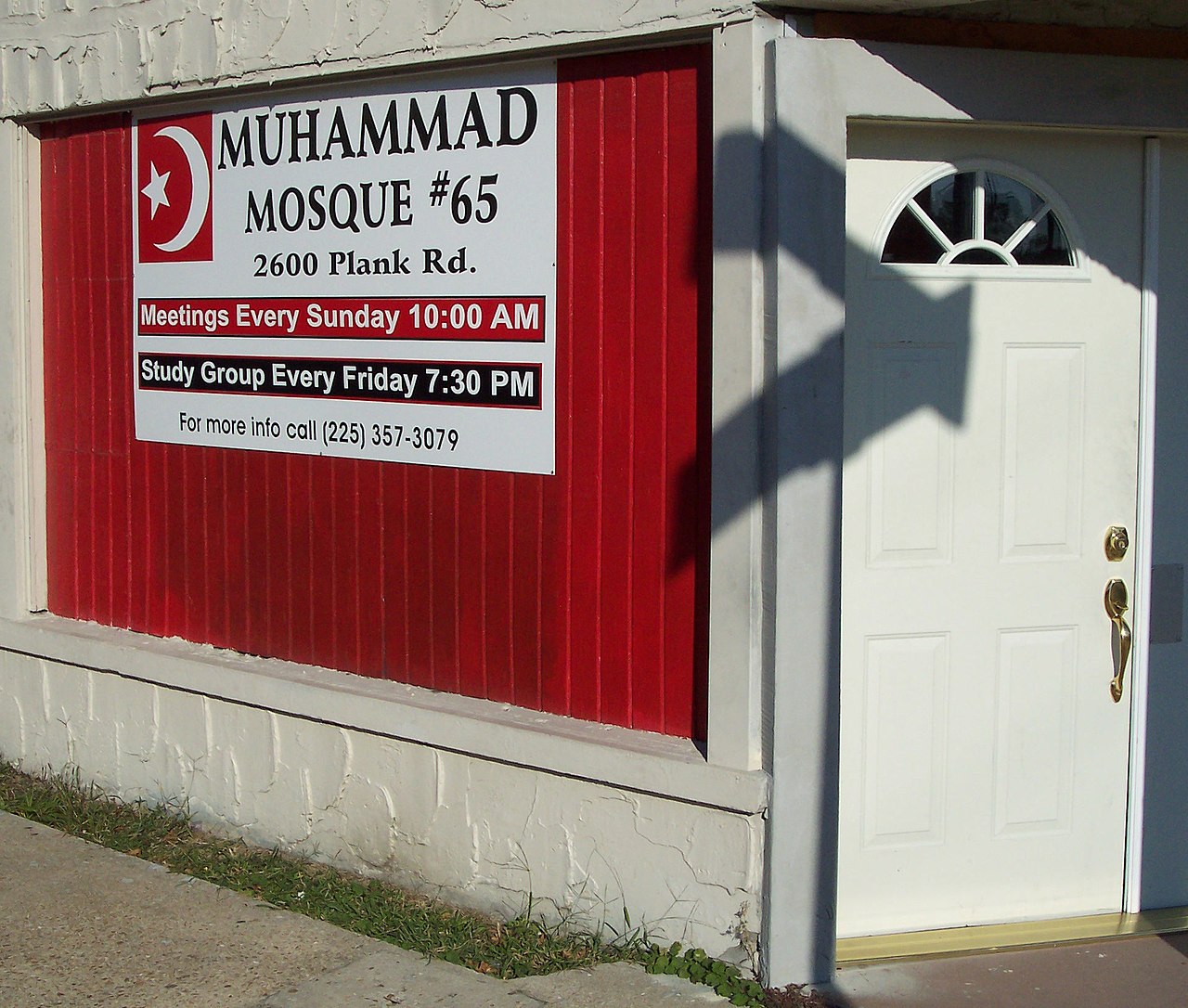


Beliefs and organization
Doctrinally the Nation of Islam departs in several ways from mainstream Sunni and Shia Islam, adopting a distinct set of teachings about history, identity and social justice. The movement stresses personal discipline, dietary rules, distinctive dress, and the cultivation of economic and institutional independence for African Americans. Its internal structure includes local temples or mosques, youth and women's training programs, and security and community units. Key organizational elements include:
- Places of worship and study—local temples where sermons and classes take place.
- Training groups—such as men's and women's training organizations.
- Economic enterprises—businesses, farms and cooperative ventures aimed at self-sufficiency.
For synopses of leadership roles and internal structures, see leadership and institutions.
Origins and development
The movement traces its founding to Detroit in 1930 under a figure known as Wallace Fard Muhammad, who taught a distinctive religious message and whom later leaders described in messianic terms. After Fard's disappearance, Elijah Muhammad became the most prominent leader and oversaw substantial growth in membership and organization. During the mid-20th century the Nation attracted national attention through public ministers and spokespeople; one of the best-known early members was Malcolm X, who brought visibility in the 1950s and early 1960s before leaving the group and subsequently expanding his own views. Modern leadership and organizational transformations are discussed at founder and current organization.
Activities, influence and examples
The Nation of Islam has run schools, businesses, and community programs intended to reduce poverty, improve education, and foster entrepreneurship. It organizes religious observances and public events, and its members have been active in civic campaigns and neighborhood initiatives. The movement has also had a wider cultural presence, influencing music, literature and public debate about race and religion; further reading on cultural roles is available at cultural impact.
Controversies and distinctions
The Nation of Islam is widely noted for its distinctive theology and its political emphasis on Black self-determination. It has attracted both praise for community-building and criticism for statements by some leaders that critics describe as inflammatory or discriminatory. Debates about the group touch on questions of religious identity, civil rights strategy, and interfaith relations; summaries of critical perspectives can be found at criticism. For summaries of official teachings and how they differ from other Muslim groups see teachings.
Because the movement has undergone changes in leadership style, public profile and institutional focus over time, assessments vary; contemporary analyses typically treat it as an influential American religious and social movement with a complex legacy.
Questions and answers
Q: What is the Nation of Islam?
A: The Nation of Islam is a religious group.
Q: When and where was the Nation of Islam founded?
A: The Nation of Islam was founded in Detroit, Michigan, in 1930 by Master Fard Muhammad.
Q: What is the main goal of the Nation of Islam?
A: The main goal of the Nation of Islam is to bring back the spiritual, mental, social and economic condition of blacks in the United States.
Q: Who has been leading the Nation of Islam since 1981?
A: Louis Farrakhan has been leading the Nation of Islam since 1981.
Q: Who was a member of the Nation of Islam?
A: Malcolm X was a member of the Nation of Islam.
Q: What does the Nation of Islam aim to bring back among black people in the United States?
A: The Nation of Islam aims to bring back the spiritual, mental, social and economic condition of blacks in the United States.
Q: What was the role of Master Fard Muhammad in the founding of the Nation of Islam?
A: Master Fard Muhammad founded the Nation of Islam in 1930.
Related articles
Author
AlegsaOnline.com Nation of Islam Leandro Alegsa
URL: https://en.alegsaonline.com/art/68500