
Narbonne: Mediterranean city with Roman roots and regional importance
Narbonne is a historic city in southern France, once a major Roman port. Today it is an administrative subprefecture in Aude, near the Mediterranean coast, noted for its cathedral, archaeology and wine-producing hinterland.
Narbonne (Occitan: Narbona) is a city in southern France that serves as a commune and as a subprefecture within the Aude department. It lies in the administrative area of Occitanie, a larger region of France, and is the capital of the arrondissement of Narbonne (arrondissement). The city's layout and institutions reflect its long role as a local centre of government, commerce and culture.
Image gallery
10 Images
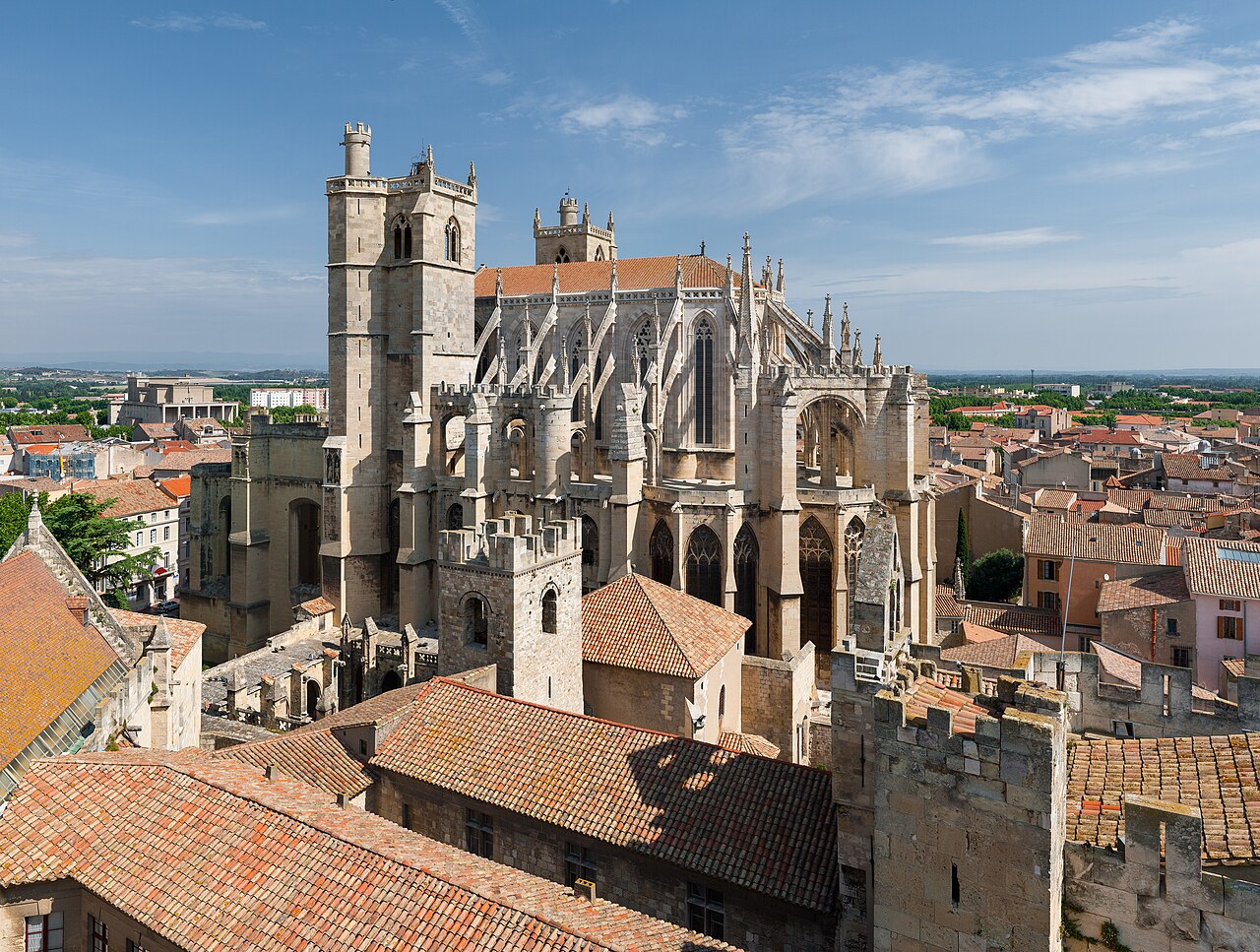


Location and landscape
Narbonne occupies a low-lying position on the coastal plain of southern France. Historically it functioned as a maritime hub, though the modern town itself stands about 15 km from the actual shores of the Mediterranean Sea. The surrounding landscape includes lagoons, salt marshes and vineyards that link the city to both coastal and agricultural economies. The Canal de la Robine, a navigable waterway, crosses the town and connects to regional inland routes.
Historical overview
Narbonne's origins go back to the Roman era, when it was established as an important Atlantic–Mediterranean link and trading centre in Roman times. Known in antiquity as Narbo Martius, it became a wealthy port and an administrative hub of the Roman province in Gaul. Over subsequent centuries Narbonne passed through Visigothic, Frankish and medieval phases, each leaving layers of architecture and urban fabric that survive in differing degrees.
Notable features and heritage
The city retains significant monuments and archaeological remains that testify to its past. Key sites include a large medieval cathedral, Roman ruins and civic buildings, and the old harbour quarter. The urban ensemble combines narrow medieval streets with open quays and squares. Visitors and researchers value Narbonne for its accessible evidence of continuity from antiquity through the Middle Ages to the present.
- Cultural institutions: museums and archaeological displays documenting the Roman and medieval phases.
- Built heritage: cathedral precincts, remnants of Roman public works and later civic architecture.
- Waterways: the Canal de la Robine linking Narbonne to coastal and inland navigation.
Economy, wine and contemporary role
Today Narbonne combines public administration with a service-oriented economy, tourism and connections to a productive rural hinterland famous for vineyards. The surrounding appellations and cooperatives contribute to the region's reputation for wine. Narbonne also functions as a regional transport node, with road and rail links serving local industries and visitors.
Why Narbonne matters
Narbonne illustrates how a Mediterranean inlanding port can persist as a cultural and administrative centre long after changes in coastlines and trade routes. Its layers of urban history make it a case study in Roman urbanism, medieval transformation and modern adaptation. For practical information about visiting, local institutions or further reading, consult regional guides and municipal resources.
Related terms and links: port, Roman times, Occitan name, France, commune, subprefecture, Aude, department, Occitanie, region, capital, arrondissement, shores, Mediterranean Sea.
Questions and answers
Q: What is Narbonne?
A: Narbonne is a French commune, a subprefecture in the Aude department of the Occitanie region. It is also the capital of the arrondissement of Narbonne.
Q: When was Narbonne wealthy and important?
A: Narbonne was a wealthy port and major city in Roman times.
Q: How far away from the Mediterranean Sea is it now?
A: Now, it is approximately 15 km (9.3 mi) away from the shores of the Mediterranean Sea.
Q: What language do people speak in this area?
A: People in this area primarily speak Occitan.
Q: Is Narbonne still an important city today?
A: No, today it does not have as much importance as it did during Roman times.
Q: What department is Narbonne located in?
A: Narbonne is located in the Aude department of France's Occitanie region.
Q: What region does this commune belong to? A:Narbone belongs to France's Occitanie region
Related articles
Author
AlegsaOnline.com Narbonne: Mediterranean city with Roman roots and regional importance Leandro Alegsa
URL: https://en.alegsaonline.com/art/68368
Sources
- narbonne.fr : "L'équipe municipale"
- insee.fr : "Commune de Narbonne (11262)"
- map-france.com : "City of Narbonne"
- annuaire-mairie.fr : "La ville de Narbonne"
- habitants.fr : "Aude (11)"
- insee.fr : "Régions, départements, arrondissements, cantons et communes"
- insee.fr : "Unité urbaine de Narbonne (11502)"
- insee.fr : "Aire urbaine de Narbonne (101)"