
Nanuqsaurus — small Arctic tyrannosaurid from Late Cretaceous Alaska
Nanuqsaurus is a small tyrannosaurid from Alaska’s Late Cretaceous, known from partial cranial material (DMNH 21461). It is notable for its reduced size and adaptation to high‑latitude polar environments.
Overview
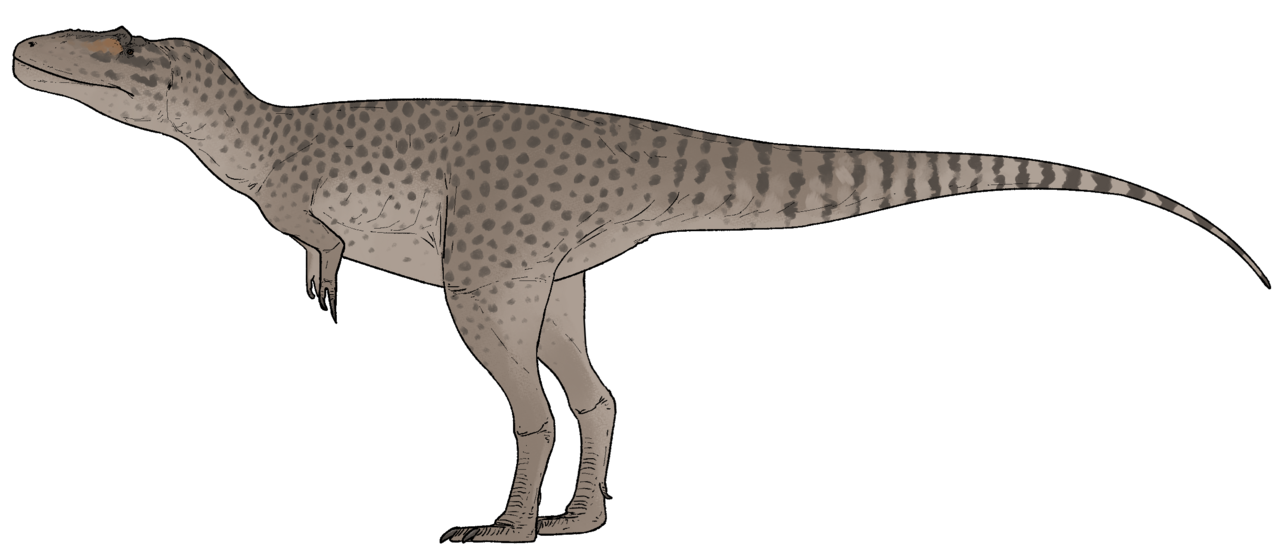
Nanuqsaurus is a genus of theropod dinosaur placed within the tyrannosaurid family. The name combines an Iñupiaq word for "polar bear" with the Greek for "lizard," reflecting both its Arctic provenance and predatory nature. Known from limited cranial remains recovered on Alaska's North Slope, Nanuqsaurus is reconstructed as a relatively small, gracile tyrannosaurid that may have reached roughly 6 metres in length—considerably smaller than the largest continental relatives. Name origin
Image gallery
10 Images



Discovery and naming
The type material, catalogued as DMNH 21461, comprises parts of the skull roof and adjacent cranial bones recovered from Late Cretaceous formations of northern Alaska. The taxon was formally named and described in the scientific literature in 2014, and its type species is commonly referred to in paleontological discussions of polar dinosaur faunas. Fieldwork in these units has produced a range of vertebrate and plant fossils that help place Nanuqsaurus in a broader ecosystem context. Genus record Specimen data
Morphology
Although only fragmentary cranial bones are known, the preserved elements preserve diagnostic features that distinguish Nanuqsaurus from other tyrannosaurids. The skull roof fragments indicate a shorter, narrower skull compared with large-bodied relatives. Estimates based on cranial proportions suggest a complete skull length of about 50 centimetres, implying a smaller overall body size. These inferences are provisional because they rely on comparisons with better-known tyrannosaurids. Skull information
Size, growth, and ecology
Nanuqsaurus is notable for its reduced adult size relative to iconic giants such as Tyrannosaurus. Several hypotheses have been proposed to explain smaller body size in Arctic dinosaurs: limited and seasonal resources, insular or regional dwarfing, and ecological partitioning with other predators. Growth patterns, life span, and precise dietary habits remain uncertain until more postcranial material is discovered and studied. Environment
Paleoenvironment
The rocks that yielded Nanuqsaurus preserve a high‑latitude coastal plain environment that in the Late Cretaceous supported a diverse community of vertebrates and plants. Although temperatures were milder than the modern Arctic, the region experienced prolonged seasonal variation in daylight and available resources. Faunal associations include hadrosaurs, ceratopsians, smaller theropods, and early mammals, indicating a productive ecosystem capable of supporting a top predator. Classification notes
Classification and significance
Anatomical characters of the cranial fragments place Nanuqsaurus within Tyrannosauridae, though its exact relationships to other members of the family are debated and depend on new material and analyses. Its discovery expanded understanding of tyrannosaurid diversity and distribution, showing that these predators occupied a range of body sizes and habitats, including high latitudes. Continued field work may clarify its phylogenetic position and life history. Further reading
Key characteristics
- Known primarily from partial cranial remains (specimen DMNH 21461).
- Estimated body length around 6 m; skull roughly 50 cm when complete.
- Smaller than many continental tyrannosaurids; likely a local apex or mesopredator.
- Found in Late Cretaceous, high‑latitude deposits of Alaska, indicating adaptation to polar environments.
- Described in the scientific literature in 2014; further discoveries are needed to resolve many aspects of its biology.
Questions and answers
Q: What is Nanuqsaurus?
A: Nanuqsaurus is a genus of theropod dinosaur.
Q: How is Nanuqsaurus related to polar bears?
A: Nanuqsaurus means 'polar bear lizard' but it is not related to polar bears in any way.
Q: What is the size of Nanuqsaurus as compared to Tyrannosaurus?
A: Nanuqsaurus is half the size of Tyrannosaurus.
Q: What is the length of Nanuqsaurus?
A: Nanuqsaurus may have grown up to 6 meters or about 20 feet long.
Q: What is DMNH 21461?
A: DMNH 21461 is a partial skull roof fossil of Nanuqsaurus found in Alaska.
Q: How big would the skull of Nanuqsaurus have been when complete?
A: The skull of Nanuqsaurus would have been about 50 cm or 1.65 feet when complete.
Q: Is there any other evidence of Nanuqsaurus besides DMNH 21461?
A: No, presently there is only one specimen of Nanuqsaurus known, i.e., DMNH 21461.
Related articles
Author
AlegsaOnline.com Nanuqsaurus — small Arctic tyrannosaurid from Late Cretaceous Alaska Leandro Alegsa
URL: https://en.alegsaonline.com/art/68281
Sources
- journals.plos.org : journals.plos.org/plosone/article?id=10.1371/journal.pone.0091287