
Namur Province (Wallonia, Belgium)
Namur is a central province of Wallonia in southern Belgium, noted for its river valleys, the city and citadel of Namur, French-speaking culture, and a mix of agriculture, industry and tourism.
Overview
Namur is one of the five provinces of Wallonia in southern Belgium. The provincial capital is the city of Namur, located at the junction of two rivers. The area combines low river valleys and higher, wooded terrain to the southeast and has long served as a regional crossroads between northern and southern Europe.
Image gallery
3 Images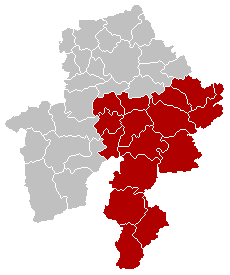


Geography and landscape
The province is shaped by river systems and rolling hills. The Meuse and Sambre rivers are important waterways that cross the region, carving valleys and supporting riverfront towns. To the southeast the landscape rises toward the edges of the Ardennes, offering forests, limestone cliffs and scenic drives popular with visitors.
Administration and settlements
Administratively, Namur is organised into three arrondissements, including Namur, Dinant and Philippeville. These districts contain a mix of urban centres and rural municipalities, where local economies range from farming to light industry. The provincial capital, the city of Namur, is an administrative and cultural hub centred on a prominent citadel.
History and development
The region has a long history as a strategic and commercial zone. Medieval fortifications and river trade shaped local towns, and the citadel at Namur was expanded repeatedly because of the site's military importance. Modern provincial institutions took shape in the 19th century with the reorganisation of Belgian territory and the growth of regional government.
Language, culture and economy
French is the predominant language and cultural influence, reflected in literature, media and everyday life. Local dialects such as Walloon and Picard persist in some communities. The economy blends agriculture, small and medium enterprises, light manufacturing and tourism focused on heritage sites, outdoor recreation and river cruises.
Notable facts and distinctions
- Namur is one of Wallonia's provinces and is often described by its scenic river valleys and fortified capital.
- Visitors are attracted to historic centres, forts and natural areas at the transition to the Ardennes.
- Its multilingual place names reflect the region's cultural contacts: French, Dutch, German, Walloon.
For more information on administrative status and regional context, see links about the province, Belgium, the province's border relations and its situation next to France. Namur's role within Wallonia continues to shape its public life and identity.
Questions and answers
Q: What is Namur Province?
A: Namur Province is a Belgian province located on the border with France.
Q: What are the different names of Namur Province in different languages?
A: Namur Province is known as Namur in French, Namen in Dutch, Namur in German, Nameur in Picard, and Nameur in Walloon.
Q: Is Namur Province a French-speaking region of Belgium?
A: Yes, Namur Province is a predominantly French-speaking southern region of Belgium.
Q: How many provinces are there in Wallonia?
A: There are five provinces in Wallonia.
Q: What is the bordering country of Namur Province?
A: Namur Province is located on the border with France.
Q: What is the significance of Namur Province in Belgium?
A: Namur Province is a significant province of Belgium due to its location on the border with France, and its contribution to the predominantly French-speaking southern region of Belgium.
Q: What is the official language of Namur Province?
A: The official language of Namur Province is French.
Related articles
Author
AlegsaOnline.com Namur Province (Wallonia, Belgium) Leandro Alegsa
URL: https://en.alegsaonline.com/art/68209
Sources
- statbel.fgov.be : Population per municipality as of 1 January 2016
- statbel.fgov.be : Institut National de Statistique - Direction générale Statistique et Information économique