
Nakhon Ratchasima Province (Korat)
Nakhon Ratchasima (Korat) is Thailand's largest province by area, a cultural and agricultural center on the Khorat Plateau known for Phimai, Khao Yai access, silk, and rural traditions.
Overview
Nakhon Ratchasima, commonly called Korat or Khorat, is a major province in northeastern Thailand. It occupies the western edge of the Khorat Plateau and serves as a gateway between the capital region and Isan (northeastern Thailand). The provincial capital, also named Nakhon Ratchasima, lies roughly 260 km from Bangkok and functions as a commercial, transport and cultural hub for surrounding provinces. The province combines broad agricultural plains with forested highlands and is one of Thailand’s most populous and geographically extensive provinces.
Image gallery
10 Images




Geography and environment
The landscape is defined by the transition from the Dong Phaya Yen mountain range to the flat Khorat Plateau. Rivers such as the Mun and smaller tributaries cross the province, supporting irrigation and food production. In the western part of the province, forested ranges and protected areas provide habitat and cooler microclimates; parts of Khao Yai National Park lie near or within the province’s borders, attracting wildlife and nature tourism. The variety of elevation and soil types supports mixed agriculture, fruit orchards, and seasonal vegetable farming.
History and cultural heritage
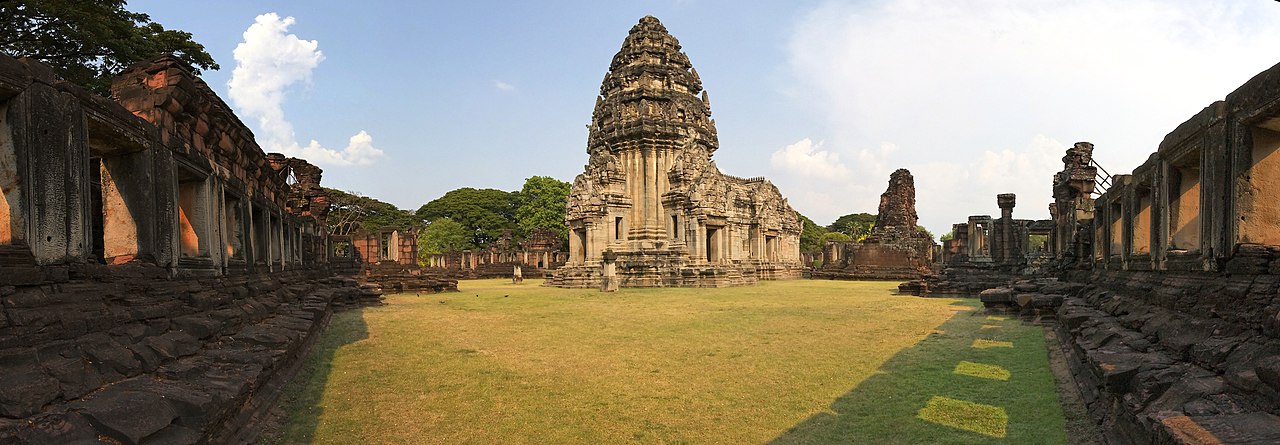
Human settlement in the area dates back many centuries and the region played an important role during the Khmer empire and subsequent Thai polities. The Phimai Historical Park preserves Khmer-style temple architecture, including one of the most significant Khmer sanctuaries in Thailand. Local traditions include textile weaving, pottery and crafts that reflect a mix of Thai and Lao-Isan influences. The Korat cat, a silver-blue shorthaired breed, is internationally associated with the province.
Economy, products and society
Agriculture remains the economic backbone: rice, sugarcane, cassava and fruit are widely cultivated. In recent decades manufacturing, commerce and services have expanded, concentrated around the provincial capital and towns such as Pak Chong and Sikhio. Handicrafts — including silk weaving and traditional pottery from villages like Dan Khun Thot — are produced for both local use and the tourist market. Education and healthcare institutions in the city provide regional services.
Tourism and notable places
Visitors are drawn to a combination of historical sites, natural parks and rural scenery. Key attractions include:
- Phimai Historical Park: Khmer temple complex with a museum and restored structures.
- Gateway to Khao Yai National Park and related wildlife tours around Pak Chong.
- Wang Nam Khiao district: known for cooler weather, seasonal flowers, vineyards and small farms.
- Traditional craft villages and local food markets offering Isan cuisine and street foods.
Travelers can reach the province by road from Bangkok, rail connections and regional bus services. The area also serves as an entry point for inland excursions into northeastern Thailand.
Administration and districts
The province is subdivided into more than 30 administrative districts (amphoes). Prominent districts and towns include Pak Chong, Phimai, Dan Khun Thot, Sikhio, Chok Chai and Wang Nam Khiao. These centers host government offices, regional hospitals and educational institutions that serve surrounding rural communities. For administrative details and visitor information, see provincial resources such as local government guides and travel pages: official province site, tourism overview, heritage and parks and transport information.
Questions and answers
Q: What is Nakhon Ratchasima Province?
A: Nakhon Ratchasima Province is the biggest province and the second most populated province of Thailand located in the eastern part of Thailand.
Q: What does Nakhon Ratchasima mean?
A: Nakhon Ratchasima means ‘big province’.
Q: How far is Nakhon Ratchasima from Bangkok?
A: Nakhon Ratchasima is about 260 kilometers from Bangkok.
Q: What are some attractions of Nakhon Ratchasima province?
A: Nakhon Ratchasima has forests, walking trails, education, rivers, sightseeing spots, food, ancient cultures, traditions, and local handicrafts for sale.
Q: How many districts does Nakhon Ratchasima have?
A: Nakhon Ratchasima has 25 districts and six other small districts.
Q: What are some of the districts' names in Nakhon Ratchasima province?
A: Some of the district's names in Nakhon Ratchasima province are Pak Chong, Sikhio, Sung Noen, Kham Thale So, Dan Khun Thot, Non Thai, Non Sung, Kham Sakaesaeng, Phimai, Khong Non Daeng, and more.
Q: What is the area Nakhon Ratchasima covers?
A: Nakhon Ratchasima covers an area of about 20494 square kilometers.
Related articles
Author
AlegsaOnline.com Nakhon Ratchasima Province (Korat) Leandro Alegsa
URL: https://en.alegsaonline.com/art/68166
Sources
- nakhonratchasima.go.th : nakhonratchasima.go.th/nakhonrat/index.php
- tourthai.com : tourthai.com