
Nail (fastener): history, types, manufacture and uses
A nail is a simple metal fastener with a head and pointed shank used since antiquity. This article explains its parts, historical development, common types, manufacturing methods and practical uses.
Overview
A nail is a small metal object used to fasten materials together by being driven into them. Typical nails have three basic parts: a flat or shaped head, a long shank and a pointed tip. They are usually installed by striking with a hammer or with powered tools such as a nail gun. Nails provide a quick, inexpensive connection in woodworking, construction and many household repairs.
Image gallery
10 Images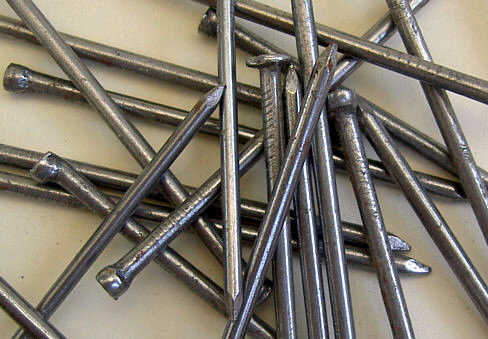





Parts, materials and common types
The head provides a strike surface and prevents the nail pulling through the workpiece. The shank transfers load and resists withdrawal; it can be smooth, ringed or twisted. The point drives into material and may be blunted or diamond-shaped for specific tasks. Nails are commonly made from steel (often galvanized for corrosion resistance), stainless steel, copper, bronze or aluminum.
- Common nails: general construction with a thick shank.
- Finish nails and brads: smaller heads for trim and finishing work.
- Roofing nails (clout nails): large flat heads and often galvanized.
- Masonry and concrete nails: hardened steel for use in stone or concrete.
- Spikes and fencing nails: large nails for heavy joinery.
- Specialty shanks: ring-shank and spiral-shank for greater withdrawal resistance.
History and development
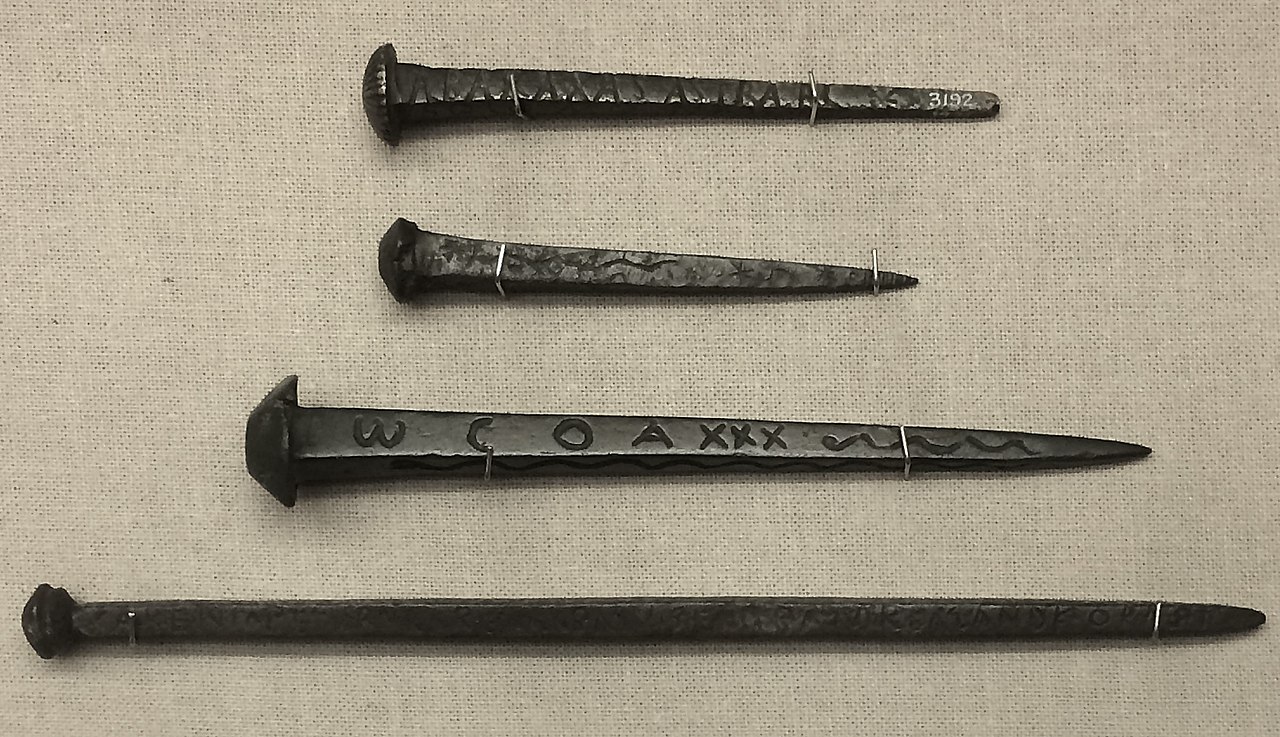
Nails have an ancient pedigree. Metal fasteners resembling modern nails are known from early bronze and iron ages; bronze nails found in Ancient Egypt have been dated to several millennia BCE. Historical texts such as the Bible mention nails, and iron for their production has been associated with major building projects like Solomon's Temple. In the Roman era nails were produced at scale; archaeological finds include vast stores left when forces evacuated a military fortress at Inchtuthil, where reportedly "seven tons" of nails remained.
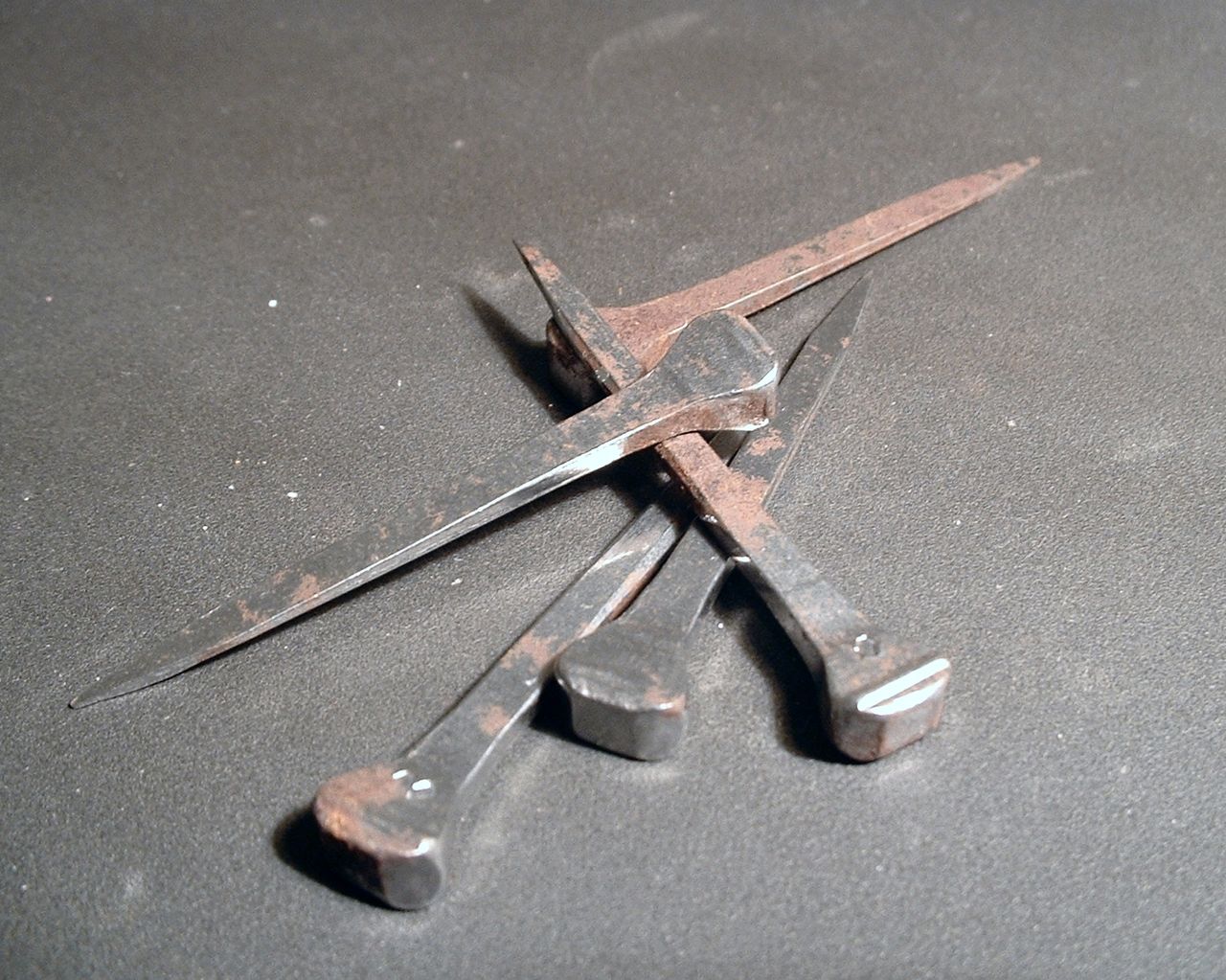
Manufacture progressed through several broad periods: hand-wrought or forged nails made by blacksmiths until the 19th century; machine-made cut nails from the early Industrial Revolution; and the rise of wire-drawn nails, which became the dominant form from the late 19th century onward. Modern production draws wire, cuts lengths, forms points and heads at high speed.
Applications and techniques
Nails are widely used where shear strength and rapid assembly are required. Typical applications include framing, roofing, flooring, cabinetry and furniture. Finishing nails are chosen when the head must be concealed; common nails or spikes suit structural framing. Nails are fast to install with a hammer or pneumatic nailer, but they offer less reversible strength than screws or bolts, which provide better tensile and withdrawal resistance when threads engage wood.
Archaeological, economic and practical notes
Because nails were once labor-intensive, old constructions sometimes reused nails, and collections of nails can be informative to archaeologists dating sites and trade. In modern construction, coatings, material selection and shank shape are chosen to resist corrosion and withdrawal. Safety practices—eye protection, correct nail size, and caution with power tools—reduce risk during installation.
Distinctions and related terms
In common speech "nail" can also mean the keratin plate at the tip of a finger or toe; this article concerns the metal fastener. Nails differ from screws and bolts by lacking a continuous helical thread; specialized fasteners such as staples, rivets and adhesives provide alternative joining methods when nails are unsuitable.
Questions and answers
Q: What is a nail?
A: A nail is a metal object with a flat head and a long sharp tip used to join two objects together.
Q: How is a nail put into another object?
A: A hammer or nail gun is used to put a nail into another object.
Q: What are the three periods in the history of the nail?
A: The three periods in the history of the nail are hand-wrought (forged) nail (pre-history until 19th century), cut nail (roughly 1800 to 1914), and wire nail (roughly 1860 to the present).
Q: What is the earliest known documentation of nails?
A: Bronze nails found in Egypt dating back to 3400 BC are the earliest known documentation of nails.
Q: Is there any reference of nails in the Bible?
A: Yes, there are references to nails in the Bible. King David gave iron to make nails for Solomon's Temple.
Q: How extensively did the Romans use nails?
A: The Romans made extensive use of nails. The Roman army left behind seven tons of nails when it evacuated the fortress of Inchtuthil in Perthshire, Scotland, in 86 or 87 AD.
Q: How old are hand-wrought (forged) nails?
A: Hand-wrought (forged) nails date back to pre-history until the 19th century.
Related articles
Author
AlegsaOnline.com Nail (fastener): history, types, manufacture and uses Leandro Alegsa
URL: https://en.alegsaonline.com/art/68135
Sources
- fourshee.com : "History of Nails"
- books.google.com : 50 scientific discoveries that changed the world