
Nadine Gordimer: South African novelist, activist, and Nobel laureate
Profile of Nadine Gordimer (1923–2014), South African writer and political activist, her major works, themes, anti-apartheid involvement, awards including the 1991 Nobel Prize, and lasting influence.
Overview
Nadine Gordimer (20 November 1923 – 13 July 2014) was a South African novelist, short-story writer and political activist whose work examined moral and psychological complexities under apartheid and in the transition to a democratic South Africa. She received the Nobel Prize in Literature in 1991 for a body of fiction that critics and the Nobel committee judged to be of significant human and social value. Gordimer's career combined literary achievement with outspoken engagement in political causes.
Image gallery
3 Images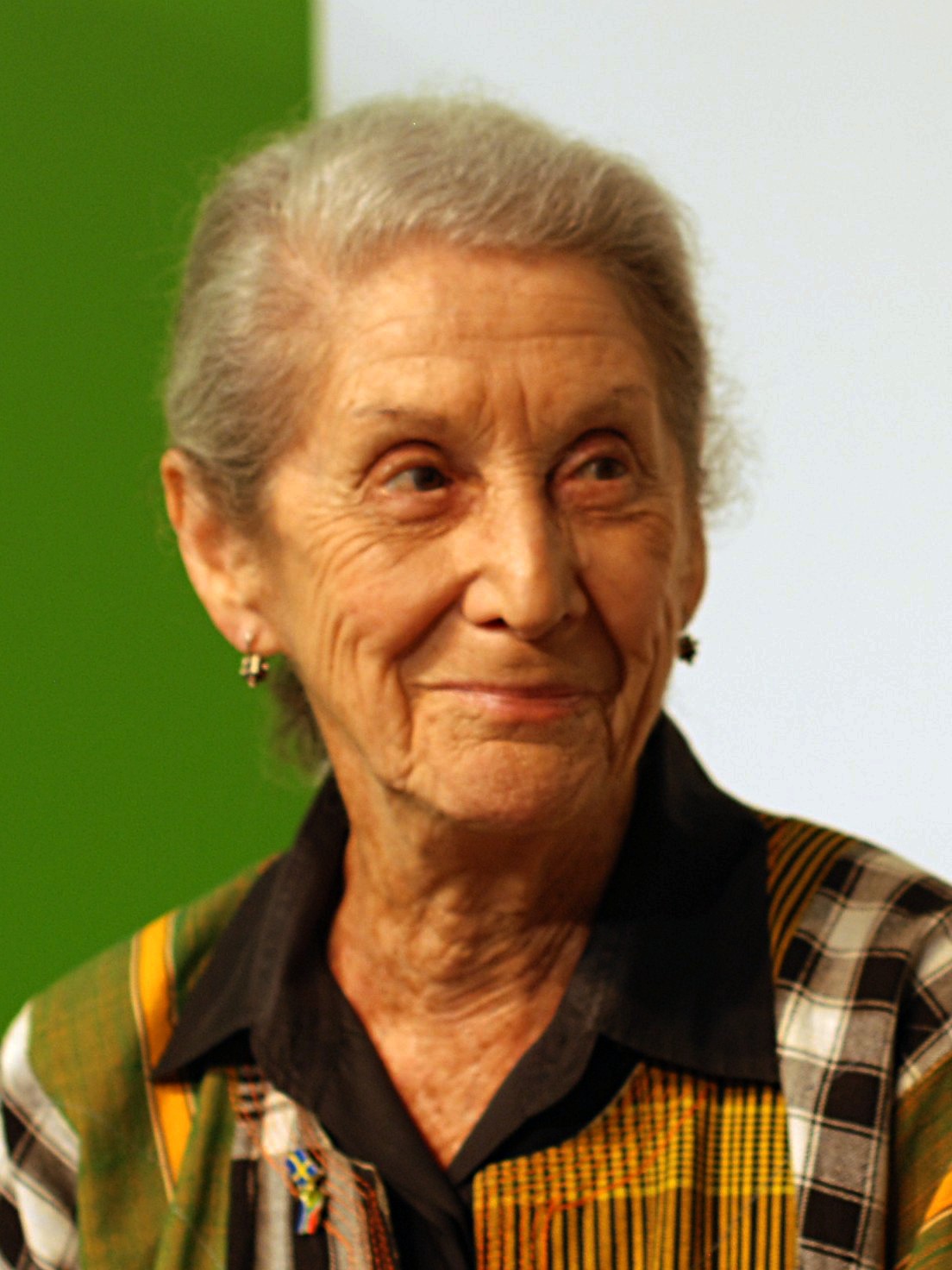


Early life and background
Gordimer was born near Springs, a small town outside of Johannesburg, and grew up in a diverse, often segregated urban setting. She was of Jewish descent and began writing at an early age; her first short stories were published while she was still a teenager. Her personal experience of racial division and the evolving politics of South Africa shaped both her subject matter and her public stance.
Literary work and themes
Gordimer's fiction is known for its attention to character psychology, ethical dilemmas and the effects of political systems on everyday life. She used a realistic style that often foregrounded internal conflict and moral ambiguity rather than overt polemic. Major novels include Burger's Daughter, July's People and The Conservationist, and her output also comprises numerous short stories and essays. Her works addressed race, class, censorship and personal responsibility in ways that focused on human relationships as well as national crises.
Political engagement and controversy
Gordimer was not only a commentator but an active participant in South Africa's struggle against apartheid. She joined the banned African National Congress during the era when membership was proscribed and used her position to advocate for change. Some of her novels were banned or subjected to censorship by the apartheid regime. Beyond anti-apartheid activism, she supported public-health causes, including work related to HIV/AIDS, and in 2011 was among the Nobel laureates who signed the "Stockholm memorandum" on sustainability.
Awards, recognition and notable facts
Gordimer was awarded numerous honors during her lifetime, most prominently the Nobel Prize in Literature in 1991. She also received other major literary prizes and international recognition for her contribution to letters; for example, one of her novels, The Conservationist, earned the Booker Prize in the 1970s. The Nobel committee cited her capacity to illuminate the human condition in politically charged circumstances, echoing the spirit of Alfred Nobel's intent that literature confer benefit on humanity.
Legacy and selected bibliography
Gordimer's work remains widely read and studied for its nuanced interrogation of power, identity and moral choice. Her fiction is included in many academic curricula on 20th-century and postcolonial literature, and she is frequently discussed alongside other major South African writers for her influence on both literature and public life.
- Selected novels: July's People; Burger's Daughter; The Conservationist.
- Other work: numerous short stories, essays and literary criticism.
- Honors and actions: Nobel Prize in Literature (1991); signer of the 2011 "Stockholm memorandum"; anti-apartheid activism and support for HIV/AIDS initiatives.
For further general reference on Gordimer's life and writing, consult biographical and literary sources that survey South African literature and the history of apartheid-era cultural politics; see also authoritative online biographies and academic treatments for more detailed chronologies and critical interpretations. The life of Nadine Gordimer stands as a prominent example of a writer whose artistic work and civic engagement were closely entwined.
More about her writing | Nobel citation and context | Cultural background | Political affiliations | Early life and birthplace
Questions and answers
Q: Who was Nadine Gordimer?
A: Nadine Gordimer was a South African writer, political activist, and recipient of the 1991 Nobel Prize for Literature.
Q: What was Nadine Gordimer’s contribution to humanity?
A: According to Alfred Nobel, Nadine Gordimer was a woman "who through her magnificent epic writing has been of very great benefit to humanity."
Q: What was Gordimer's role in ending apartheid in South Africa?
A: Gordimer's writing and her activism played a key role in abolishing apartheid in South Africa. She was active in the anti-apartheid movement and joined the African National Congress while it was banned.
Q: What other cause was Gordimer involved in besides anti-apartheid activism?
A: Gordimer was also active in HIV/AIDS causes.
Q: What was the "Stockholm memorandum" that Gordimer signed?
A: The "Stockholm memorandum" was signed by 20 Nobel Laureates at the 3rd Nobel Laureate Symposium on Global Sustainability in Stockholm, Sweden on 18 May 2011.
Q: Where was Gordimer born?
A: Gordimer was born near Springs, a small town outside of Johannesburg.
Q: When did Gordimer pass away?
A: Gordimer died on 13 July 2014 at the age of 90.
Related articles
Author
AlegsaOnline.com Nadine Gordimer: South African novelist, activist, and Nobel laureate Leandro Alegsa
URL: https://en.alegsaonline.com/art/68071
Sources
- telegraph.co.uk : A Writer's Life: Nadine Gordimer
- washingtonpost.com : "The Speech at Rivonia Trial that Changed History"
- nobel-cause.de : "Stockholm Memorandum,"
- nobelprize.org : "The Nobel Prize in Literature 1991"
- channel24.co.za : "SA novelist Nadine Gordimer dies"
- theguardian.com : "Nadine Gordimer dies aged 90"