
Myxobolus cerebralis — parasite causing whirling disease in salmonids
Myxobolus cerebralis is a microscopic myxozoan parasite that infects salmonid fish, causing whirling disease. It requires an aquatic worm host and has spread across continents, affecting wild and farmed fish.
Myxobolus cerebralis is a microscopic parasitic myxozoan that infects the cartilage and nervous tissues of salmonid fishes, most notably salmon and trout. Infection with this organism causes whirling disease, a condition named for the characteristic corkscrew or spinning swimming behavior of affected juvenile fish. The parasite does not infect people, but it can severely reduce survival and body condition in young fish and has economic and ecological consequences for fisheries and aquaculture.
Image gallery
6 Images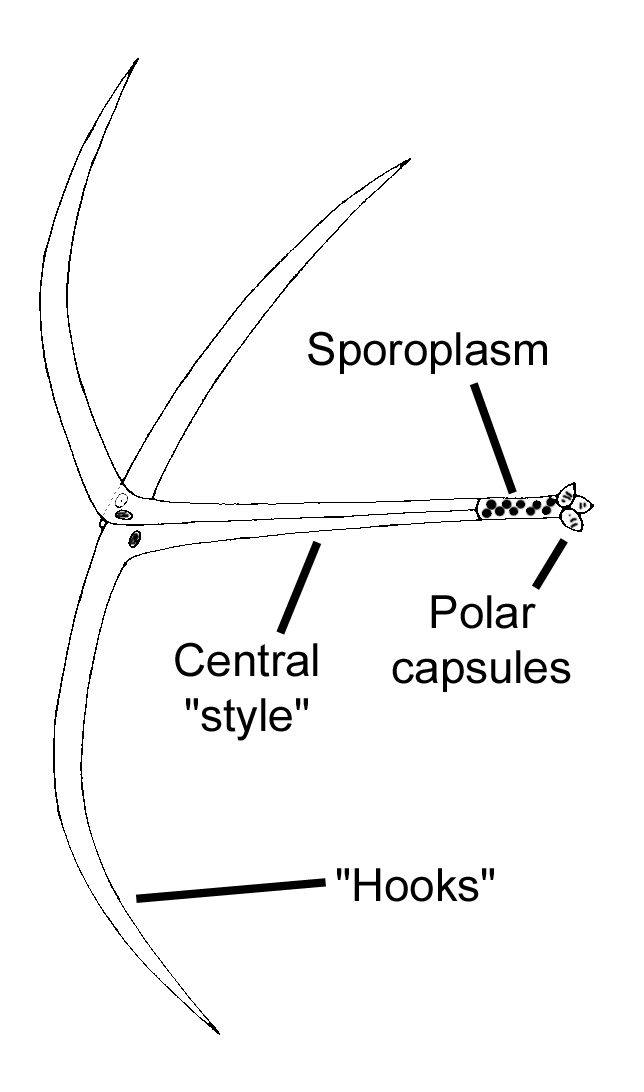



Biology and life cycle
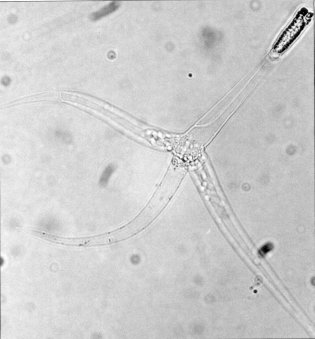
Myxobolus cerebralis belongs to a group commonly called myxozoans, microscopic multicellular parasites related to cnidarians. Its life cycle alternates between two hosts: a salmonid fish and an aquatic oligochaete worm, typically Tubifex tubifex. Infected fish produce hard, resistant myxospores in cartilage and other tissues; when these spores are released to the environment and consumed or contacted by the worm host, they develop into infective triactinomyxon stages that are subsequently released into the water and can infect fish.
Symptoms, pathology, and effects
Young fish are most susceptible. The parasite invades cartilage and can damage developing bone and peripheral nerves, producing skeletal deformities and neurological dysfunction. This damage explains clinical signs such as erratic swimming, the “whirling” motion, failure to feed normally, and increased vulnerability to predators. Severe outbreaks can lead to high mortality in hatcheries and local declines in wild populations. References to damage to bones and nerves reflect the tissues most commonly affected.
Distribution, history, and spread
Originally described in Europe, Myxobolus cerebralis has been detected across much of that continent, including reports from Russia, and it established in other regions over the twentieth century. It is now well established in parts of North America and has been reported from locations as far afield as the South Africa. The movement of infected fish, contaminated equipment, and aquatic animals has contributed to its wider distribution. Discovery in the 1980s that a worm intermediate host is required helped clarify transmission and suggested targets for control.
Detection, management, and prevention
Diagnosis is made by observing spores or parasite stages in tissue, histological examination, and molecular tests. Management focuses on reducing transmission risk: biosecurity measures at hatcheries, avoiding transfer of infected fish or sediment, and careful stocking practices. Other measures include selecting resistant or less susceptible fish strains where available, and controlling worm populations in rearing waters. Complete eradication is rarely feasible once the parasite is established in a watershed.
Importance and research
Whirling disease caused by Myxobolus cerebralis remains a concern for recreational fisheries, conservation of native trout and salmon, and commercial aquaculture. Research continues on host resistance, improved diagnostics, and ecological factors that influence transmission. Managers and anglers are advised to follow local guidance to limit spread, since human activity is a major pathway for moving the parasite between water bodies.
Questions and answers
Q: What is Myxobolus cerebralis?
A: Myxobolus cerebralis is a small Myxozoan parasite that eats the insides of fish like salmon and trout, causing whirling disease.
Q: Where is Myxobolus cerebralis found?
A: Myxobolus cerebralis is found in most of Europe (including Russia), the United States, South Africa, and other countries.
Q: What does Myxobolus cerebralis need to live in before it can live in a fish?
A: Myxobolus cerebralis needs to live in a worm before it can live in a fish.
Q: How does Myxobolus cerebralis infect fish and worms?
A: Myxobolus cerebralis infects both fish and worms by poking a hole in them and putting part of itself in.
Q: What is whirling disease and who does it hurt the most?
A: Whirling disease is caused by Myxobolus cerebralis and it hurts young fish the most. It can hurt bones and nerves and makes it hard for fish to swim straight and get food.
Q: Does whirling disease affect humans?
A: No, whirling disease does not affect humans, only fish.
Q: Has Myxobolus cerebralis caused any significant fish population declines?
A: Yes, Myxobolus cerebralis has become well-established, particularly in North America, and has caused the decline of whole cohorts of fish.
Related articles
Author
AlegsaOnline.com Myxobolus cerebralis — parasite causing whirling disease in salmonids Leandro Alegsa
URL: https://en.alegsaonline.com/art/68019
Sources
- doi.org : 10.1645/ge-82r
- jstor.org : 3285855
- pubmed.ncbi.nlm.nih.gov : 14533670
- doi.org : 10.1139/z94-126