
Myxobacteria: social, gliding soil bacteria that form multicellular fruiting bodies
Overview of myxobacteria: their taxonomy, social gliding motility, multicellular life cycle, ecological roles, genomes, and significance in research and biotechnology.
Overview
Myxobacteria are a group of Gram-negative, soil-associated bacteria known for coordinated social behaviour and complex life cycles. Often called "slime bacteria," they are classified within the delta subgroup of the Proteobacteria and are notable for forming multicellular structures when nutrients become scarce. For general taxonomy and classification information see taxonomic resources.
Image gallery
5 Images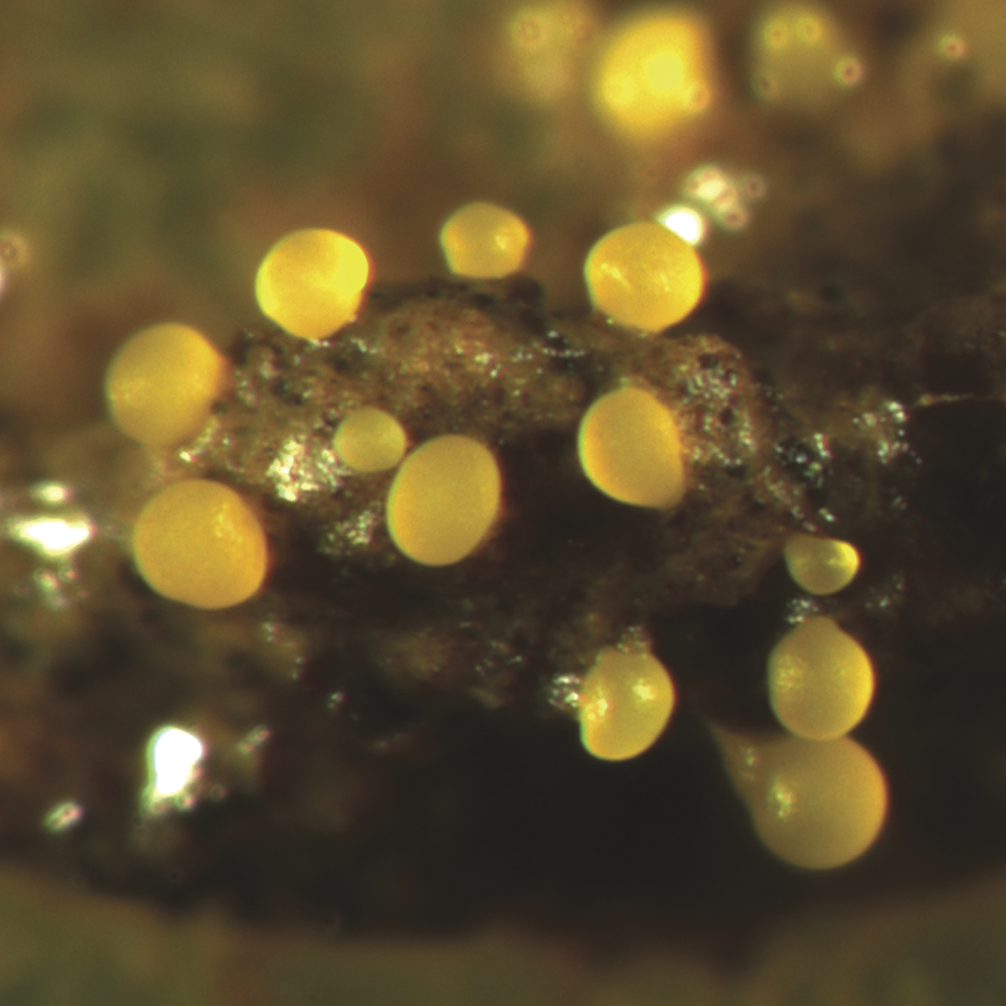


Key characteristics
At the cellular level myxobacteria glide across surfaces rather than swim and typically move as part of dense swarms that cooperate to find and digest food. Many species possess relatively large genomes compared with typical bacteria, encoding extensive regulatory networks and biosynthetic pathways; genomic overviews are available at genome databases. They are Gram-negative in cell envelope structure (Gram-negative references).
- Habitat: primarily soil and decaying organic matter (soil ecology).
- Motility: surface gliding using distinct mechanisms (gliding motility).
- Sociality: swarm formation, cell–cell signaling and coordinated enzyme secretion (swarming behaviour, signalling systems).
- Development: formation of fruiting bodies and resistant spores.
Movement and predation
Myxobacteria display two complementary gliding modes. "Adventurous" motility allows individual cells to move, while "social" motility depends on type IV pili and interactions between cells. In swarms they secrete extracellular enzymes and secondary metabolites to lyse and consume insoluble organic substrates and other microorganisms; coordinated secretion is described in studies on extracellular enzymes (enzyme secretion).
Life cycle and multicellularity
When nutrients are limiting, myxobacterial populations undergo a developmental program: cells aggregate into three-dimensional fruiting bodies inside which some cells differentiate into myxospores, dormant and stress-resistant forms. This multicellular behaviour has made certain species, such as Myxococcus xanthus, models for studying bacterial development and multicellularity (developmental biology).
Ecological roles and applications
Ecologically, myxobacteria contribute to decomposition and nutrient cycling by breaking down complex organic matter in soils. They are also predators of other microbes, shaping microbial communities. Their large repertoires of secondary metabolites include molecules with antibiotic or antifungal activity, which has attracted interest for natural product discovery and biotechnology.
Research significance and notable facts
Because of their complex social behaviours, genetic tractability in certain species, and rich biosynthetic potential, myxobacteria are subjects of active research in microbiology, ecology and drug discovery. For accessible summaries and further reading see overview resources (overview) and focused reviews on social behaviour (cell signalling) and swarming (swarm dynamics).
Further technical and genomic resources are maintained in specialized databases and repositories (genomic data, environmental data, cell envelope studies). Research continues to reveal how relatively simple cells coordinate complex multicellular programs and produce chemically diverse metabolites with potential applications.
Questions and answers
Q: What are myxobacteria?
A: Myxobacteria are a group of bacteria that usually live in the soil and feed on insoluble organic substances.
Q: Where are myxobacteria found?
A: Myxobacteria are found in the soil.
Q: What type of bacteria are myxobacteria?
A: Myxobacteria are included in the delta group of proteobacteria, a large group of Gram-negative forms.
Q: How do myxobacteria move?
A: Myxobacteria move by gliding on the surface.
Q: How do myxobacteria travel in swarms?
A: Myxobacteria travel in swarms with many cells kept together by intercellular molecular signals.
Q: What do myxobacteria do to increase feeding efficiency?
A: Myxobacteria put out extracellular enzymes to digest food, which increases feeding efficiency.
Q: How do the genomes of myxobacteria compare to other bacteria?
A: Myxobacteria have very large genomes compared to other bacteria.
Related articles
Author
AlegsaOnline.com Myxobacteria: social, gliding soil bacteria that form multicellular fruiting bodies Leandro Alegsa
URL: https://en.alegsaonline.com/art/68018
Sources
- doi.org : 10.1038/nbt1354
- pubmed.ncbi.nlm.nih.gov : 17965706
- doi.org : 10.1088/1478-3967/1/3/005
- pubmed.ncbi.nlm.nih.gov : 16204837
- pnas.org : "A three-dimensional model of myxobacterial aggregation by contact-mediated interactions"
- doi.org : 10.1073/pnas.0504259102
- ncbi.nlm.nih.gov : 1183571
- pubmed.ncbi.nlm.nih.gov : 16061806
- doi.org : 10.1038/sj.jim.7000025
- pubmed.ncbi.nlm.nih.gov : 11780785
- sciencemag.org : "Adaptive evolution of an sRNA that controls Myxococcus development"
- doi.org : 10.1126/science.1187200
- ncbi.nlm.nih.gov : 3027070
- pubmed.ncbi.nlm.nih.gov : 20489016
- doi.org : 10.1038/nature04677