
Myobatrachidae — the ground and water frogs of Australia and New Guinea
A family of primarily terrestrial and aquatic frogs native to Australia and New Guinea, with about 100 species in three subfamilies, notable for diverse reproductive modes including foam nests and gastric brooding.
Overview
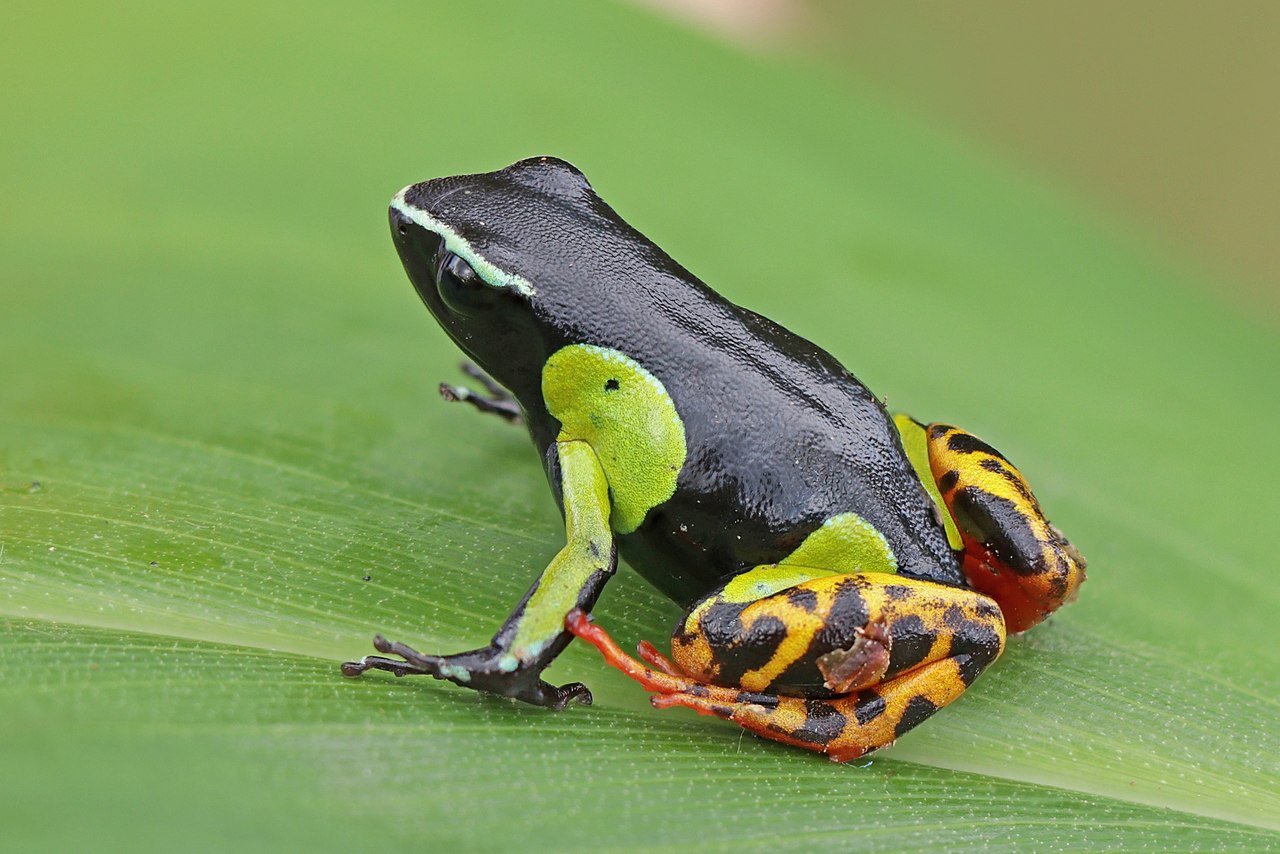
Myobatrachidae is a family of frogs (order Anura) native to Australia and New Guinea. The family contains approximately one hundred described species that occupy a wide range of habitats, from arid plains and heathlands to temperate forests and freshwater wetlands. Members of the family are non-arboreal: they live on land or in water and do not climb vegetation. They lack the adhesive toe pads characteristic of tree frogs, and their morphology reflects their ecological diversity, with burrowing, terrestrial and aquatic forms represented.
Image gallery
3 Images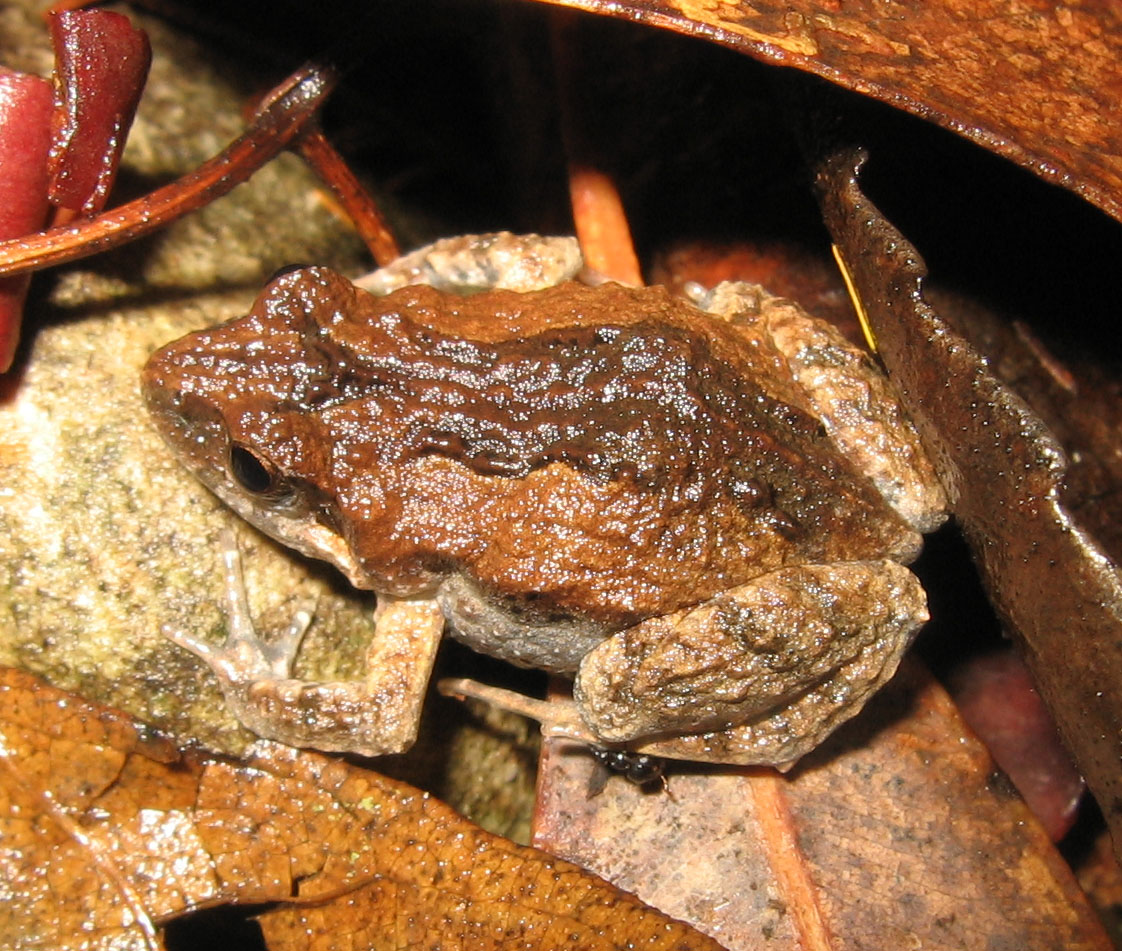

Physical characteristics
Body size in myobatrachids varies greatly. Some species reach less than 1.5 centimetres in snout–vent length, while others include some of the largest Australian frogs, such as the Giant Barred Frog (commonly cited at about 12 centimetres). Burrowing species tend to be compact with stout bodies and short limbs, whereas aquatic species often have more muscular limbs and webbed feet. Skin texture ranges from smooth to warty, and many species have cryptic coloration that helps them blend with leaf litter or soil.
Reproduction and development
Reproductive strategies among myobatrachids are unusually varied and are a major feature of the family's biology. Modes include foam-nesting, aquatic egg deposition with free-swimming tadpoles, terrestrial eggs laid on moist substrates, and modified larval development in which the free-swimming tadpole stage is reduced or absent. The family is traditionally divided into three subfamilies in part on the basis of reproductive mode.
Subfamilies and notable modes
- Limnodynastinae — many species build foam nests. A female (sometimes aided by the male) whips secretions into a protective foam in which eggs are laid; nests may float on water or be placed on land above water level.
- Myobatrachinae — a diverse assemblage including terrestrial breeders: some lay eggs on land and show larval adaptations to dry or ephemeral environments, while others use water bodies for tadpole development.
- Rheobatrachinae — historically included the gastric‑brooding frogs, which were remarkable for maternal brooding in the stomach. Both known gastric‑brooding species have not been observed in the wild for decades and are believed to be extinct or possibly lost; their disappearance has become emblematic of amphibian declines.
Distribution and ecology
Myobatrachids occur across much of Australia and into parts of southern New Guinea. They exploit diverse microhabitats: some are fossorial or semi‑burrowing and emerge after rains to breed; others are associated with permanent streams, swamps or ephemeral pools. As insectivores, they help control invertebrate populations and form an important link in food webs, serving as prey for birds, reptiles and mammals.
Conservation and research
Status varies across the family. Many species remain locally common, but others face threats from habitat loss, introduced predators, changes to fire regimes, and emerging diseases such as chytridiomycosis, which has contributed to declines in amphibian populations worldwide. The loss of the gastric‑brooding frogs stimulated research interest and, in some cases, laboratory efforts to study their unique biology and to explore advanced reproductive or genetic techniques. Conservation actions for myobatrachids include habitat protection, field monitoring, disease management and captive‑breeding programs for the most threatened taxa.
Further reading and resources
For general overviews and taxonomic summaries consult accessible resources such as an online family overview (family overview), regional field guides and distribution maps (regional field guides), taxonomic databases and specialist treatments (taxonomic resources), and conservation assessments or recovery plans (conservation reports). These sources provide species lists, range information and references to primary literature for researchers and the public.
Notable facts
- Myobatrachidae includes both very small and relatively large frog species within the same continental region.
- The family is an example of how reproductive diversity can structure taxonomic groupings in amphibians.
- The gastric‑brooding frogs are among the most unusual reproductive specialists known in vertebrates and their loss illustrates broader conservation concerns for amphibians.
This summary is intended as an introductory encyclopedic account. For species‑level identification, ecological studies or conservation status checks consult specialist keys and regional agencies via the links above or institutional collections and peer‑reviewed literature.
Questions and answers
Q: Where can members of the Myobatrachidae family be found?
A: Members of the Myobatrachidae family can be found in Australia and New Guinea.
Q: What is the size range of species in the Myobatrachidae family?
A: The size range of species in the Myobatrachidae family varies greatly, with some species less than 1.5 centimetres long and the Giant Barred Frog being 12 centimetres long.
Q: Do any members of the Myobatrachidae family live in trees?
A: No, none of the members of the Myobatrachidae family live in trees.
Q: What distinguishes the Myobatrachidae family from tree frogs?
A: The Myobatrachidae family does not have the adhesive toe disc cups found in tree frogs.
Q: How is the Myobatrachidae family broken up into sub-families?
A: The Myobatrachidae family is broken up into three sub-families: Limnodynastinae, Myobatrachinae and Rheobatrachinae.
Q: What is the main factor that determines the sub-family a Myobatrachidae species belongs to?
A: The main factor that determines the sub-family a Myobatrachidae species belongs to is their egg-laying habits.
Q: What method of egg laying is used by the Limnodynastinae sub-family?
A: The Limnodynastinae sub-family lays foam nests, which are made by the female frog from a chemical on her skin. These nests may float on water or be on land.
Related articles
Author
AlegsaOnline.com Myobatrachidae — the ground and water frogs of Australia and New Guinea Leandro Alegsa
URL: https://en.alegsaonline.com/art/67979
Sources
- commons.wikimedia.org : Myobatrachidae