
Mycorrhiza: plant–fungus symbioses that shape terrestrial ecosystems
Mycorrhizas are mutual associations between plant roots and fungi that improve nutrient and water uptake, influence soil structure and plant health, and form complex underground networks.
Mycorrhiza (from Greek "fungus" + "roots") describes a close, usually mutualistic association between the roots of most land plants and fungi. In these partnerships the fungal partner colonizes the plant's root system—either surrounding root cells or entering them—and extends a web of hyphae into the surrounding soil. These fungal filaments are often much thinner and more extensive than plant roots, increasing the effective surface area available to absorb water and mineral nutrients.
Image gallery
10 Images
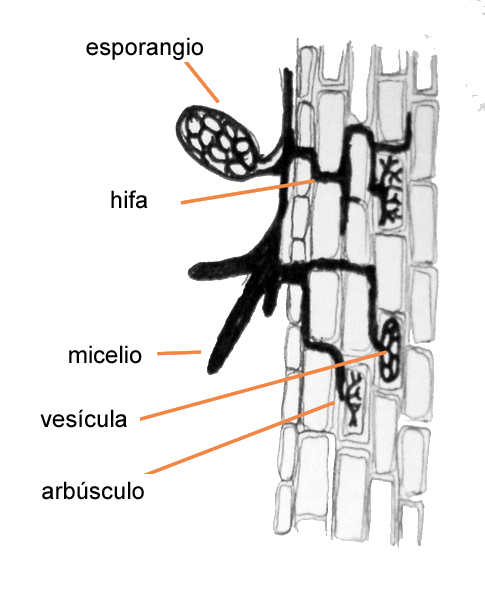

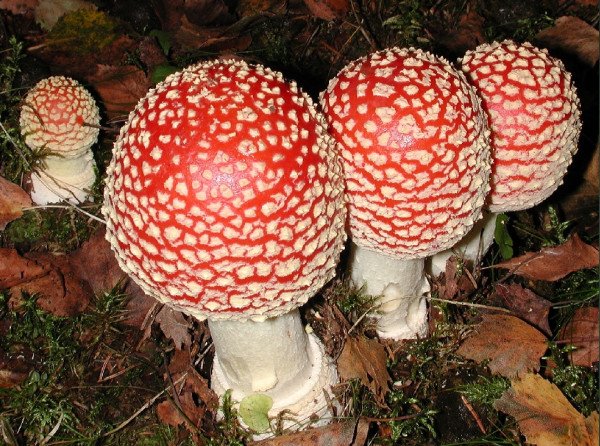


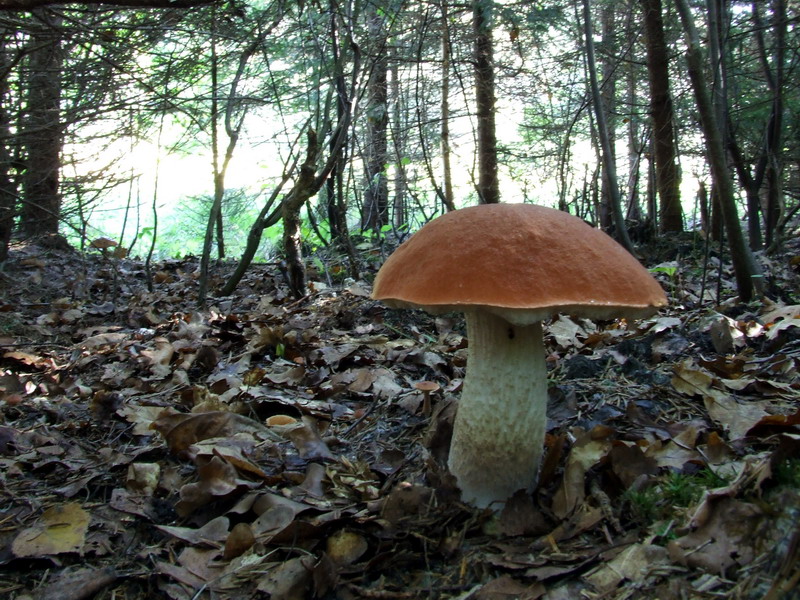

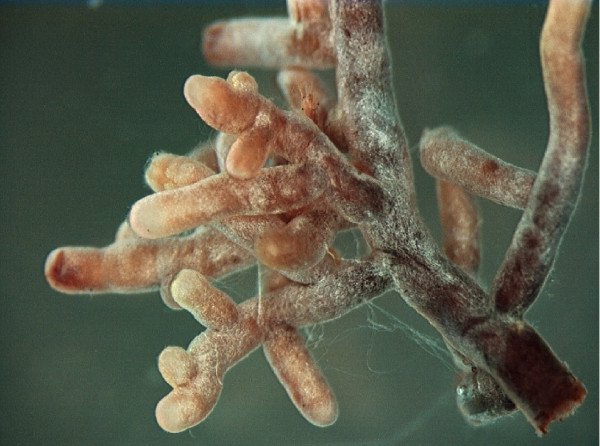
Types and structural features
Mycorrhizas are diverse and are conventionally grouped by how fungal hyphae associate with root tissues. Key categories include:
- Ectomycorrhiza: fungal hyphae form a sheath around roots and grow between root cells in a structure called the Hartig net, but do not penetrate individual cell membranes. Common with many trees in temperate forests. Ectomycorrhizal overview
- Arbuscular (endomycorrhiza): fungi of the Glomeromycota enter root cortical cells and form branched structures (arbuscules) where nutrient exchange takes place; these are widespread among herbaceous plants and many crops. Arbuscular mycorrhiza details
- Orchid and ericoid mycorrhiza: specialized forms adapted to orchids and plants of heathlands, respectively, with distinctive roles in seed germination or nutrient capture. Specialized mycorrhizas
Functions and benefits
At the core of the association is a reciprocal exchange: plants supply fungi with photosynthetically derived carbon compounds, while fungi supply plants with nutrients and other services. Major functions include improved uptake of phosphorus and other mineral nutrients, enhanced water relations during drought, increased tolerance to soil pathogens, and contributions to soil aggregation through hyphal networks. These benefits make mycorrhizas important in natural ecosystems and in agriculture and forestry. Ecosystem services
Evolution and ecological significance
Fossil and molecular evidence indicate that mycorrhizal-like associations date back hundreds of millions of years and likely played a crucial role in the early colonization of land by plants. Today, most land plants form some type of mycorrhizal partnership—estimates suggest that the majority of plant species and plant families depend on them to varying degrees. Because they mediate nutrient cycles, mycorrhizas influence plant community composition, productivity, and resilience to environmental change. Evolutionary context
Underground networks and practical uses
Fungal hyphae can connect roots of different plants, producing extensive "common mycorrhizal networks" that may facilitate transfer of carbon, signalling molecules or nutrients among neighbors; popularized as the "Wood Wide Web," these networks are an active area of ecological research. Mycorrhizal inoculants are used in restoration, horticulture and some agricultural practices to improve seedling establishment and soil health, though effectiveness depends on species match and site conditions. Mycorrhizal networks Applied uses
Notable distinctions and considerations
- Not all plant–fungus interactions are beneficial; the outcome ranges from mutualism to parasitism depending on context and partner identity. Interaction outcomes
- Management and conservation of mycorrhizal communities can influence reforestation success, invasive species dynamics, and soil carbon storage. Conservation implications
Understanding mycorrhizas connects plant physiology, soil biology and ecosystem ecology. Their ubiquity and functional importance make them central to many questions in biology, agriculture and environmental management.
Questions and answers
Q: What is a mycorrhiza?
A: A mycorrhiza is a symbiotic association between a fungus and the roots of a plant where the fungus lives inside the plant roots and in the earth.
Q: Why are mycorrhizas important for plant growth in many ecosystems?
A: Mycorrhizas are important for plant growth in many ecosystems because the fungal hyphae are more efficient than plant roots at absorbing nutrients.
Q: What percentage of all land plant species have mycorrhiza?
A: At least 80% of all land plant species (and over 90% of families) have mycorrhiza.
Q: How many species of fungi and plants are involved in mycorrhizas?
A: Mycorrhizas involve about 6000 species of fungi and 240,000 species of plants.
Q: What are the two main types of mycorrhizas?
A: The two main types of mycorrhizas are ectomycorrhiza and endomycorrhiza.
Q: What is the difference between ectomycorrhizal fungi and endomycorrhizal fungi?
A: The difference between ectomycorrhizal fungi and endomycorrhizal fungi is that the hyphae of ectomycorrhizal fungi do not penetrate individual cells within the root, while the hyphae of endomycorrhizal fungi penetrate the cell wall and invaginate the cell membrane.
Q: What is Wood Wide Web?
A: Wood Wide Web is a term used for mycorrhizal networks in forests.
Related articles
Author
AlegsaOnline.com Mycorrhiza: plant–fungus symbioses that shape terrestrial ecosystems Leandro Alegsa
URL: https://en.alegsaonline.com/art/67957
Sources
- theatlantic.com : "Trees have their own internet"
- doi.org : 10.1007/s00572-004-0330-5
- resources.metapress.com : resources.metapress.com
- biolbull.org : "Plants, mycorrhizal fungi and endobacteria: a dialog among cells and genomes"
- doi.org : 10.2307/1543562
- pubmed.ncbi.nlm.nih.gov : 12700157
- doi.org : 10.1073/pnas.91.25.11841
- pubmed.ncbi.nlm.nih.gov : 11607500
- doi.org : 10.1146/annurev.micro.58.030603.123749
- pubmed.ncbi.nlm.nih.gov : 16153162
- doi.org : 10.1016/j.tree.2006.07.003
- pubmed.ncbi.nlm.nih.gov : 16843567
- planetearth.nerc.ac.uk : Planet Earth Online
- cat.inist.fr : cat.inist.fr
- mykoweb.com : mykoweb.com/articles/MycorrhizalNetworks.html