
Mycoplasma genitalium
A very small, cell-wall–lacking bacterium that colonizes the urogenital and respiratory tracts; important as a sexually transmitted pathogen and a model for minimal-genome research.
Mycoplasma genitalium is a diminutive bacterium in the genus Mycoplasma that commonly colonizes ciliated cells of the mucosal lining and is associated with infection of the epithelial surfaces of the primate genital and respiratory tracts. It is notable for lacking a rigid cell wall, having a very small genome and cell size, and for its role in sexually transmitted infections, most often linked to non-gonococcal urethritis and cervicitis.
Image gallery
3 Images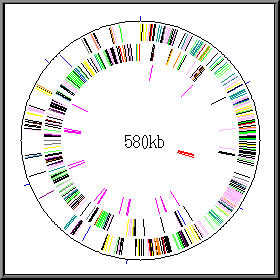


Characteristics and biology
Like other mycoplasmas, M. genitalium is pleomorphic (variable in shape) and depends on host-derived nutrients such as cholesterol in culture. It adheres to host cells using a specialized attachment organelle and grows slowly in laboratory media, which makes routine culture challenging. The organism’s compact genome made it a focus of research into the minimal set of genes required for cellular life.
Disease, diagnosis and clinical importance
M. genitalium can cause symptomatic urethritis in men and cervicitis or pelvic inflammatory disease in women, but it is also frequently detected in asymptomatic carriers. Diagnosis is primarily by nucleic acid amplification tests (NAATs) because culture is slow and insensitive. Treatment has been complicated by increasing antibiotic resistance; macrolide antibiotics have been widely used but resistance has emerged, and fluoroquinolones or other agents may be required when resistance is detected.
Uses in research and notable facts
The small genome of M. genitalium attracted attention from molecular biologists studying minimal genomes and the basic requirements for life. Its genome size and gene content have been compared with other organisms with reduced genomes, such as Candidatus Carsonella ruddii and small archaea like Nanoarchaeum. By contrast, the smallest known free-living bacterium is Pelagibacter ubique, which occupies a different ecological niche in the oceans.
Management, prevention and public-health considerations
- Diagnosis: NAATs are the preferred diagnostic method.
- Treatment: macrolides are commonly used but resistance requires alternative regimens; follow local guidelines and resistance testing where available.
- Prevention: safer-sex measures and partner notification reduce transmission; routine screening policies vary by jurisdiction due to differing prevalence and clinical impact.
Because M. genitalium combines clinical significance with unusual biological features, it remains an important organism in both infectious-disease practice and basic microbiology research. Ongoing surveillance of antibiotic susceptibility and further study of its biology help inform clinical guidelines and our understanding of minimal cellular systems.
Questions and answers
Q: What is Mycoplasma genitalium?
A: Mycoplasma genitalium is a small parasitic bacterium that lives on the ciliated epithelial cells of the primate genital and respiratory tracts.
Q: How small is the genome of Mycoplasma genitalium?
A: Mycoplasma genitalium has one of the smallest known genomes.
Q: What are some other very small bacteria?
A: Other very small bacteria include the endosymbiont Candidatus Carsonella ruddii and the recently discovered bacterium Nanoarchaeum.
Q: What is the smallest known free living bacterium?
A: The smallest known free living bacterium is Pelagibacter ubique with 1.3 Mb.
Q: Where does Mycoplasma genitalium live?
A: Mycoplasma genitalium lives on the ciliated epithelial cells of the primate genital and respiratory tracts.
Q: What is the size of Mycoplasma genitalium compared to other bacteria?
A: Mycoplasma genitalium is one of the smallest bacteria.
Q: Which recently discovered bacterium is very small?
A: Nanoarchaeum is a recently discovered bacterium that is very small.
Related articles
Author
AlegsaOnline.com Mycoplasma genitalium Leandro Alegsa
URL: https://en.alegsaonline.com/art/67955
Sources
- sciencemag.org : sciencemag.org/content/309/5738/1242
- sciencemag.org : sciencemag.org/content/270/5235/397
- cell.com : cell.com/retrieve/pii/S0092867412007763