
Mussaurus — an early sauropodomorph from the Late Triassic
Mussaurus is a small-to-medium early sauropodomorph dinosaur from Late Triassic Argentina. Known from hatchlings and adults, it illuminates growth, behavior and the early evolution toward giant sauropods.
Overview
Mussaurus (meaning "mouse lizard") is an early member of the sauropodomorph lineage of dinosaurs that lived in what is now southern Argentina during the Late Triassic, roughly 215 million years ago. Originally known from tiny, large-eyed juvenile skeletons, subsequent discoveries of larger individuals revealed that the taxon included both hatchlings and adults. Mussaurus is important for understanding the early stages of sauropod evolution and the changes in anatomy and life history that led to later gigantic, quadrupedal sauropods.
Image gallery
10 Images


Characteristics and growth
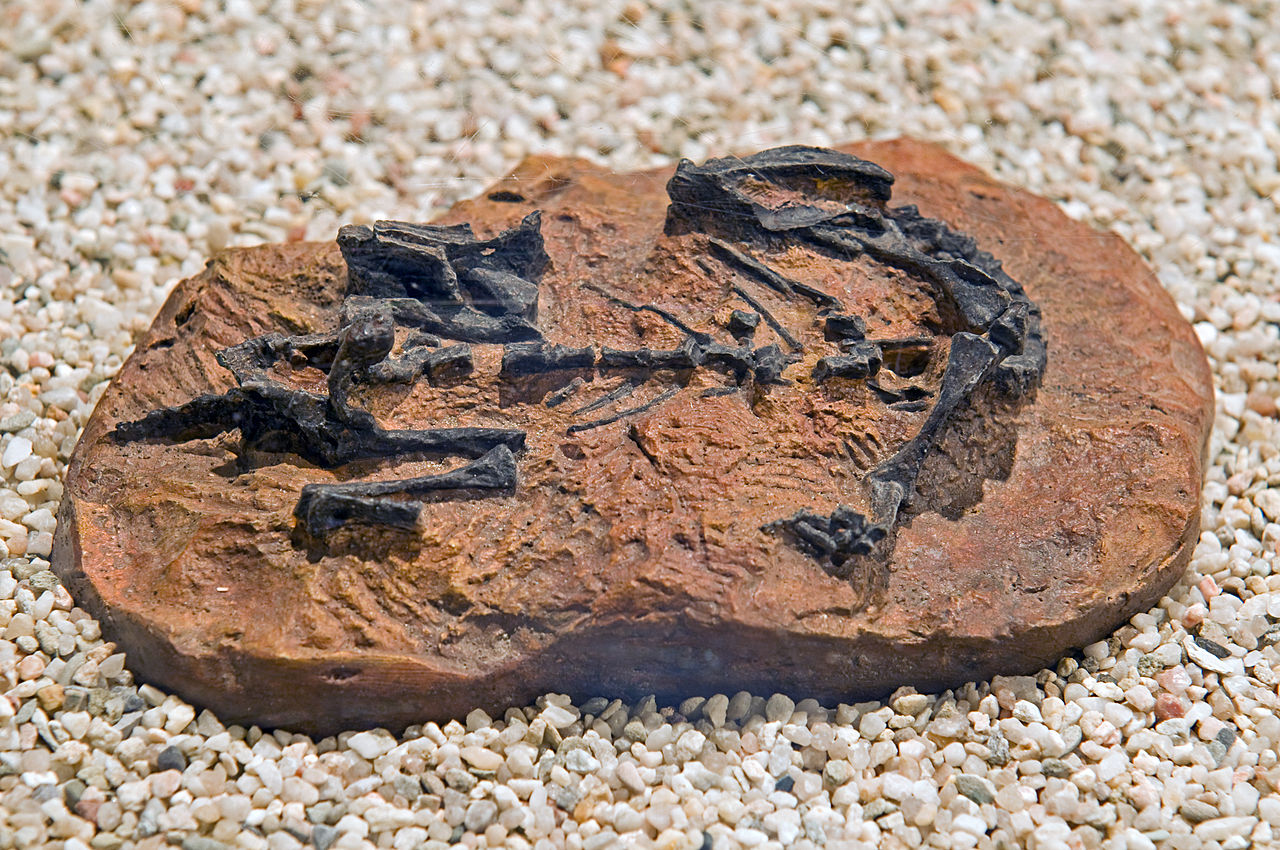
Juvenile Mussaurus specimens are among the smallest dinosaur skeletons ever found, with hatchlings only a few tens of centimetres long and proportionally large eyes and heads. Adult individuals were substantially larger — estimates place them at around 2.5–3 metres in length and a modest body mass for a dinosaur. Bone histology and changes in limb proportions through growth indicate pronounced ontogenetic change: juveniles had relatively long hindlimbs and a body suited for bipedal movement, while adults show limb proportions consistent with a more robust, potentially quadrupedal posture.
Discovery and fossil record
Fossils of Mussaurus were recovered from Triassic deposits in southern Argentina. The first finds included articulated, tiny skeletons that drew attention because of their minute size and good preservation. Later fieldwork uncovered larger juveniles and adult remains, enabling researchers to assemble a growth series. These specimens came from sedimentary contexts that also preserve other Triassic vertebrates and plants, helping reconstruct the environment Mussaurus inhabited.
Ecology, behavior and nesting
Evidence from bonebeds and grouped juvenile remains suggests that Mussaurus may have engaged in some level of social behavior. Clustering of young individuals has been interpreted as the product of gregarious nesting or juvenile aggregations, a behavior that could have provided protection from predators and facilitated growth. As an herbivore, Mussaurus fed on the Triassic vegetation available in its environment; its teeth and jaws were suited to cropping and processing plant material rather than active carnivory.
Classification and evolutionary significance
Placed within Sauropodomorpha, Mussaurus has long been discussed as a basal sauropodomorph (sometimes called a "prosauropod") with anatomical features that bridge more primitive forms and true sauropods. Comparative study of its vertebrae, pelvis and limb bones shows a mixture of ancestral and derived traits, supporting the idea that Mussaurus occupied a transitional position in the early evolution toward large, obligate quadrupedal sauropods. For general background on the Triassic period and sauropodomorph origins see Triassic and for the locality context see southern Argentina.
Notable facts and distinctions
- Mussaurus was named for the small size of the first-discovered skeletons, but adults were much larger than hatchlings.
- Ontogenetic changes in posture and proportion are well documented in this genus and inform debates about how sauropod body plans evolved.
- The genus contributes to discussions about early dinosaur sociality and nesting behavior; for evolutionary relationships see analyses that treat it as near the origin of true sauropods (transitional relationship).
Overall, Mussaurus offers a rare window into growth, behavior and anatomical change within an early branch of the dinosaur family tree, making it a key taxon for paleontologists studying the stepwise transformations that produced the later giant sauropods.
Questions and answers
Q: What does the name Mussaurus mean?
A: Mussaurus means "mouse lizard".
Q: When did Mussaurus live?
A: Mussaurus lived about 215 million years ago.
Q: Where was Mussaurus found?
A: Mussaurus was found in southern Argentina.
Q: What was the size of the first discovered Mussaurus skeletons?
A: The first discovered Mussaurus skeletons were hatchlings that were only 9-16 inches long (18-37 cm).
Q: Are there adult specimens of Mussaurus?
A: Yes, there are adult specimens of Mussaurus.
Q: How big could adult Mussaurus get?
A: Adult Mussaurus possibly reached 3 meters (10 feet) in length and weighed 70 kilograms (150 lbs).
Q: What is the evolutionary relationship between Mussaurus and true sauropods?
A: Mussaurus possesses anatomical features suggesting a close, possibly transitional evolutionary relationship with true sauropods.
Related articles
Author
AlegsaOnline.com Mussaurus — an early sauropodomorph from the Late Triassic Leandro Alegsa
URL: https://en.alegsaonline.com/art/67799
Sources
- tandfonline.com : tandfonline.com/doi/abs/10.1080/02724634.2013.769444