
Musikverein — Vienna's historic concert hall and the Golden Hall
Musikverein in Vienna, Austria, is a 19th-century concert hall famed for its acoustics, the Golden Hall, the Vienna Philharmonic residency, and the annual New Year's Concert broadcast worldwide.
Overview
The Musikverein is a prominent concert building in central Austria's capital, long regarded among the world's leading concert halls. Completed in 1870, it hosts an active season of orchestral and chamber music performances and is best known as the principal performance home of the Vienna Philharmonic.
Image gallery
10 Images




History and founding
The hall was commissioned by the Gesellschaft der Musikfreunde (Society of Friends of Music), an influential cultural association that sought to advance musical life in Vienna. The society received the site through the patronage of Emperor Franz Joseph, and the new building opened on 6 January 1870. Since then it has served as a focal point for Vienna's musical institutions, festivals and premieres.
Architecture, layout and principal rooms
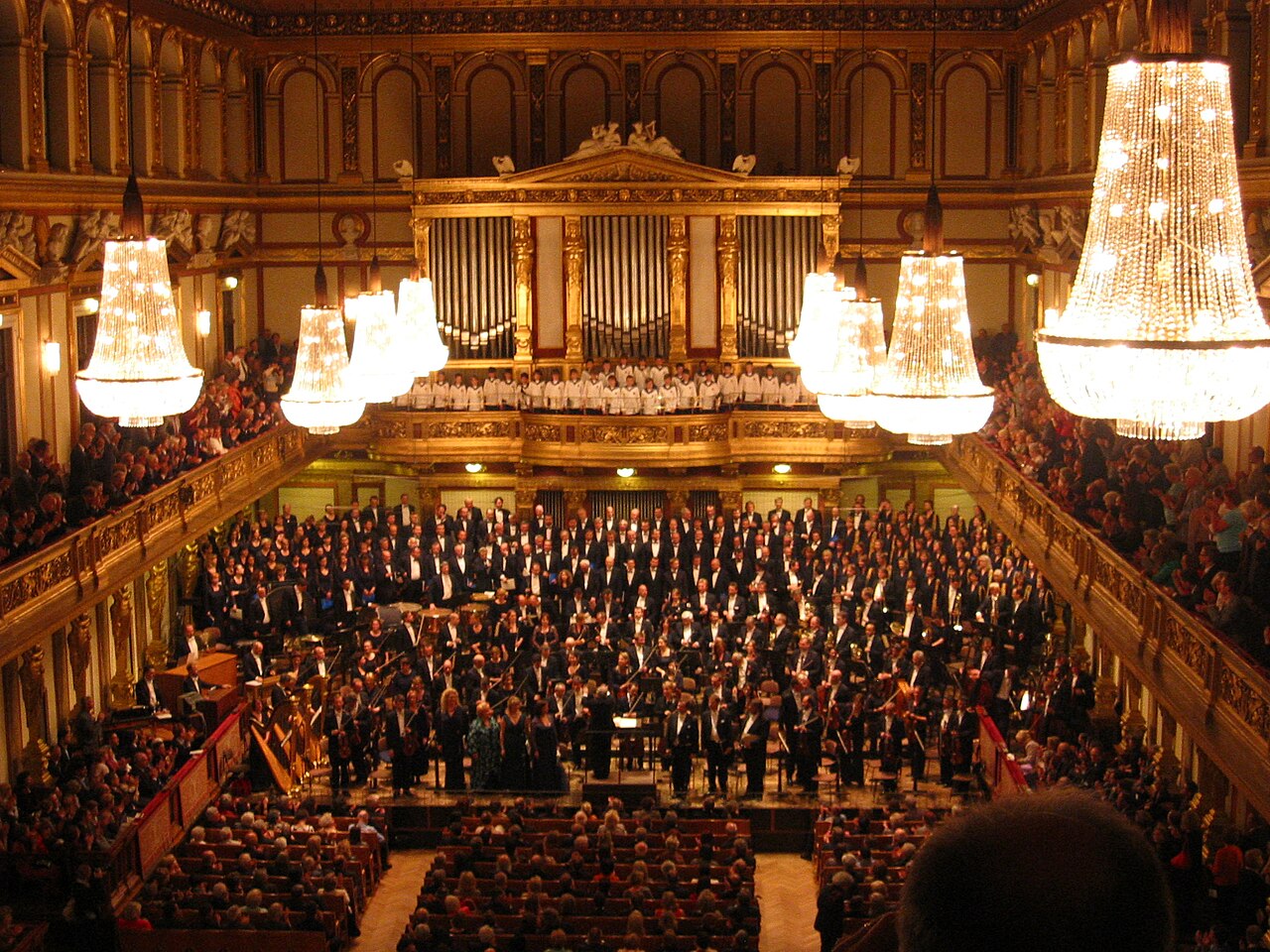
The Musikverein complex combines a richly decorated exterior with interiors that emphasize clarity of sound and elegant ornament. Its best-known space is the Goldener Saal (Golden Hall), a rectangular 'shoebox' auditorium whose proportions and finishes have been praised for producing warm, balanced acoustics. The building also contains smaller halls and salons used for chamber music, rehearsals and society functions.
- Goldener Saal: the large ceremonial hall used for major concerts.
- Chamber halls: smaller, more intimate rooms for recitals and academic events.
- Society spaces: administrative and exhibition rooms linked to the Gesellschaft der Musikfreunde.
Acoustics, organ and renovations
Acoustic scholars and performers frequently cite the hall's shape, volume and interior surfaces when explaining its celebrated sound. In 1907 an organ built by the Austrian firm Rieger was installed, adding capacity for large-scale choral and organ repertoire. Over time the building has undergone careful restorations to preserve decorative details while updating technical systems such as lighting and climate control.
Events, importance and traditions
Beyond its regular concert season, the Musikverein is internationally visible each year on 1 January, when the Vienna New Year's Concert is performed and broadcast to millions. The hall's combination of historical significance, resident ensembles, and frequent guest appearances by leading conductors and soloists keeps it central to Austria's musical identity.
Notable facts and visiting
- The Golden Hall seats around 1,744 people with additional standing room for several hundred, making it both grand and intimate for orchestral sound.
- The Gesellschaft der Musikfreunde continues to maintain the building and curate its artistic program.
- Visitors can attend public concerts, guided tours and special exhibitions that explain the hall's history and architecture.
While modern concert venues offer various technical advantages, the Musikverein remains a touchstone for performers and listeners who prize its historic atmosphere and acclaimed acoustic qualities. Its long-running traditions and association with Vienna's musical life make it a landmark for both scholars and music lovers.
Questions and answers
Q: What is the Musikverein in Vienna?
A: The Musikverein in Vienna is a famous concert hall where the Vienna Philharmonic Orchestra performs.
Q: When was the Musikverein opened?
A: The Musikverein was opened on January 6, 1870.
Q: Who built the Musikverein?
A: The Musikverein was built by the Gesellschaft der Musikfreunde (Society of Friends of Music), who were given the land by Emperor Franz Joseph.
Q: What was put in the Konzerthaus in 1907?
A: A beautiful organ was put in the Konzerthaus by the Austrian firm of organ builders Rieger in 1907.
Q: What is the name of the main auditorium in the Musikverein?
A: The name of the main auditorium in the Musikverein is the Goldener Saal (The Golden Hall).
Q: How many people can the Goldener Saal seat?
A: The Goldener Saal can seat 1,744 people and has standing room for another 300.
Q: What event is held in the Musikverein every year on January 1st?
A: The Vienna New Year's Concert is held in the Musikverein every year on January 1st, which is watched by millions of people in countries all over the world.
Related articles
Author
AlegsaOnline.com Musikverein — Vienna's historic concert hall and the Golden Hall Leandro Alegsa
URL: https://en.alegsaonline.com/art/67778