
Musée d'Orsay
Paris museum of 19th- and early-20th-century art housed in a former Beaux-Arts railway station, renowned for its Impressionist and Post-Impressionist collections.
Overview
The Musée d'Orsay is a major art museum located on the left bank of the Seine in Paris. It presents an extensive survey of European art produced roughly between the mid-19th century and the early 20th century. The museum is particularly famous for its holdings of Impressionism and Post-Impressionism, and for occupying an architecturally striking former railway terminal.
Image gallery
10 Images






Building and architecture
The museum occupies the former Gare d'Orsay, a Beaux-Arts railway station constructed for the 1900 Exposition Universelle. Key features of the original station—such as the grand train hall, the large clocks and a soaring iron-and-glass roof—were preserved and adapted during the conversion to a museum in the late 20th century. The transformation into a cultural institution involved significant conservation and redesign to install exhibition spaces while retaining the building's nineteenth-century character.
Collections and organization
The Musée d'Orsay's collections focus on art dating approximately from 1848 to 1914–1915 and encompass a range of media. Paintings are a central component, supported by paintings, sculpture, furniture and decorative arts, and photography. The displays are arranged to show stylistic developments and connections between movements such as Realism, Impressionism, Symbolism and early Modernism.
- Key media: oil paintings, sculptures, drawings, decorative arts, and early photographic work.
- Notable strengths: Impressionist and Post-Impressionist masterpieces and an integrated presentation of the period's visual culture.
Artists and notable works
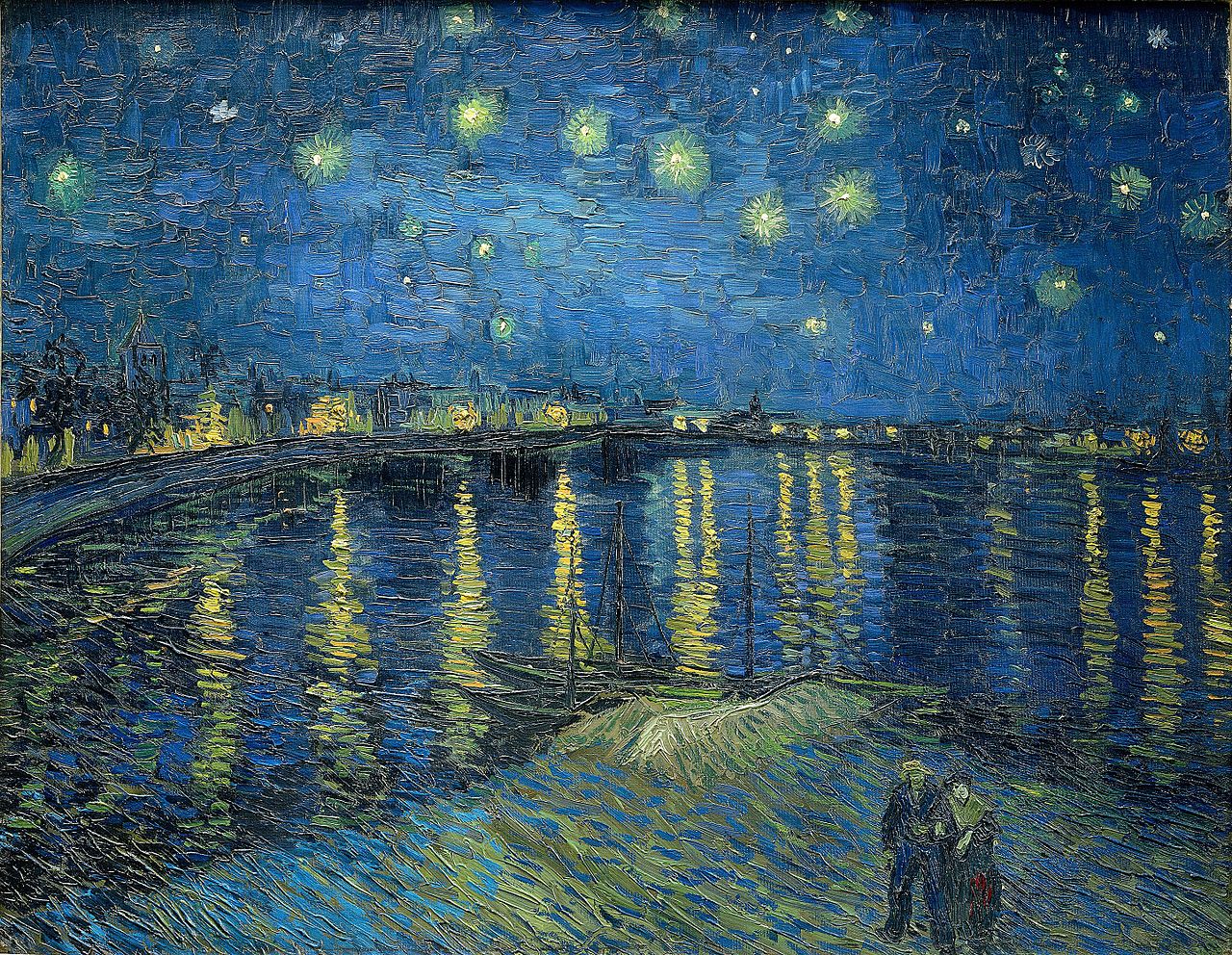
The collection includes canonical artists whose work helped reshape modern art. Visitors will encounter paintings and pieces by Claude Monet, Édouard Manet, Edgar Degas, Pierre-Auguste Renoir, Paul Cézanne, Georges Seurat, Alfred Sisley, Paul Gauguin and Vincent van Gogh, among others. These works are frequently cited in surveys of nineteenth-century painting and continue to be central to scholarship and public exhibitions.
History and public role
After decades in which the former station served various functions, the building was adapted as a museum to provide a dedicated home for nineteenth-century art. Since its opening as a museum in the 1980s, it has become an important cultural destination, attracting international visitors and scholars. The institution organizes temporary exhibitions, research programs and educational activities that contextualize its permanent collection and support ongoing study of the period.
Visiting and significance
The Musée d'Orsay remains notable for the combination of its carefully curated collections and its unusual setting. Exhibition galleries follow a logical chronological and thematic layout, making the museum accessible both to general visitors and to those seeking deeper study. Its holdings of Impressionist and Post-Impressionist work make it one of the world's most important centers for understanding the artistic shifts that led from academic painting to modern art.
Further resources: consult the museum's visitor information and current exhibitions through its official channels for opening hours, ticketing and special programs: Musée d'Orsay site, or relevant cultural portals Impressionism resources and national museum listings via museum directories.
Questions and answers
Q: What is the Musée d'Orsay?
A: The Musée d'Orsay is an art museum in Paris. It was originally built in 1900 as a railway station, and then converted into a museum in 1986.
Q: What type of art does the Musée d'Orsay exhibit?
A: The Musée d'Orsay exhibits mainly 19th century French art, including paintings, sculptures, furniture, and photography. It has an extensive collection of impressionist and post-impressionist masterpieces that is the largest in the world.
Q: Who are some of the painters whose work is featured at the Orsay?
A: Some of the painters whose work can be found at the Orsay include Monet, Manet, Degas, Renoir, Cézanne, Seurat, Sisley, Gauguin and Van Gogh.
Q: Why is it called 'the Impressionism museum'?
A: The Orsay is called 'the Impressionism museum' because it features many works by famous Impressionist painters such as Monet, Degas, Renoir and Van Gogh.
Q: When did it become a museum?
A: The building was first used as a railway station when it was built in 1900 but then became a museum in 1986.
Q: Where is the Musée d'Orsay located?
A: The Musée d'Orsay is located in Paris.
Q: What time period does its artwork cover?
A:The artwork featured at the Orsay covers from 1848 to 1915.
Related articles
Author
AlegsaOnline.com Musée d'Orsay Leandro Alegsa
URL: https://en.alegsaonline.com/art/67712