
Murchison meteorite — 1969 fall in Victoria, Australia
A well-studied carbonaceous chondrite that fell in 1969 near Murchison, Victoria. Noted for abundant water-altered minerals and a rich inventory of organic compounds with implications for early Earth chemistry.
Overview
The Murchison meteorite is the name given to a large stony meteorite that fell near the town of Murchison, Victoria in Australia on 28 September 1969. It is classified as a carbonaceous chondrite (CM group) and the total recovered material exceeds 100 kilograms. Because many fragments were collected immediately after the witnessed fall, Murchison became one of the most intensively examined meteorites in cosmochemistry and astrobiology.
Image gallery
7 Images




Composition and distinguishing features
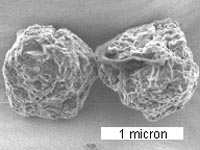
Murchison contains a mixture of primitive minerals and abundant volatile- and water-bearing phases. The rock is notable for its high content of hydrated silicates and fine-grained matrix, which record aqueous alteration on its parent body. In addition to mineral phases, Murchison contains a diverse suite of organic compounds. Studies have identified numerous simple and complex carbon-bearing molecules, including a variety of amino acids, carboxylic acids and related organics, many of which show isotopic signatures that differ from terrestrial material.
Fall, recovery and immediate observations
The fall was widely observed: a bright fireball appeared at about 10:58 am and the bolide fragmented in flight. Debris was scattered over an area greater than 13 square kilometres and individual pieces as large as 7 kg were recovered soon afterwards. One well-known fragment of about 680 g reportedly fell through a roof and came to rest in hay, an event often cited when discussing the meteorite's prompt retrieval and minimal terrestrial contamination (hay fragment).
Scientific importance and research
Murchison has been central to arguments that meteoritic material could have delivered prebiotic ingredients to the early Earth. Its organic inventory—measured in many laboratories and distributed to institutions worldwide—includes both protein and non-protein amino acids and other organics whose isotopic compositions imply an extraterrestrial origin. The meteorite also contains presolar grains and isotopic anomalies that preserve information about processes in the early solar system and in stellar environments prior to solar formation. For introductions to the organic findings see general summaries of organic compounds in meteorites and reviews of carbonaceous chondrites.
Preservation, distribution and study practices
Because the Murchison fall was observed and pieces were collected quickly, many samples are regarded as comparatively uncontaminated. Researchers therefore take special precautions when handling fragments—working in clean facilities, documenting provenance of pieces, and storing material under controlled conditions. Samples have been loaned to laboratories for chemical, isotopic and mineralogical studies, producing decades of publications that continue to refine our view of the meteorite's formation and alteration history.
Notable facts and continuing relevance
- Murchison remains one of the richest meteorites known for extraterrestrial organic matter and is frequently cited in studies of prebiotic chemistry.
- Its mix of hydrated minerals and organics makes it an important reference for understanding aqueous alteration on small bodies.
- Because fragments were widely distributed after the fall, Murchison material is held in multiple museum and research collections and continues to be re-examined with new analytical techniques.
Questions and answers
Q: What is the Murchison meteorite?
A: The Murchison meteorite is a meteorite that fell in Murchison, Victoria, Australia.
Q: Why is the Murchison meteorite famous?
A: The Murchison meteorite is famous because it is one of the most studied meteorites due to its richness in organic compounds.
Q: How much does the Murchison meteorite weigh?
A: The Murchison meteorite weighs over 100 kg.
Q: When did the Murchison meteorite fall?
A: The Murchison meteorite fell on September 28, 1969, at about 10:58 am.
Q: Where was the Murchison meteorite found?
A: The Murchison meteorite was found in an area larger than 13 km², with fragments up to 7 kg.
Q: What was the reaction of people when the Murchison meteorite fell?
A: People saw a bright fireball that then separated into three fragments before disappearing, leaving a cloud of smoke. About 30 seconds later, a tremor was heard.
Q: Did the Murchison meteorite cause any damage when it fell?
A: The Murchison meteorite caused damage when it fell as one of its fragments, weighing 680 g, broke through a roof and fell in hay.
Related articles
Author
AlegsaOnline.com Murchison meteorite — 1969 fall in Victoria, Australia Leandro Alegsa
URL: https://en.alegsaonline.com/art/67604
Sources
- lpi.usra.edu : The Meteorite Society database
- psrd.hawaii.edu : Planetary science research discoveries: glossary
- ncbi.nlm.nih.gov : Nonprotein amino acids from spark discharges and their comparison with the Murchison Meteorite amino acids
- ui.adsabs.harvard.edu : 1997Natur.389..265E
- doi.org : 10.1038/38460
- pubmed.ncbi.nlm.nih.gov : 9305838
- ui.adsabs.harvard.edu : 2001Natur.414..879C
- doi.org : 10.1038/414879a
- pubmed.ncbi.nlm.nih.gov : 11780054
- pha.jhu.edu : "Organic molecules in comets and meteorites and life on Earth. Department of Physics and Astronomy, Johns Hopkins University"
- news.bbc.co.uk : "Space rock contains organic molecular feast"
- pnas.org : "High molecular diversity of extraterrestrial organic matter in Murchison meteorite revealed 40 years after its fall"
- ui.adsabs.harvard.edu : 2010PNAS..107.2763S
- doi.org : 10.1073/pnas.0912157107
- ncbi.nlm.nih.gov : 2840304