
Mumtaz Mahal (Arjumand Banu Begum)
Arjumand Banu Begum, known as Mumtaz Mahal, was the chief consort of Mughal emperor Shah Jahan; her death inspired the Taj Mahal and she is remembered for her role in court life and cultural memory.
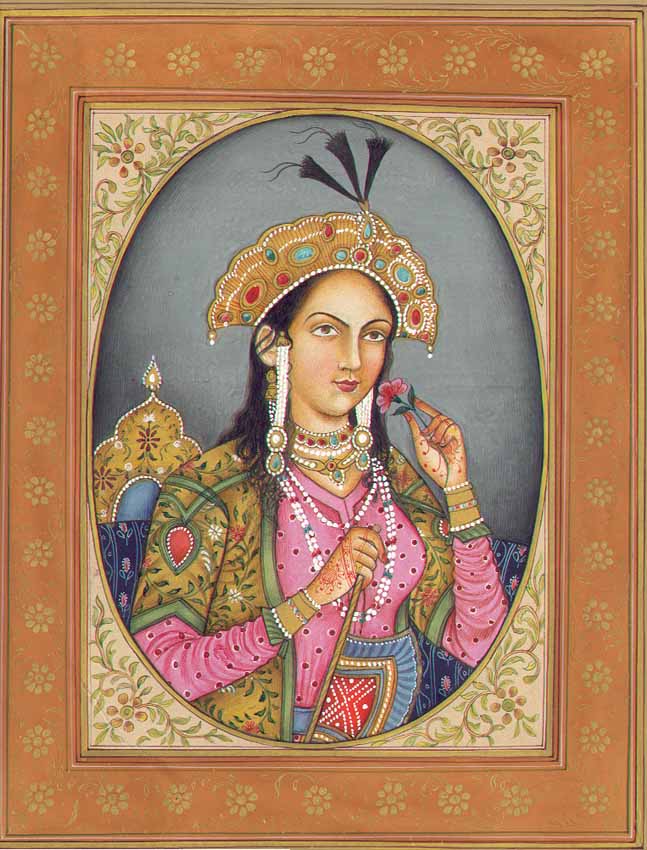
Arjumand Banu Begum, widely known by the sobriquet Mumtaz Mahal, was the principal wife and closest companion of the Mughal ruler Shah Jahan. She occupied a prominent position at the imperial court of the Mughal emperor, and contemporary accounts and later histories emphasize her beauty, poise and devotion. The popular name combines Persian elements: Mumtaz (often rendered as "the chosen" or "jewel") and Mahal ("palace"), reflecting the language and tastes of the period; Persian was the courtly idiom of the Mughal elite. Her familiar title is also discussed in biographical treatments and reference works on royal nomenclature that examine such nicknames.
Born into a family established at the Mughal court, Mumtaz Mahal married Shah Jahan early in his career and accompanied him in public and private life. She is widely reported to have borne many children and to have been a close confidante and adviser in domestic and charitable affairs. Sources note that she shared the emperor's travels and campaigns and that her presence at court had both emotional and ceremonial significance.
Mumtaz Mahal died while giving birth, an event that had great personal impact on Shah Jahan. In mourning he commissioned an elaborate white‑marble mausoleum to enshrine her memory. The tomb, completed under the patronage of the emperor and built in a synthesis of Persian, Islamic and Indian architectural traditions, is internationally known today as the Taj Mahal. The monument functions as a funerary complex and as a major statement of Mughal monumental art.
Image gallery
10 Images


Legacy and cultural significance
- Architectural legacy: the mausoleum commissioned by Shah Jahan remains a defining symbol of Mughal architecture and has influenced later memorial buildings.
- Historical memory: Mumtaz Mahal's life is often invoked in discussions of royal women, dynastic families and courtly culture in early modern South Asia.
- Popular culture: her story has been recurrently represented in literature, poetry, visual arts and tourism, where it is commonly associated with themes of love, loss and imperial patronage.
Direct documentary records by Mumtaz Mahal are limited, so historians rely on court chronicles, travelers' reports and architectural evidence to reconstruct her life and influence. For additional context on the period, readers consult biographies of Shah Jahan, studies of the Mughal empire, works on the Persianate court language and culture, and reference entries that address royal titles such as Mumtaz and household designations like Mahal. Further biographical summaries and analyses of her reputation appear in specialized articles and encyclopedias that treat prominent court figures.
Questions and answers
Q: Who was Mumtaz Mahal?
A: Mumtaz Mahal was the second wife of Shah Jahan, the Mughal emperor.
Q: What was Mumtaz Mahal's nickname?
A: Mumtaz Mahal's nickname was "Jewel of the palace" in Persian.
Q: What does Mumtaz Mahal's nickname mean?
A: Mumtaz Mahal's nickname means "Jewel of the palace" in Persian.
Q: Who gave Mumtaz Mahal her nickname?
A: Mumtaz Mahal's husband, Shah Jahan, gave her the nickname "Jewel of the palace" in Persian.
Q: What language does the name "Mumtaz Mahal" come from?
A: The name "Mumtaz Mahal" comes from the Persian language.
Q: What does the name "Mumtaz Mahal" mean in English?
A: The name "Mumtaz Mahal" does not have a direct English translation, but it roughly means something like "Exalted Palace" or "Chosen One of the Palace."
Q: Was Mumtaz Mahal a well-known figure in Mughal history?
A: Yes, Mumtaz Mahal is a well-known figure in Mughal history, largely due to her husband's construction of the famous Taj Mahal mausoleum in her honor.
Related articles
Author
AlegsaOnline.com Mumtaz Mahal (Arjumand Banu Begum) Leandro Alegsa
URL: https://en.alegsaonline.com/art/67506