
Mulberry (Morus): trees, fruit, cultivation, and uses
Mulberry (Morus) are deciduous trees native to Asia, Africa and the Americas, grown for edible clustered fruit and for leaves used in silkworm culture; overview of species, history, cultivation, and uses.
Overview
Mulberry is the common name for trees in the genus Morus, a small group of deciduous trees and large shrubs. Species occur naturally across warm parts of Asia, Africa and the Americas, and several taxa have been widely introduced beyond their native ranges. Mulberries produce characteristic clustered fruits, attractive foliage, and fast early growth, which has made them useful both in orchards and as urban shade trees.
Image gallery
10 Images




Botanical characteristics
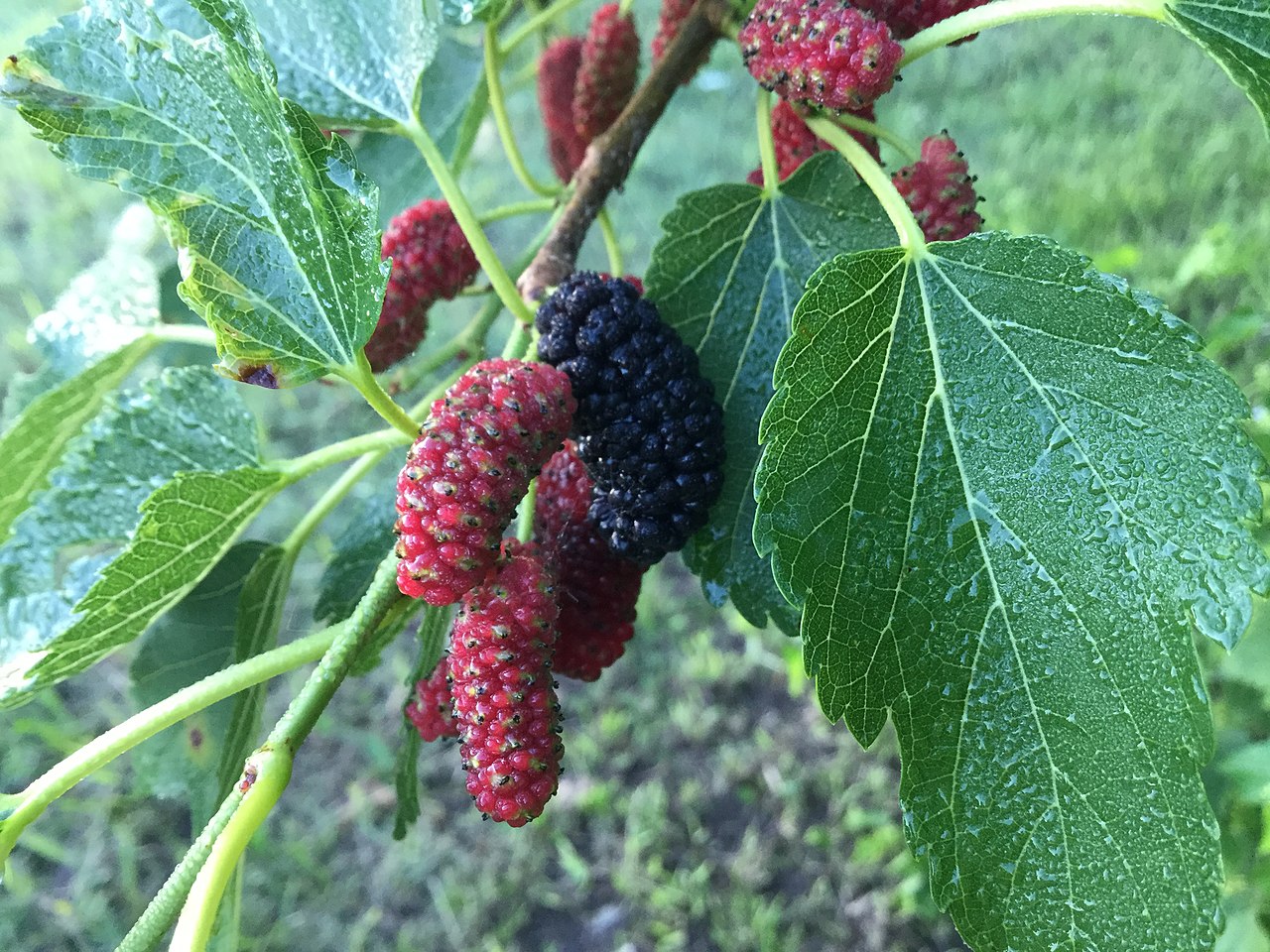
Mulberries have simple, often lobed leaves with a coarse texture. Trees usually grow rapidly when young but slow with age; many cultivated specimens remain well under 15 metres tall. Flowers are small and wind- or insect-pollinated, while the edible fruit is a compact cluster of tiny drupelets that ripen to white, red, purple or nearly black. The aggregate fruit is sometimes described as a multiple or compound fruit because it forms from a tight cluster of flowers.
- Leaves: simple, alternate, sometimes deeply lobed.
- Flowers: inconspicuous, unisexual or bisexual depending on species.
- Fruit: elongated clusters of sweet drupelets; commonly eaten fresh or processed.
- Growth: quick initial growth, later slower development; many species tolerate varied soils.
History and relationship with humans
Mulberries have been associated with human activity for millennia. The white mulberry (Morus alba) was cultivated in China largely to feed Bombyx mori, the domesticated silkworm, and the species spread with sericulture. Other species, such as the black mulberry (Morus nigra) and the red or American mulberry (Morus rubra), were prized for fruit flavor and local uses. Introductions for fruit production, shade, and silkworm forage have led to naturalized and sometimes invasive populations in regions outside native ranges.
Uses and culinary value
Mulberry fruit are sweet and juicy when ripe; flavors range from mild (often in white mulberry) to strong and richly aromatic (commonly in black and red mulberries). They are eaten fresh, dried, or used in pies, jams, syrups, wines, and beverages. The leaves are an essential food for silkworms and have been used as forage. Wood has limited specialized uses, and the trees are valued in gardens for shade and ornamental form.
Cultivation and propagation
Mulberries are adaptable and easy to grow. They root readily from cuttings or layers and may also be raised from seed, though seedlings can vary in quality and fruit characteristics. Commercial orchards often use clonal propagation or grafting to preserve desirable cultivars. Management considerations include pruning to control size, collecting droppings of ripe fruit to avoid staining, and monitoring for hybridization between cultivated and native species.
Notable species and distinctions
- Morus alba (white mulberry): native to East Asia; widely planted for silkworms and often naturalized.
- Morus nigra (black mulberry): valued for richly flavored fruit, traditionally cultivated in parts of western Asia and Europe.
- Morus rubra (red/American mulberry): native to eastern North America, with distinctive local uses and ecological roles.
Where mulberries are established they can provide seasonal fruit, wildlife food, and cultural connections to sericulture and traditional foods. Cultivators balance their utility with issues such as litter from fallen fruit and the potential for non-native varieties to spread into wild habitats.
For further reading on taxonomy, cultivation practices and species lists see resources linked here: status and classification, fruit biology, and practical guides at regional horticultural sites or culinary references.
Questions and answers
Q: How many species of trees are in the genus Mulberry?
A: Mulberry is a genus of 10-16 species of trees.
Q: Where are mulberries native to?
A: Mulberries are native to warm regions of Asia, Africa, and the Americas, with most of the species native to Asia.
Q: What is the height of mature mulberry trees?
A: Mulberries grow fast when young but soon become slow-growing and rarely grow over 10-15 meters tall.
Q: What is the fruit of the black mulberry and the red mulberry like?
A: The fruit of the black mulberry, native to southwest Asia, and the red mulberry, native to eastern North America, have the strongest flavor.
Q: What is the flavor of the fruit of the white mulberry like?
A: The fruit of the white mulberry, an east Asian species, has a very weak flavor.
Q: How are mulberries usually planted?
A: Mulberries can be grown from seeds, which is the best idea as seedling-grown trees are generally healthier. However, they are often planted from large pieces cut from other mulberry trees, which easily take root.
Q: For what culinary uses are mulberries used?
A: The fruit grows in bunches, is red to dark purple in color, edible, and sweet with a good flavor in several species. The fruit is used in pies, tarts, and wines.
Related articles
Author
AlegsaOnline.com Mulberry (Morus): trees, fruit, cultivation, and uses Leandro Alegsa
URL: https://en.alegsaonline.com/art/67414
Sources
- doi.org : 10.1007/s00497-005-0018-9