
Mouthpiece (brass)
Component of brass instruments that the player buzzes into; its shape and size strongly influence tone, range, comfort, and response across trumpet, trombone, tuba and related instruments.
A brass mouthpiece is the removable part of a brass instrument into which a player buzzes their lips to initiate sound. By focusing and shaping the airstream and lip vibration, the mouthpiece sends vibrations into the instrument’s tubing, where they are amplified and tuned. Mouthpieces exist for a wide family of instruments — trumpet, cornet, trombone, euphonium, tuba and others — and are available in many shapes and sizes to suit different players, styles, and musical demands. For a general description of the instruments that use them see brass instrument.
Image gallery
3 Images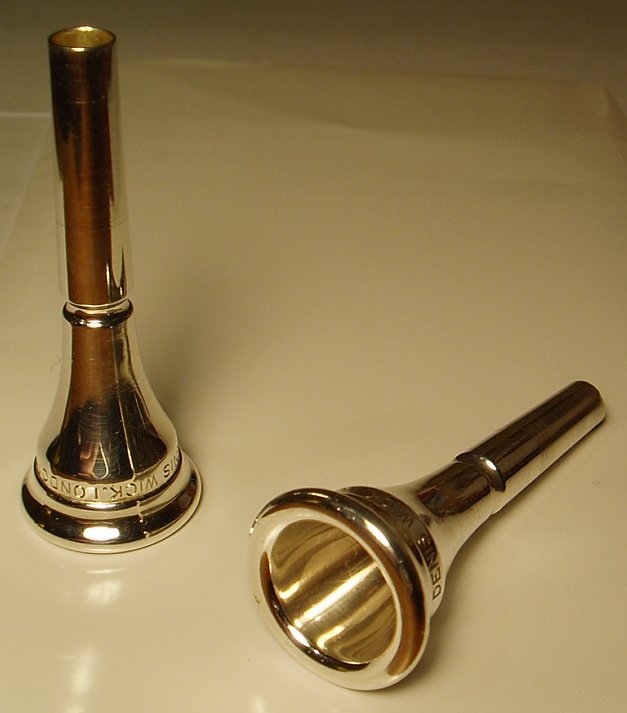


Parts and basic characteristics
A mouthpiece is typically described by several interacting features: the rim (the edge the player contacts), the cup (a hollowed bowl behind the rim), the throat (a constriction between cup and backbore), the backbore (the tapered interior section toward the shank) and the shank (the part that fits into the instrument). Each element influences comfort, control and sound. Manufacturers vary the overall diameter, rim contour, cup depth and throat size to create different playing characteristics.
How design affects sound and playability
Smaller diameters and shallower cups generally make high registers easier and produce a brighter, more focused tone; larger diameters and deeper cups tend to support a darker, fuller sound and greater low-frequency response. A wider rim can improve endurance and stability for some players, while a sharper or more rounded rim affects flexibility and articulation. The throat and backbore play a large role in resistance, projection and timbre: a larger throat/backbore lowers resistance and can yield greater volume but may require more air control.
Instrument-specific considerations
Larger instruments use larger mouthpieces because they need greater volume of air and a larger vibrating air column to produce low pitches; conversely, small instruments use smaller mouthpieces to facilitate higher pitches. Within instrument families there are also variations: for example, cornet and trumpet mouthpieces look similar but often differ in cup shape and shank taper to suit subtle differences in instrument bore and desired sound. Many players use different mouthpieces for orchestral, solo or marching contexts.
History and development
Mouthpieces evolved from simple funnels and early horn fittings to the more refined, standardized shapes emerged in the 19th and 20th centuries as valve and bore designs developed. Advances in manufacturing allowed more consistent dimensions and interchangeable parts, which helped players experiment with combinations that matched their physiology and musical aims. Modern mouthpieces are produced in brass and commonly plated or finished for comfort and durability.
Uses, maintenance and selection
Players select mouthpieces by balancing tone, range and comfort. Common considerations include rim size for lip contact, cup depth for tonal color, and throat size for resistance. Materials and finishes (silver, gold plating, stainless or plastic) can affect feel and, to a lesser extent, maintenance. Regular cleaning and inspection of the shank and cup help preserve a seal and hygienic playing surface.
Notable distinctions and practical advice
There is no universally “best” mouthpiece; choices depend on anatomy, repertoire and technique. Teachers often recommend gradual experimentation and guidance from experienced players or teachers rather than abrupt changes. Because mouthpiece properties interact with an instrument’s bore, tuning and the player’s embouchure, small adjustments can have noticeable effects on intonation, endurance and tone color.
Questions and answers
Q: What is a brass mouthpiece?
A: A brass mouthpiece is the part of a brass instrument that a player blows into to make a sound.
Q: What is the purpose of a mouthpiece?
A: The purpose of a mouthpiece is to send vibrations down the instrument to make a musical note.
Q: Why are larger mouthpieces used on larger instruments?
A: Larger mouthpieces are used on larger instruments because a larger mouthpiece makes a lower sound, and bigger instruments make lower sounds.
Q: Why are smaller mouthpieces used on smaller instruments?
A: Smaller mouthpieces are used on smaller instruments because a smaller mouthpiece makes a higher sound, and smaller instruments make higher sounds.
Q: What determines the size of the mouthpiece used?
A: The size of the mouthpiece used is determined by the size of the instrument.
Q: What does a larger mouthpiece make?
A: A larger mouthpiece makes a lower sound.
Q: What does a smaller mouthpiece make?
A: A smaller mouthpiece makes a higher sound.
Related articles
Author
AlegsaOnline.com Mouthpiece (brass) Leandro Alegsa
URL: https://en.alegsaonline.com/art/67175
Sources
- westmusic.com : Facts about parts of a brass mouthpiece
- kentfoss.com : A study of brass mouthpieces
- musiccentralwebsite.com : All the parts of a brass mouthpiece
- 4.0
- 4.1
- abimusic.com : Information on different mouthpiece styles, and how they make a brass instrument sound.
- ibowtie.com : information on rim contours
- ibowtie.com : Information on cup depths
- ibowtie.com : Information on trumpet throats and backbores
- gwmouthpieces.com : Information about steel and titanium mouthpieces