
Mountain goat (Oreamnos americanus)
A North American alpine ungulate adapted to steep, rocky terrain. This article summarizes its appearance, behavior, habitat, reproduction, predators, and interactions with people.
The mountain goat, Oreamnos americanus, is a large, hardy ungulate native to the high mountains of northwestern North America. Often called the Rocky Mountain goat, it is the sole living species of the genus Oreamnos. Mountain goats specialize in life at high elevations where snow, wind and sparse vegetation shape their seasonal movements and daily habits. Their strong climbing ability, sure-footed hooves and insulating coat make them one of the most recognizable alpine mammals in their range.
Image gallery
10 Images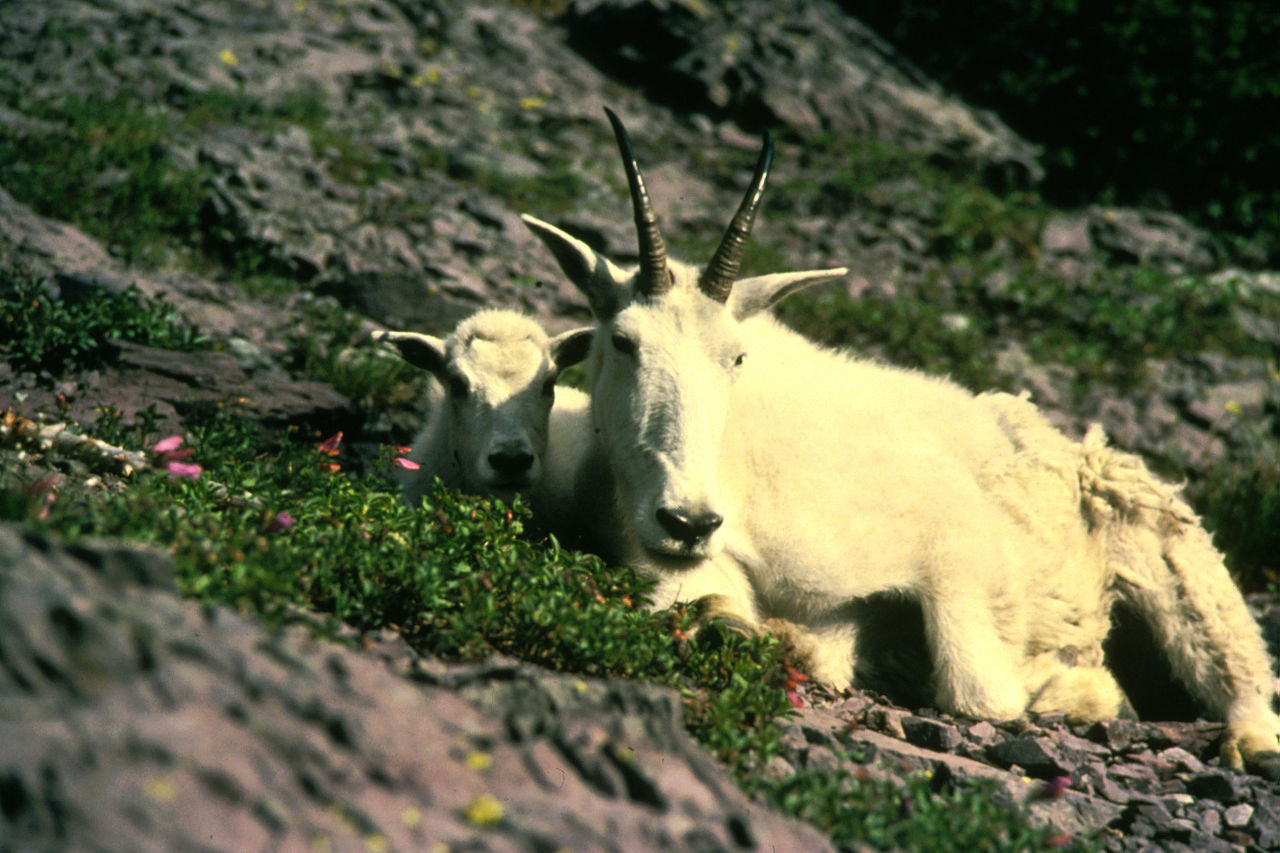


Description and physical adaptations
Adults are compact and muscular with relatively short legs and a thick fleece. The dense undercoat and long, coarse outer hairs insulate against cold and wind; during warmer months they shed some of the woolly underfur. Both sexes have black, slightly curved horns made of keratin that are used for defense and social interactions. The hooves are cloven with a rough, rubbery pad that improves grip on steep, rocky surfaces.
- Coat: White to off-white, providing camouflage on snowfields.
- Horns: Present in males and females; shapes and size differ among individuals and with age.
- Feet: Split hooves with concave undersides and soft pads for traction.
- Size: Shoulder height typically around 90–120 cm (3–4 ft), with variation by sex and region.
Behavior, social structure and diet
Mountain goats are primarily herbivorous, feeding on grasses, sedges, herbs, shrubs, lichens and mosses depending on season and locality. They spend much of their time foraging on alpine meadows and talus slopes and often move to ledges and cliffs to rest and avoid predators. Social organization varies: females (nannies) with young commonly form loose groups in summer, while adult males (billys) may be solitary or form small bachelor groups outside the breeding season. Activity patterns can shift with weather and human disturbance.
Common predators include large carnivores such as cougars and wolves, and scavengers or avian predators may take young animals. When threatened, mountain goats rely on steep, inaccessible terrain and aggressive displays or physical defense, particularly by females protecting kids.
Reproduction and life cycle
The breeding season, or rut, occurs in the autumn. After mating, females undergo a gestation of roughly six months and typically give birth to one kid in late spring or early summer, when forage quality improves. Newborns are agile within days and begin climbing with their mothers shortly after birth. Young may remain with their mother through their first year; dispersal patterns vary, and father-offspring associations are uncommon.
Range, conservation and human interactions
Native populations occur in the Rocky Mountains, Coast Mountains and parts of the Pacific Northwest and Alaska. Mountain goats have been introduced or expanded into some areas outside their original distribution, producing local management and ecological questions. Populations are generally stable in many regions, but local declines can result from overharvest, habitat disturbance, or increased predation. People encounter mountain goats at alpine trails and parks; because they are wild animals adapted to steep terrain, close approaches can be dangerous and wildlife managers advise keeping distance and following local guidelines.
For further reading and field identification resources, consult regional wildlife guides and conservation agency pages such as those indexed at species profiles, range maps at distribution summaries, taxonomic references at genus information, and public safety guidance for alpine visitors at park advisories.
Questions and answers
Q: What is a mountain goat?
A: A mountain goat is a species of goat that lives in North America.
Q: What is another name for the mountain goat?
A: The mountain goat is also known as the Rocky Mountain goat.
Q: Where do mountain goats like to live?
A: Mountain goats like to live on high elevations.
Q: What do mountain goats eat?
A: Mountain goats eat grasses, lichens, and leaves.
Q: When does the female mountain goat become pregnant?
A: The female mountain goat becomes pregnant in November, the only month they are together.
Q: What are the names of the mother, father, and baby mountain goats?
A: The mother mountain goat is called a nanny, the male is called a billy, and the baby is called a kid.
Q: When do the male and female mountain goats meet?
A: The male and female mountain goats only meet in November which is the mating month.
Related articles
Author
AlegsaOnline.com Mountain goat (Oreamnos americanus) Leandro Alegsa
URL: https://en.alegsaonline.com/art/67130