
Mount Logan — Canada's highest peak
Mount Logan is Canada's highest mountain (5,959 m) in Yukon’s Kluane National Park. A vast, heavily glaciated massif and the second-highest peak in North America, it attracts scientific study and technical mountaineering.
Overview
Mount Logan is the highest mountain in Canada and the dominant summit of the Saint Elias range. With an elevation commonly given as 5,959 metres, it is widely cited as the second-highest peak in North America, after Denali. The mountain was named for Sir William Edmond Logan, founder of the Geological Survey of Canada, and sits within a large protected area in the far southwest of Yukon.
Image gallery
6 Images


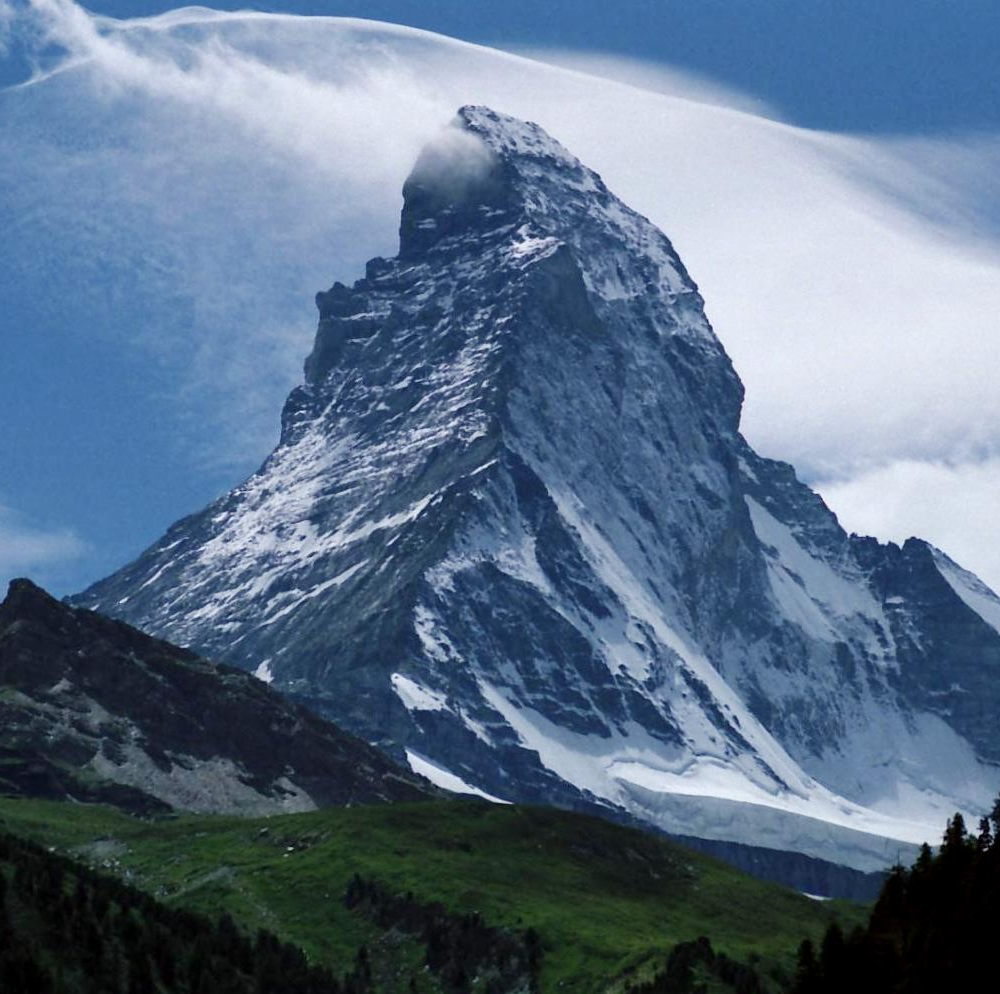

Location and massif
Mount Logan lies inside Kluane National Park and Reserve and is part of a complex massif rather than a single, isolated peak. The massif includes multiple summits, eleven of which rise above 5,000 metres, and its broad, rugged structure gives Logan an exceptional footprint among non-volcanic mountains.
Geology and glaciation
The Saint Elias Mountains result from active tectonic uplift where Pacific-derived plates interact with the North American plate, producing steep relief and rapid mountain-building. Persistent cold and heavy snowfall have created an extensive ice cap on Logan; localized ice thicknesses reach many hundreds of metres and feed numerous outlet glaciers. Because of its size and persistent accumulation, Logan is often described as having one of the largest base circumferences of any non-volcanic mountain on Earth.
Climate
Climatic conditions on Mount Logan are extreme. High plateaus and upper slopes experience long, severe winters with mean temperatures far below freezing and short, cool summers that rarely eliminate the summit ice. The combination of latitude, elevation, and extensive glaciation makes weather unpredictable and often severe for extended periods.
Mountaineering history
The first documented successful ascent of Mount Logan took place in the early 20th century, led by an organized expedition. Since that time, Logan has remained a serious objective for experienced alpine teams because of its remoteness, complex glacier travel, crevasse hazard, and often-prolonged bad weather. Typical expeditions require long approaches over icefields, careful route-finding, high-camp logistics and self-sufficiency.
Common routes and challenges
Routes up Logan tend to favor broad ridges and glaciered approaches rather than steep rock faces; nonetheless, hazards include deep crevasses, avalanche-prone snow slopes, sudden storms and extreme cold. Access to the mountain is remote: most teams rely on aircraft to reach base areas within the protected region, then travel over ice for several days to reach higher camps.
Scientific and conservation importance
Because of its extensive ice mass and active uplift, Mount Logan is a focus for glaciological and climatological research as well as tectonic studies. The mountain and surrounding valleys support alpine biodiversity and are protected within park boundaries to preserve wilderness values and scientific resources. Visitors and researchers must follow park regulations to limit environmental impact and respect the area's cultural and natural heritage.
Cultural and regional significance
Mount Logan is a prominent landmark in Yukon and an element of the broader landscape that links Canada’s northern ranges to adjacent protected areas. The peak lies within lands long used and stewarded by Indigenous peoples; modern management of the area takes conservation, recreation and cultural values into account.
Further information
- General overviews and park guidance: overview pages and Kluane National Park.
- Comparative listings for North American peaks: continent listings and references to Denali.
- Geological and massif studies: massif research and reports on base morphology.
- National resources and expedition information: national databases.
This entry summarizes widely known facts about Mount Logan’s geography, climate, and human significance. For technical climbing advice, detailed route descriptions, or the latest scientific findings, consult authoritative mountaineering guides, park authorities and peer-reviewed research.
Questions and answers
Q: What is the name of the highest mountain in Canada?
A: The highest mountain in Canada is Mount Logan.
Q: What is the rank of Mount Logan in North America?
A: Mount Logan is the second-highest mountain in North America, after Denali.
Q: Who was the mountain named after and what was his profession?
A: The mountain was named after Sir William Edmond Logan, a Canadian geologist and the founder of the Geological Survey of Canada (GSC).
Q: Where is Mount Logan located?
A: Mount Logan is located in Kluane National Park and Reserve in southwestern Yukon.
Q: Which record people think Mount Logan holds?
A: People think that Mount Logan has the largest base circumference of any non-volcanic mountain on Earth.
Q: How many peaks over 5,000 meters does the Mount Logan massif have?
A: The Mount Logan massif has eleven peaks over 5,000 meters (16,400 feet).
Q: What are the temperature conditions on and near Mount Logan?
A: Temperatures are extremely low on and near Mount Logan. On the 5,000 m (16,400 ft) high plateau, air temperature stays around -45°C (-49°F) in the winter. It reaches near freezing in summer.
Related articles
Author
AlegsaOnline.com Mount Logan — Canada's highest peak Leandro Alegsa
URL: https://en.alegsaonline.com/art/67055
Sources
- bivouac.com : "Mount Logan"
- pc.gc.ca : "Kluane National Park and Reserve of Canada"
- nrcan.gc.ca : "Mount Logan"
- virtualmuseum.ca : "Mount Logan: Canadian Titan"