
Mount Fraser: an extinct scoria cone near Beveridge, Victoria
Mount Fraser is an extinct volcanic scoria cone near Beveridge, Victoria, Australia. It features two craters, historical associations with early explorers and Ned Kelly, and a scoria quarry used for construction.
Overview
Mount Fraser is an extinct volcanic scoria cone located near Beveridge in central Victoria, Australia. The hill rises approximately 120 metres above the surrounding plain and has a base circumference of about 1,200 metres. Geologically it is the product of basaltic volcanic activity and is estimated to have last erupted roughly one million years ago. The site is recognised for its natural and cultural values and appears on heritage registers.
Image gallery
2 Images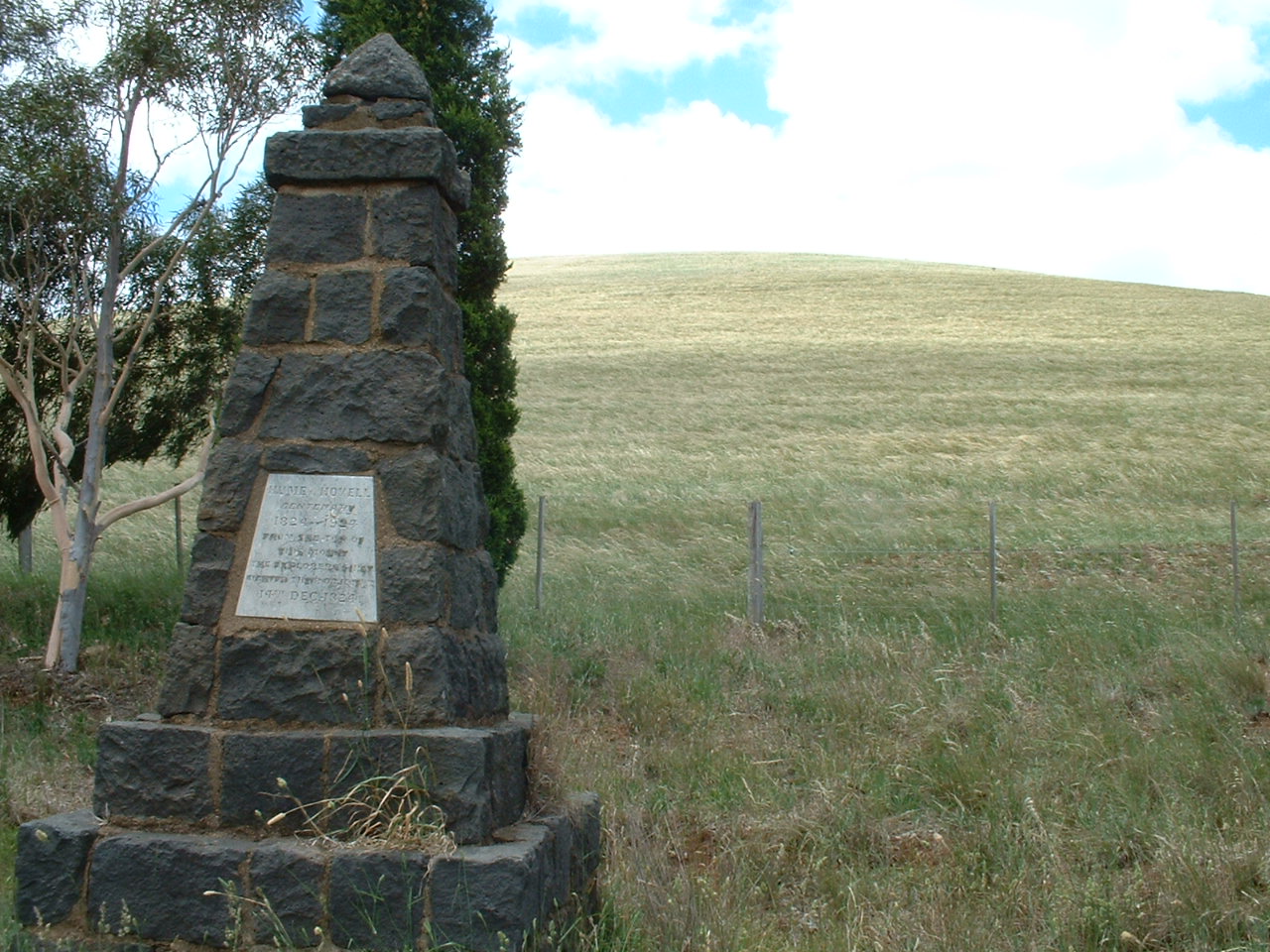

Physical characteristics
The cone comprises weathered scoria and basaltic material typical of small monogenetic volcanoes. There are two distinct summit depressions: one broad, shallow crater and a second smaller, enclosed crater. The larger crater forms a low rim that affords panoramic views across the surrounding agricultural landscape. Scoria from the cone is relatively porous and lightweight, a property that has made it useful for local construction and landscaping.
History and cultural significance
European discovery and early ascent are part of Mount Fraser's recorded history. Explorers Hamilton Hume and William Hovell climbed the cone on 14 December 1824, using the elevation to survey the surrounding country and sight Port Phillip Bay. The feature has also been known by older names such as "Mount Bland" and "Big Hill" in nineteenth-century accounts. The area immediately surrounding Mount Fraser has cultural links to the bushranger Ned Kelly, who was born nearby; this association contributes to its local historic interest.
Uses and modern context
Mount Fraser has served several practical and recreational roles. A scoria quarry operates on its flank to supply lightweight rock for building and roadworks in the Melbourne region; this commercial use has modified part of the cone but the summit and craters remain distinct. The hill's slopes and wind-exposed ridgelines have been used informally for glider launching and model aviation in the past, taking advantage of the reliable updrafts.
Conservation and access
Mount Fraser is recorded in Australian heritage listings reflecting both its geologic rarity in the local landscape and its historic associations. Public access is subject to local land management and quarrying operations; visitors should observe signage and private property boundaries. For further context on regional volcanism and management of volcanic landforms see general geological and heritage resources such as volcanic cone guides, regional entries for Beveridge and Victoria, and local history pages relating to early exploration and settlement.
Quick facts
- Type: extinct scoria cone / basaltic volcano (see volcano types)
- Height: about 120 metres above surrounding plain
- Base circumference: roughly 1,200 metres
- Crater count: two (one wide and shallow, one small and closed)
- Last eruption: approximately one million years ago (Pleistocene)
- Notable associations: ascent by Hume and Hovell; nearby birthplace of Ned Kelly)
For more historical references and local details consult regional heritage entries and community history pages: bushranger history, aviation activities, quarry information at local quarry reports, and construction-use notes for Melbourne building materials. Additional general resources are available through broader geological and heritage portals.
Questions and answers
Q: What is Mount Fraser?
A: Mount Fraser is a volcanic cone located near Beveridge, Victoria, Australia.
Q: When did Mount Fraser last erupt?
A: Mount Fraser last erupted about one million years ago and is now extinct.
Q: How tall is Mount Fraser?
A: Mount Fraser is about 120 metres in height above the surrounding land.
Q: How big is the distance around the base of Mount Fraser?
A: The distance around the base of Mount Fraser is 1200 metres.
Q: What are the features of the two craters on Mount Fraser?
A: One crater on Mount Fraser is wide and shallow while the other is small and closed.
Q: Who were the first explorers to climb Mount Fraser?
A: Hamilton Hume and William Hovell were the first explorers to climb Mount Fraser on 14 December 1824, and saw Port Phillip Bay.
Q: What is the significance of Mount Fraser in Australian history?
A: Mount Fraser was a site for flying gliders and is listed on the Australian Heritage database. It was also known as Mount Bland and Big Hill in the past, and the bushranger Ned Kelly was born near the volcano. Additionally, there is a quarry on the side of the hill which digs out scoria for building in Melbourne.
Related articles
Author
AlegsaOnline.com Mount Fraser: an extinct scoria cone near Beveridge, Victoria Leandro Alegsa
URL: https://en.alegsaonline.com/art/67027
Sources
- dpi.vic.gov.au : "Mount Fraser"
- mcmc.org.au : "Site 37 Mount Fraser Eruption Point"
- environment.gov.au : "Mount Fraser"
- redreaming.info : "Beveridge"
- catalogue.nla.gov.au : "Returning home"
- mindat.org : "Hematite from Fe Quarry, Mt. Frazer, Beveridge"