
Mound Builders: Indigenous earthen monuments of Eastern North America
Earthen mounds built by diverse Indigenous cultures across eastern North America from the Archaic through the Mississippian eras. Overview of forms, cultures, functions, history, and modern stewardship.
Overview
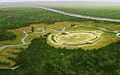 The phrase "Mound Builders" has been used historically to describe a wide range of Indigenous peoples who constructed artificial earthworks and mounds across what is now the eastern United States and parts of the Southeast and Midwest. Scholars generally avoid the label as a single cultural designation because the earthworks were created by multiple cultures over millennia. The mounds vary in age, form and purpose, with the earliest known sites dating to the Late Archaic period and major centers continuing into the historic era.
Types, forms and construction
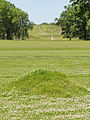
Mounds and earthworks include many distinct forms: conical burial mounds, platform mounds supporting structures, long earthen ridges and embankments, and effigy mounds carved into animal shapes. Construction typically used basket-loaded soil, clay, sand or shell and required coordinated, sustained labor. Some common types are:
- Conical mounds—often used for burials or mortuary ceremonies.
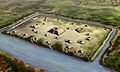
- Platform mounds—flat-topped mounds used for public buildings, elite residences, or temples.
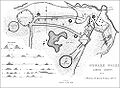
- Geometric and enclosure earthworks—large geometric shapes, plazas and walls sometimes aligned to landscape or sky.
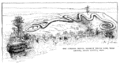
- Effigy mounds—earthworks in animal or human forms, exemplified by the Serpent Mound.
Major cultures and notable sites
Different archaeological traditions produced mounds at different times and places. Significant examples include:
- Watson Brake (northeast Louisiana, c. 3500 BCE) — among the earliest dated large mound complexes in North America.
- Poverty Point (Louisiana, c. 1650–700 BCE) — a complex of mounds and ridges known for organized layout and evidence of long-distance exchange.
- Adena and Hopewell traditions (Ohio River valley and surrounding areas, roughly 1000 BCE–500 CE) — noted for burial mounds and geometric earthworks such as the Newark Earthworks.
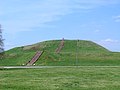
- Mississippian culture (c. 800–1600 CE) — built large platform mounds and towns, the largest known example being Cahokia (Monks Mound) near modern St. Louis.
- Fort Ancient and other Late Precontact cultures — creators of distinctive effigy mounds such as Serpent Mound (Ohio), although dates and cultural affiliations can be debated.
Functions and social significance
Mounds served multiple roles: burial monuments and mortuary centers, ceremonial and communal plazas, platforms for public buildings, markers of territorial or cosmological order, and expressions of political power. Large mound centers imply organized labor, leadership and social complexity. Some sites show evidence of extensive trade networks, craft specialization and seasonal or permanent habitation.
History of interpretation and misconceptions
From the 18th through the 19th centuries many Euro-American writers refused to credit Indigenous peoples with the construction of large earthworks, proposing instead lost civilizations or Old World builders. Archaeology, ethnography and Indigenous knowledge have long since demonstrated that Native American societies created these monuments. Modern archaeology emphasizes careful excavation, chronometric dating and consultation with descendant communities.
Preservation and contemporary relevance
Mounds are vulnerable to agriculture, development, looting and erosion. In the United States modern legal frameworks and professional practice—along with collaboration with Native American tribes—guide excavation, curation and repatriation of human remains and sacred objects (for example through laws and museum policies). Many mound sites are interpreted as archaeological parks or protected reserves, and they remain important for cultural identity, education and public history.
Notable distinctions
- "Mound Builders" is a descriptive, not a single cultural label: the earthworks reflect many distinct societies across time.
- Variability in form and age means local practices and purposes differed widely across regions.
- Archaeology continues to refine chronologies and understandings, often in partnership with Indigenous peoples who are cultural heirs to the creators of these earthworks.
Understanding these earthen monuments requires integrating archaeological data, regional comparisons and Indigenous perspectives to appreciate the technical skill, social organization and symbolic worlds that produced these enduring landscape features.
Mounds
The Mounds were built by different peoples. They had different cultures and were not connected by common traditions and lore. Therefore, any summary is inaccurate.
Apparently, monumental building forms go back very far, perhaps as far as the Middle Archaic (c. 4500-4000 BC, Middle Archaic Period). The Woodland period (1000 BC - c. 1000 AD) shows a stronger find density.
One assumes the following history of origin:
- Archaic Cultures:
- The oldest known complex mounds originated in Louisiana as at Watson Brake around 3500-3000 BC.
- Poverty Point culture on the Gulf and lower Mississippi (1800-1000 BC).
- Adena Culture in the Middle Ohio Valley (1000 B.C. - A.D. 200).
- Hopewell culture, Mississippi, Ohio to Great Lakes (300 B.C. - A.D. 500).
- Fort Ancient on the Ohio, known for its effigy mound.
A new phase is forming in the south. These complexes already resemble the Central American pyramid complexes:
- Coles Creek on the lower Mississippi (from 700 B.C.), then Plaquemine.
- Mississippi Culture
Late Hill Builders:
- Mounds in Eastern Arkansas: Arkansas or Quagu
- Mounds in Missouri: Chickasaw
- Mounds in Alabama and Georgia: various tribes of the Muskogee people.
- Mounds in western North Carolina and eastern Tennessee: Cherokee still in historic times.
- Mounds in northern Ohio and adjoining parts of New York State: branch of the Iroquois
- the stone cists found from southern Illinois to northeastern Georgia: Lenni Lenape and Shawnee
Related articles
Author
AlegsaOnline.com Mound Builders: Indigenous earthen monuments of Eastern North America Leandro Alegsa
URL: https://en.alegsaonline.com/art/66979