
Moselle (Mosel) — river through France, Luxembourg and Germany
The Moselle is a 545 km river rising in the Vosges that flows through France and Luxembourg into Germany, joining the Rhine at Koblenz. Its steep valley is noted for historic towns and Riesling vineyards.
Overview
The Moselle (German: Mosel) is a major tributary of the Rhine that runs roughly 545 kilometres from its source into the Rhine at Koblenz. It passes through northeastern France, crosses or borders Luxembourg, and flows into Germany, forming a landscape celebrated for its river scenery, historic settlements and wine-producing slopes.
Image gallery
10 Images




Course and geography
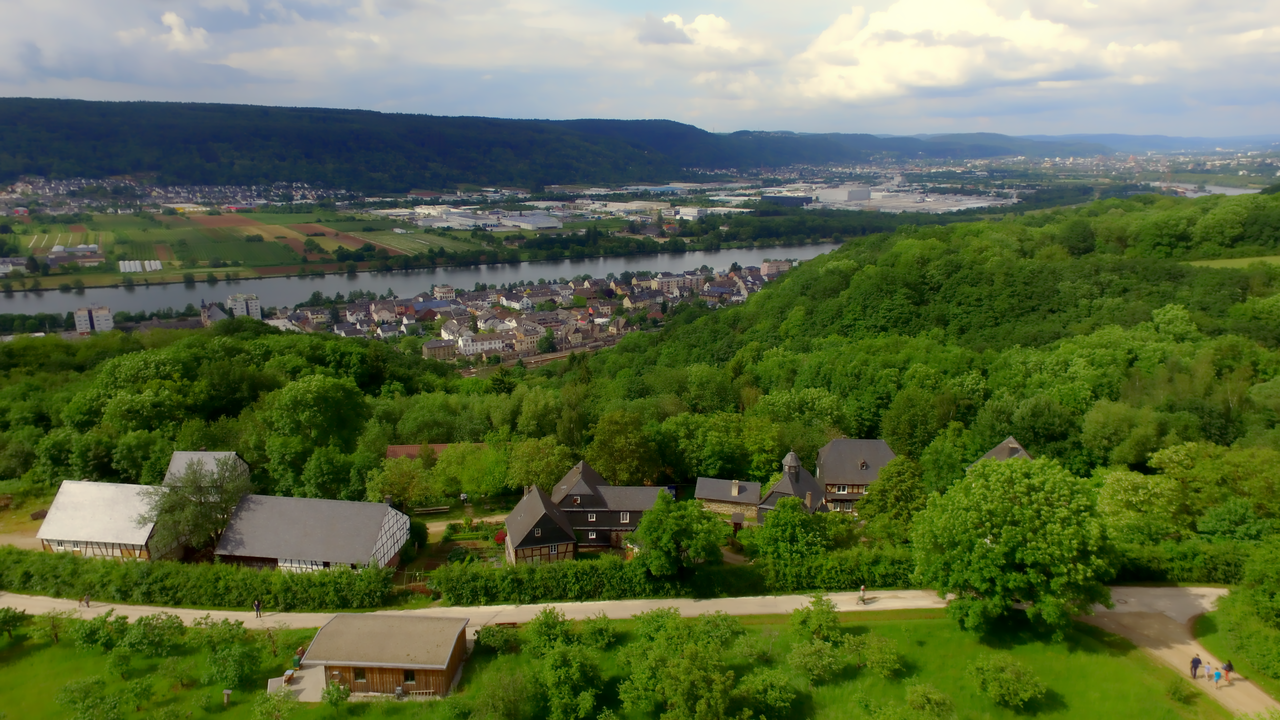
The river rises in the foothills of the Vosges mountains and follows a generally northeasterly route. Its valley changes character along the way — from narrow, wooded gorges in its upper reaches to a broader, meandering corridor downstream. The Moselle's lower course is navigable and has been canalised in places to support freight shipping and river transport. It meets the Rhine at the city of Koblenz.
Major towns and cultural sites
- Metz — an important regional centre in the French section of the river.
- Thionville — a town on the Moselle in Lorraine with industrial and river commerce history.
- Trier — one of Germany's oldest cities, with extensive Roman remains on the Moselle.
- Bernkastel-Kues — a picturesque wine town set among steep vineyard terraces.
- Koblenz — where the Moselle joins the Rhine, historically a strategic confluence.
Viticulture and the valley
The Moselle valley is among Europe's classic wine regions. Steep, often slate-rich slopes provide a microclimate favourable to white grape varieties such as Riesling, Elbling and Müller-Thurgau. Vineyards are typically planted on terraces, and wine from this area is known for its acidity, mineral character and aromatic qualities. The German wine region has been referred to in the past as Moselle–Saar–Ruwer, reflecting important subregions along tributaries.
Uses, ecology and infrastructure
The river supports multiple uses: commercial navigation, local industry, tourism and recreation. To maintain traffic and manage water levels, sections of the Moselle were modified with locks and weirs; these measures also affect fish migration and river habitats, prompting conservation and restoration efforts in parts of the basin. Flood management and sustainable tourism are ongoing concerns for communities along the river.
History and notable facts
The Moselle has been an axis of settlement and transport since antiquity. The Romans developed towns and roads along its banks; remains in places like Trier testify to that legacy. The Latin name Mosella appears in historic sources and influenced later names in the region's languages. Today the Moselle remains important for regional identity, combining natural scenery, historic towns and a long-standing wine culture.
For further reading on hydrology, wine appellations and cultural sites along the river, see dedicated regional guides and heritage resources.
Questions and answers
Q: Where does the Moselle River flow through?
A: The Moselle River flows through France and Luxembourg, then becomes part of the Rhine River after it flows into Germany.
Q: How long is the Moselle River?
A: The Moselle River is 545 kilometres (339 mi) long.
Q: What are some important cities located on the Moselle River?
A: Some important cities located on the Moselle River are Metz, Thionville, Trier, Bernkastel-Kues and Koblenz.
Q: What is the Moselle River valley famous for?
A: The Moselle River valley is famous for the wine of Elbling, Riesling, and Müller-Thurgau - grapes in the wine growing region Moselle-Saar-Ruwer.
Q: What countries are connected by the Moselle River?
A: The Moselle River connects France, Luxembourg, and Germany.
Q: Which river does the Moselle River become part of in Germany?
A: The Moselle River becomes part of the Rhine River after it flows into Germany.
Q: What are some of the famous grapes found in the wine growing region of Moselle-Saar-Ruwer?
A: Some of the famous grapes found in the wine growing region of Moselle-Saar-Ruwer are Elbling, Riesling, and Müller-Thurgau.
Related articles
Author
AlegsaOnline.com Moselle (Mosel) — river through France, Luxembourg and Germany Leandro Alegsa
URL: https://en.alegsaonline.com/art/66838
Sources
- moselle.fr : "Le président"
- insee.fr : "Département de la Moselle (57)"
- insee.fr : "Populations légales 2014 des départements et des collectivités d'outre-mer"
- splaf.free.fr : "Historique de la Moselle"
- legifrance.gouv.fr : "Décret n° 2014-1721 du 29 décembre 2014 portant suppression des arrondissements de Boulay-Moselle, de Château-Salins, de Thionville-Ouest et de Metz-Campagne (département de la Moselle)"
- peakbagger.com : "Grossman, France"
- weatherbase.com : "Metz, France - Köppen Climate Classification"
- insee.fr : "Département de la Moselle (57)"
- insee.fr : "Régions, départements, arrondissements, cantons et communes"
- insee.fr : "Département de Moselle (57) et Arrondissements"
- legifrance.gouv.fr : "Décret n° 2014-183 du 18 février 2014 portant délimitation des cantons dans le département de la Moselle"
- habitants.fr : "Habitants du départment: Moselle"