
Mosel‑Saar‑Ruwer (Mosel) — German wine region known for Riesling
Mosel‑Saar‑Ruwer (commonly Mosel) is a historic German wine region in the valleys of the Moselle, Saar and Ruwer rivers, celebrated for steep slate vineyards and high-quality Riesling and other cool‑climate wines.
The wine region historically called Mosel‑Saar‑Ruwer is one of Germany's most celebrated cool‑climate winemaking areas. It occupies steep valley slopes along the Moselle and its tributaries, the Saar and the Ruwer. The name is often shortened to Mosel; authoritative overviews and regional pages use both forms (region guide). The geography is tied to the three waterways (Moselle, Saar and Ruwer) and to nearby cities such as Koblenz and Trier, in the state of Rhineland‑Palatinate.
Image gallery
10 Images




Characteristics and grapes
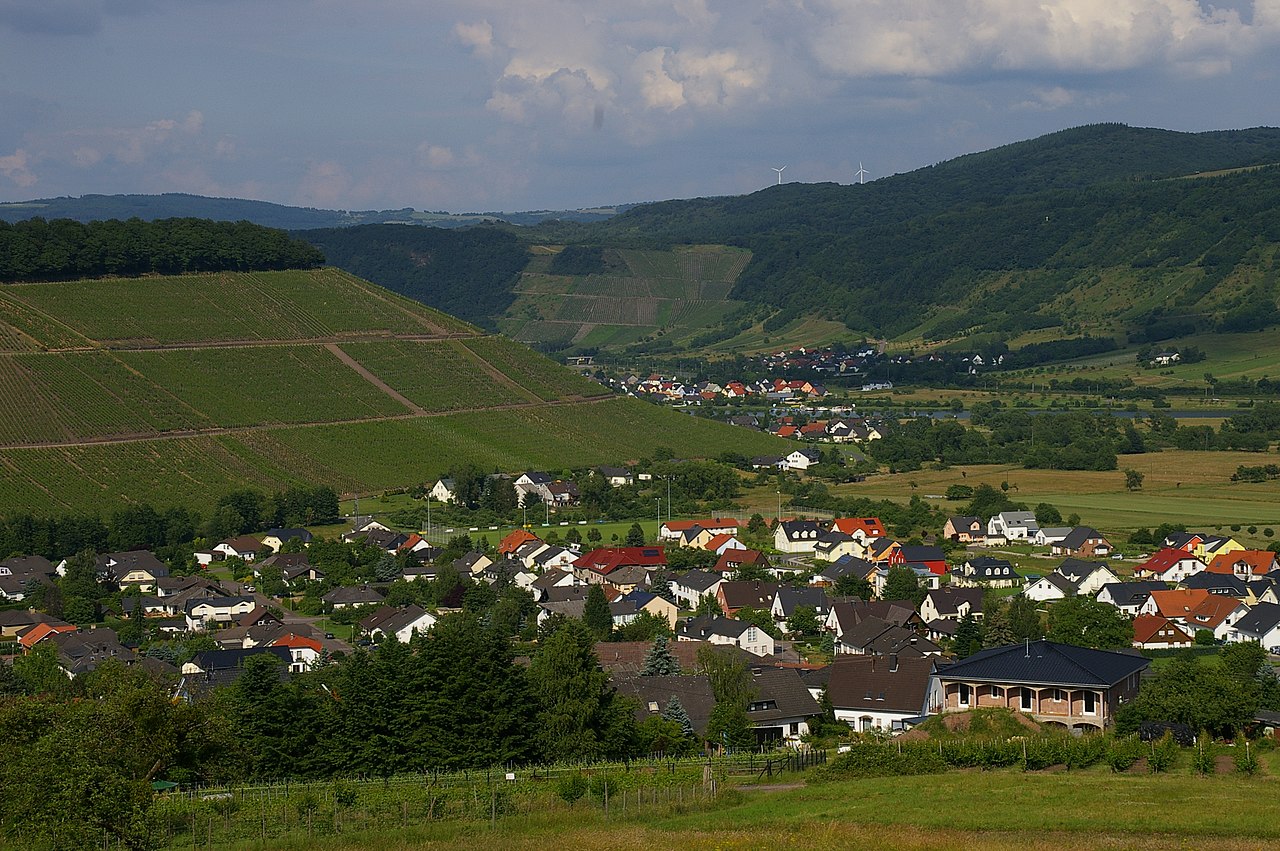
Vineyards here are famous for very steep, often terraced slopes and dark slate soils that retain heat — conditions that favor slow ripening in the region's cool climate. The dominant variety is Riesling, prized for high acidity, floral aromatics and ageability; other planted grapes include Elbling and Müller‑Thurgau among local varieties (grape profiles). The combination of climate, soil and slope produces wines that range from bone‑dry to richly sweet Prädikat styles.
Structure and notable places
Administratively the area contains six subregions (Bereiche) and a collection of larger site groupings (Großlagen). Famous villages and single‑vineyard sites such as Bernkastel‑Kues, Piesport and Ürzig are widely associated with top Rieslings and long cellaring potential. Producers vary from small family holdings to larger estates and cooperatives that vinify a wide spectrum of styles.
History and development
Viticulture in the Mosel valley stretches back to Roman times; documented wine production and trade grew through the Middle Ages. Over centuries local techniques adapted to steep‑slope farming and slate terroir. In the modern era the region retained a reputation for aromatic, high‑acidity white wines and has become a benchmark for Riesling quality worldwide.
Importance, styles and food
Mosel wines are important both domestically and internationally as examples of cool‑climate Riesling: crisp, mineral and versatile. Styles include dry Kabinett and Spätlese, lusciously sweet Auslese and Beerenauslese, and frozen‑harvest Eiswein. They pair well with seafood, pork, Asian cuisine and dishes that benefit from bright acidity and pronounced fruit.
Notable distinctions
- Slate soils: give pronounced mineral notes and aid ripening.
- Steep slopes: require labor‑intensive viticulture and produce concentrated fruit.
- Range of styles: from delicate dry wines to ageworthy sweet wines.
For practical visitors' information, tasting notes and regional maps consult local guides and the official regional portal (Mosel region, Trier tourism, Koblenz information). More on the rivers and appellation system is available through specialist resources (river valleys, state resources, grape variety summaries).
Questions and answers
Q: Where is the Mosel-Saar-Ruwer wine-growing region located?
A: The Mosel-Saar-Ruwer is located in the valleys of the rivers Moselle, Saar, and Ruwer near Koblenz and Trier, Rhineland-Palatinate.
Q: What types of grapes are the Mosel-Saar-Ruwer wines famous for?
A: Mosel-Saar-Ruwer wines are famous for Riesling, Elbling, and Müller-Thurgau grapes.
Q: How many sub-regions are there in the Mosel-Saar-Ruwer wine-growing region?
A: There are six sub-regions in the Mosel-Saar-Ruwer wine-growing region.
Q: How many large vineyards are there in the Mosel-Saar-Ruwer wine-growing region?
A: There are 19 large vineyards in the Mosel-Saar-Ruwer wine-growing region.
Q: What is the significance of the Mosel-Saar-Ruwer wine-growing region?
A: The Mosel-Saar-Ruwer wine-growing region is significant for its production of high-quality wines.
Q: What type of climate is suitable for growing grapes in the Mosel-Saar-Ruwer wine-growing region?
A: The Mosel-Saar-Ruwer wine-growing region has a cool to moderate climate with steep, south-facing slopes and stony soil that is suitable for growing grapes.
Q: What are some of the characteristics of wines produced in the Mosel-Saar-Ruwer wine-growing region?
A: Wines produced in the Mosel-Saar-Ruwer wine-growing region are typically light, crisp, and acidic, with floral and fruit notes.
Related articles
Author
AlegsaOnline.com Mosel‑Saar‑Ruwer (Mosel) — German wine region known for Riesling Leandro Alegsa
URL: https://en.alegsaonline.com/art/66836