
Mortice and Tenon Joint
A mortice (mortise) and tenon is a classic woodworking joint that fits a projecting tenon into a matching mortice. Strong, versatile, and ancient, it remains central to furniture and timber construction.
A mortice and tenon joint is a fundamental method for joining two members, typically at right angles, by inserting a shaped projection (the tenon) from one piece into a corresponding cavity (the mortice) in the other. Valued for its mechanical strength and clean appearance, this joint is used in furniture, doors, frames and heavy timber work. It can be executed by hand or machine and adapted for many materials beyond wood, including stone and metal in traditional crafts.
Image gallery
7 Images


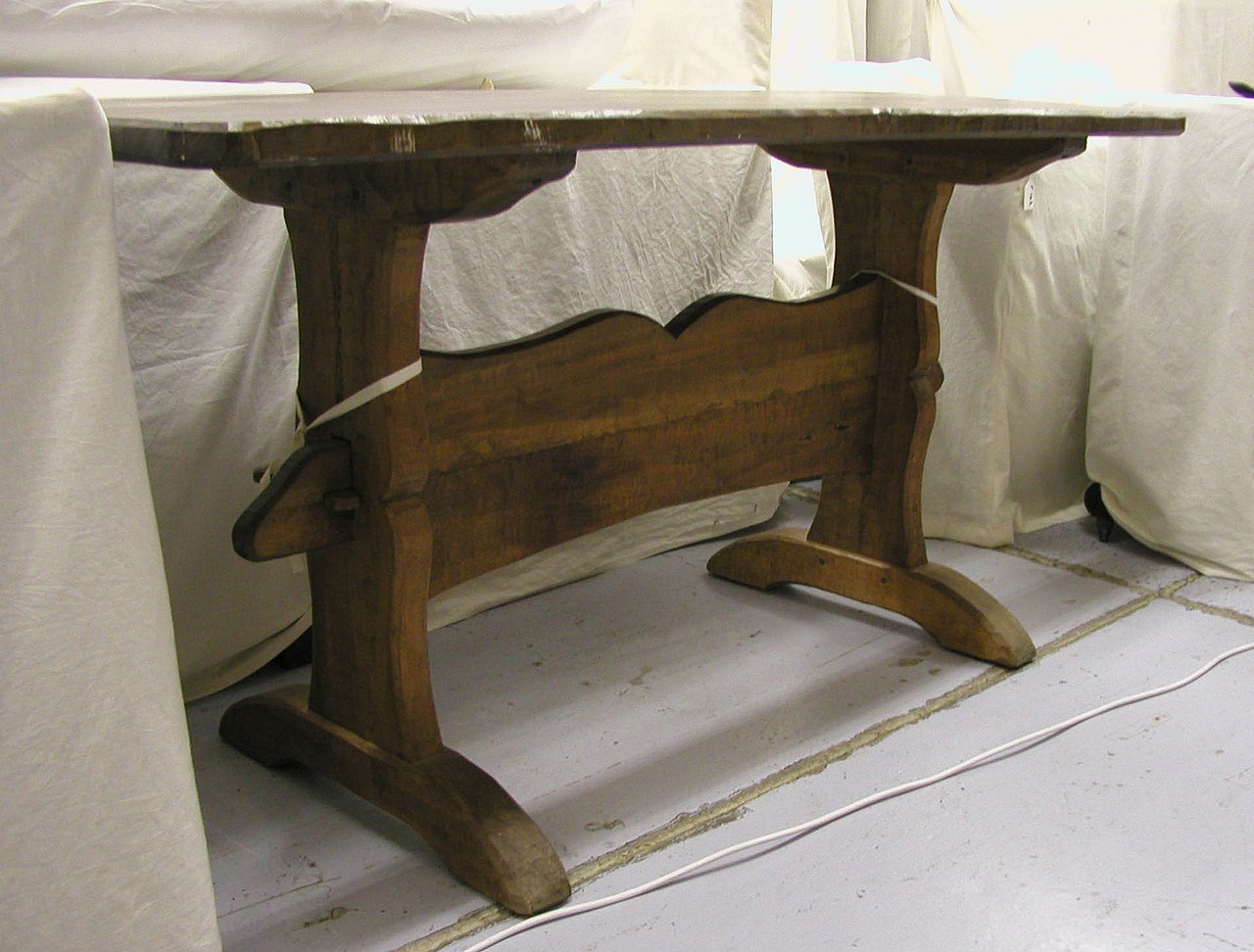


Parts and basic form
The joint consists chiefly of two elements: the mortice (a hole or recess) and the tenon (a tongue or tongue-like projection). The tenon is cut on the end of a rail or member and trimmed so its cheeks fit the mortice walls. Shoulders on the tenon seat against the face of the morticed piece to locate and restrict movement. Common additional details include haunches (a short projection that fills a cutaway in the mortice), shoulders, cheeks, and occasionally a short neck to clear opposing material.
Common variations
- Through tenon: passes completely through the morticed piece and may be visible on the far face.
- Blind (or stopped) tenon: does not show on the outer surface, remaining concealed within the mortice.
- Haunched tenon: includes a haunch to stabilize long, thin pieces such as rails in framing.
- Wedged and tusk tenons: use wedges driven into the tenon to expand it or lock it in place.
- Loose tenon: utilizes a separate, floating tenon or spline that fits two matching mortices.
Each form trades off ease of cutting, strength, appearance and resistance to racking (twisting). A through tenon can be very visible and decorative; a blind tenon preserves a smooth exterior.
History and craft
This joint has a long pedigree in human building traditions. Carpenters, cabinetmakers and joiners have relied on mortice-and-tenon connections for ancient and historic structures because they combine predictable strength with a degree of precision that suits fine work. Variants appear across many cultures and eras—used in timber framing, furniture, shipbuilding and traditional stone or metal joinery—testifying to its adaptability.
Historically, cutting was done with chisels and saws; modern shops also use routers, plunge cutters, mortising machines and power saws. Layout, marking, and accurate shoulder and cheek cuts remain central skills whether the joint is made by hand or with machines.
Assembly, fastening and repair
Once fitted, a mortice and tenon may be glued for permanent assemblies, pinned with dowels or pegs for additional shear strength, or wedged to lock the tenon in place without adhesives. Removable methods enable disassembly for repair. Repairing a worn mortice often involves inserting a fitted patch or converting to a loose-tenon repair; a compromised tenon can be rebuilt or replaced.
Uses, advantages and alternatives
Advantages of the mortice-and-tenon include high tensile and shear strength, good alignment, and aesthetic simplicity. It is particularly suited to load-bearing frames and fine furniture where long-term durability matters. Alternatives such as dowels, biscuits, pocket screws or metal fasteners can be faster or easier for some applications but rarely match the traditional joint's combination of strength and longevity.
For further technical guides and variations see general overviews such as mortice and tenon resources, practical how‑to demonstrations at trade sites carpentry guides, historical studies of joinery joinery history, and specialized treatments for stone or metal work masonry and blacksmithing.
Questions and answers
Q: What is a mortice and tenon joint?
A: A mortice and tenon joint is a type of joint that connects two pieces of wood or other material when the adjoining pieces connect at an angle of 90°.
Q: How long have carpenters been using mortice and tenon joints?
A: Carpenters have been using mortice and tenon joints for thousands of years.
Q: What is the basic form of a mortice and tenon joint?
A: The basic mortice and tenon joint has two parts: the mortice hole and the tenon tongue.
Q: What is a rail in a mortice and tenon joint?
A: A rail is a member on the end of which the tenon is cut in a mortice and tenon joint.
Q: How does a tenon fit into a mortice hole?
A: The tenon fits into a mortice hole exactly and usually has shoulders that seat when the joint fully enters the mortice hole.
Q: What are some ways to lock a mortice and tenon joint in place?
A: The joint may be glued, pinned, or wedged to lock it in place.
Q: Besides wood, what other materials is the mortice and tenon joint used with?
A: The mortice and tenon joint is also used with other materials such as stone and metal by stonemasons and blacksmiths.
Related articles
Author
AlegsaOnline.com Mortice and Tenon Joint Leandro Alegsa
URL: https://en.alegsaonline.com/art/66797