
Aspergillus flavus: biology, health risks, and agricultural impact
Aspergillus flavus is a common soil fungus and opportunistic pathogen. Some strains produce aflatoxins that contaminate food and pose human and animal health risks; control focuses on prevention and monitoring.
Overview
Aspergillus flavus is a filamentous fungus found widely in soil and on decaying organic matter across temperate and tropical regions. It acts primarily as a saprophyte, breaking down dead plant material, but some strains are opportunistic pathogens of plants, animals and humans. Environmental reservoirs include agricultural fields, stored crops and dust; the fungus readily colonizes cereal grains, legumes and tree nuts where it can persist before harvest or grow during storage. Early recognition of its dual role—as a decomposer and as a source of toxic metabolites—is important for food safety and public health. pathogen and ecological studies often emphasize its ubiquity and adaptability.
Image gallery
2 Images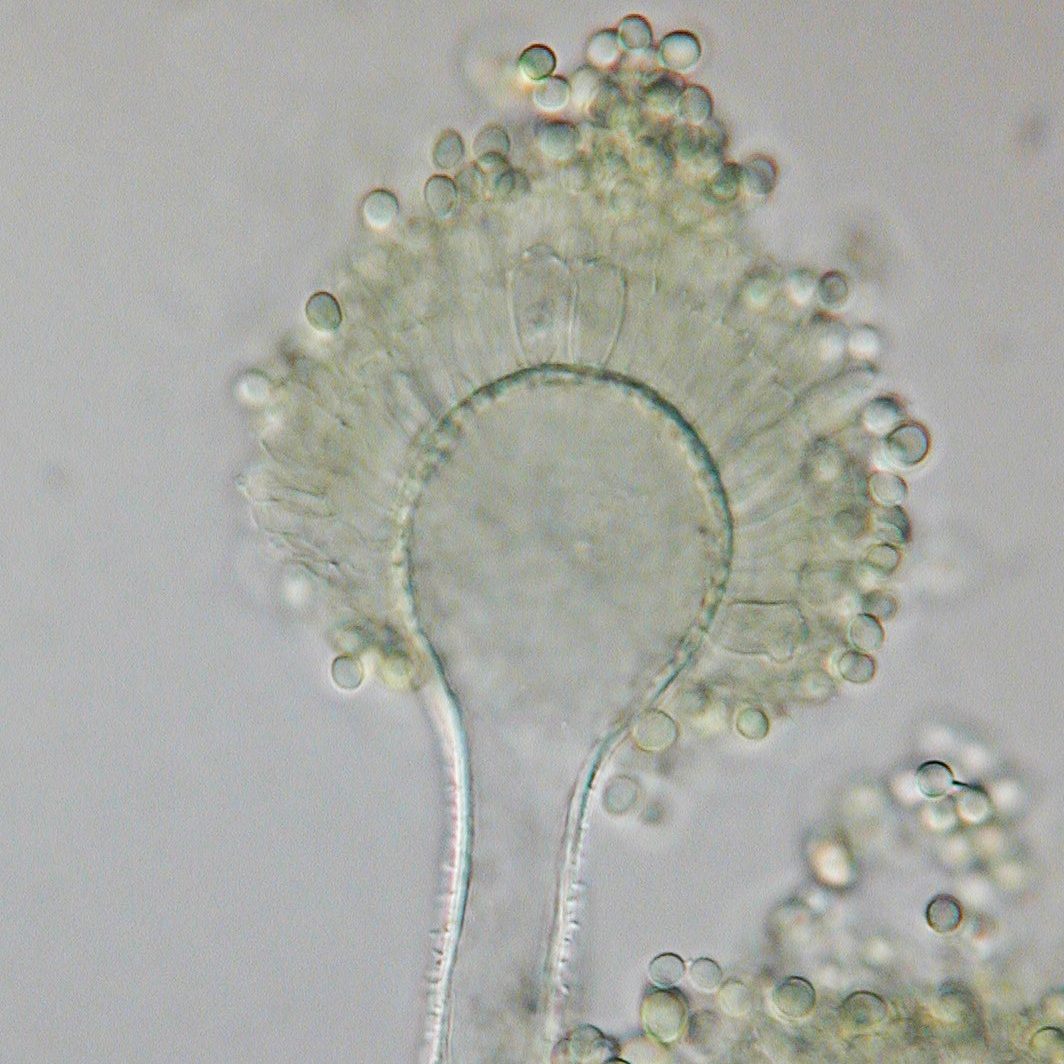

Characteristics and life cycle
Colonies of A. flavus typically appear yellow-green to olive on common growth media and produce abundant asexual spores (conidia). The fungus forms conidiophores that bear chains of conidia, and many isolates generate hardened survival structures called sclerotia. Growth is favored by warm, humid conditions and plentiful organic substrate. Genetic and physiological variation among isolates determines whether they produce secondary metabolites such as aflatoxins or other compounds like cyclopiazonic acid; not every isolate is toxigenic. Because it functions as a saprophyte, A. flavus can colonize crop residues and soil organic matter, with soil and debris acting as long-term reservoirs (soil and environmental reservoirs).
Health concerns and toxicology
A major public-health concern associated with A. flavus is the production of aflatoxins, a group of potent mycotoxins. Aflatoxin B1 is the most studied and is classified as a human carcinogen; chronic dietary exposure increases the risk of liver cancer and contributes to other liver diseases. Acute high-dose exposure can lead to acute aflatoxicosis, a serious condition that has caused fatal outbreaks in animals and occasionally in humans. In addition to toxin-mediated disease, the fungus can cause invasive or allergic aspergillosis in animals and people—especially those with weakened immunity. Patients with compromised immune systems are at higher risk of severe infection, and long-term exposure to contaminated food may increase risk of conditions such as liver cancer.
Agricultural and economic importance
Aspergillus flavus affects pre-harvest and post-harvest quality of important commodities: maize, peanuts, cottonseed, tree nuts and some spices are particularly susceptible. Contamination reduces marketability, forces rejection of consignments, and poses trade barriers where regulatory limits for aflatoxins are enforced. Outbreaks of contamination can cause significant economic losses in affected regions and endanger food security where monitoring and storage infrastructure are limited. Farmers and processors therefore prioritize practices that reduce fungal colonization and toxin accumulation on harvested products (see below).
Detection, prevention and management
Control and mitigation combine agricultural, storage and analytical measures. Pre-harvest approaches include crop rotation, irrigation management, and biological control using atoxigenic strains that compete with toxigenic ones. Post-harvest measures focus on rapid drying, clean storage, and sorting to remove moldy kernels. Analytical detection of aflatoxins uses rapid immunoassays, chromatography and mass spectrometry for confirmation. Regulatory agencies set maximum permissible levels for human and animal food; adherence and routine testing are central to reducing exposure risks. For clinical infections, antifungal therapy and supportive care are used, but prevention of exposure remains the primary strategy to reduce toxin-related disease and opportunistic infections (cereal grains and nuts are common sources).
Notable distinctions and research directions
- A. flavus is distinguished from other Aspergillus species by colony color, sclerotial formation and typical toxin profile.
- Only some strains produce aflatoxins; genetic markers and molecular assays help identify toxigenic isolates for targeted control.
- Current research emphasizes biocontrol, resistant crop varieties, better storage technology and rapid on-site testing to lower public health impact.
Because A. flavus intersects agriculture, food safety and clinical medicine, multidisciplinary surveillance and coordinated management are essential to limit its harmful effects on human and animal health as well as on economies reliant on susceptible crops.
pathogen | soil and environmental reservoirs | saprophyte | cereal grains and nuts | liver cancer | compromised immune systems
Questions and answers
Q: What is Aspergillus flavus?
A: Aspergillus flavus is a fungus that is widespread and potentially dangerous.
Q: Where does Aspergillus flavus grow?
A: Aspergillus flavus grows in soils as a saprophyte and also grows on cereal grains, legumes, and tree nuts.
Q: What are mycotoxins?
A: Mycotoxins are toxic compounds produced by certain strains of Aspergillus flavus.
Q: What is the name of the toxin produced by Aspergillus flavus?
A: The toxin produced by Aspergillus flavus is called 'aflotoxin'.
Q: Is Aspergillus flavus harmful to mammals?
A: Yes, Aspergillus flavus is harmful to mammals because its toxins are toxic to them.
Q: Can Aspergillus flavus cause liver cancer?
A: Yes, Aspergillus flavus can cause liver cancer if contaminated food is eaten by mammals.
Q: Who is at risk of aspergillosis from Aspergillus flavus?
A: People whose immune system is damaged are at risk of aspergillosis from Aspergillus flavus.
Related articles
Author
AlegsaOnline.com Aspergillus flavus: biology, health risks, and agricultural impact Leandro Alegsa
URL: https://en.alegsaonline.com/art/6676
Sources
- doi.org : 10.1146/annurev-phyto-072910-095221
- ars.usda.gov : "Helpful yeast battles food-contaminating aflatoxin"
- epa.gov : "Aspergillus flavus strain AF36 (006456) fact sheet"
- ag.arizona.edu : "Aspergillus flavus AF36"