
Montreal Wanderers (early professional ice hockey team)
Early 20th-century Montreal ice hockey club noted for rapid success and for being a founding member of the NHL; known as the Redbands and Stanley Cup champions between 1906 and 1910.
Overview
The Montreal Wanderers were a prominent professional men's ice hockey club based in Montreal, Quebec. Active in the early 1900s, the club earned the informal nickname the "Redbands" for the distinctive red trim on their uniforms. They played their home matches at the Montreal Arena and are remembered for a concentrated period of success before organized professional hockey consolidated into what became the modern National Hockey League.
Image gallery
2 Images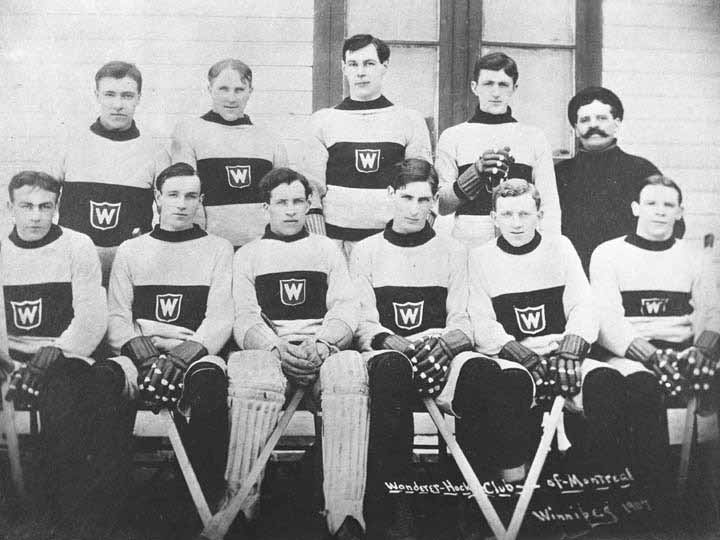

History and development
The Wanderers emerged in the era when hockey was transitioning from amateur to professional organization. Over the 1900s the club competed in several prominent circuits of the day and took part in challenge games for the top prize in the sport. In 1917 the Wanderers were one of the franchises that took part in the founding of the National Hockey League, fielding a club in the league's inaugural 1917–18 season. Their tenure in the NHL was brief: a disaster at their home rink when the Montreal Arena burned led to the team suspending operations and ultimately folding during that season.
Achievements and notable facts
- The Wanderers achieved remarkable success in cup competition, winning a series of challenge victories for the Stanley Cup across a concentrated span during the 1906–1910 period.
- They were widely regarded as one of the most successful and influential teams in pre-NHL professional hockey in Canada.
- The club helped popularize professional play in Quebec and contributed players and managers who shaped early organized hockey in and beyond Montreal.
Characteristics and play style
Contemporary reports describe the Wanderers as a fast, aggressive team for their era, relying on coordinated forward attacks and a strong physical presence—common hallmarks of early professional sides. The club's identity was closely tied to its home arena and to a period when cup challenges and short pro leagues created frequent turnover among elite teams.
Legacy and significance
Although the Wanderers' life as a franchise was relatively short compared with many later clubs, their impact is visible in several ways: they were part of the competitive core that elevated hockey's profile, they won multiple major championships during a formative decade, and they were among the founding members that established the team structure of the modern professional game. Histories of Canadian hockey commonly cite the Wanderers when tracing how club hockey evolved into today's organized leagues.
Questions and answers
Q: Who were the Montreal Wanderers?
A: The Montreal Wanderers were a professional men's ice hockey team that played in Montreal, Quebec, and were one of the founding franchises of the National Hockey League.
Q: Where did the Montreal Wanderers play their home games?
A: The Montreal Wanderers played their home games at the Montreal Arena.
Q: How many Stanley Cup challenges did the Montreal Wanderers win?
A: The Montreal Wanderers won a total of eight Stanley Cup challenges within a span of five seasons from 1906 to 1910.
Q: Were the Montreal Wanderers successful before the formation of the NHL?
A: Yes, prior to the formation of the NHL, the Montreal Wanderers, also known as the "Redbands," were one of the most successful teams in hockey.
Q: When did the Montreal Wanderers become a founding franchise of the NHL?
A: The Montreal Wanderers became a founding franchise of the NHL in the 1917-18 NHL season.
Q: In what city were the Montreal Wanderers based?
A: The Montreal Wanderers were based in Montreal, Quebec.
Q: How long did the Montreal Wanderers' successful period last?
A: The Montreal Wanderers' successful period lasted for five seasons from 1906 to 1910, during which they won eight Stanley Cup challenges.
Related articles
Author
AlegsaOnline.com Montreal Wanderers (early professional ice hockey team) Leandro Alegsa
URL: https://en.alegsaonline.com/art/66465
Sources
- legendsofhockey.net : "Players by team - Montreal Wanderers"