
Monstera deliciosa — tropical climbing plant with split leaves and edible fruit
Monstera deliciosa is a tropical hemiepiphytic vine known for large fenestrated leaves and a fragrant edible fruit; widely grown as a houseplant and naturalized in warm regions.
Overview
Monstera deliciosa is a tropical climbing plant in the Araceae family, valued for its dramatic, perforated leaves and a syncarpous fruit that is reportedly edible when fully ripe. Commonly called the Swiss cheese plant, split-leaf philodendron, or simply monstera, it is one of the best-known aroid houseplants and a frequent subject in interior design and botanical collections.
Image gallery
10 Images


Description and characteristics
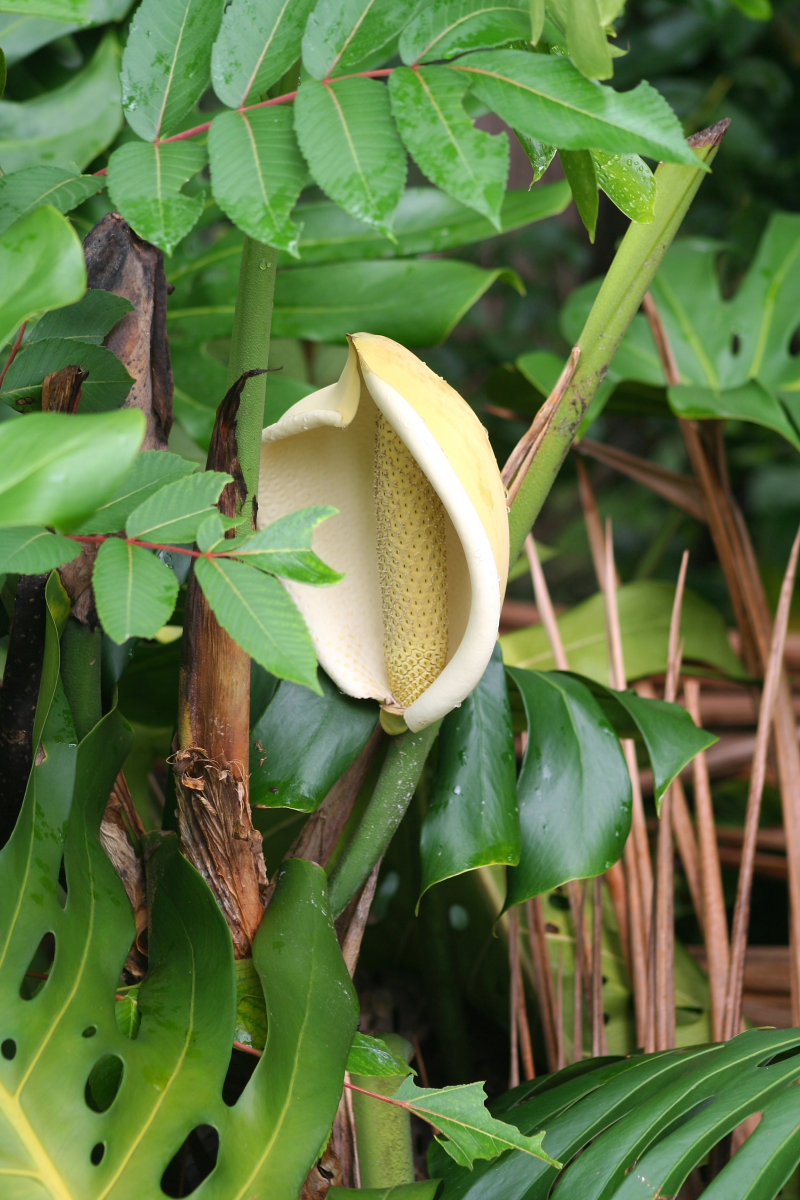
Monstera deliciosa begins life as a ground-rooted or epiphytic juvenile with entire heart-shaped leaves. As individuals mature and climb, leaves develop characteristic lobes and natural holes (fenestrations), which may help reduce wind resistance and allow light to reach lower leaves in dense forest canopies. Plants produce aerial roots that attach to tree trunks or supports and a long climbing stem. The inflorescence is an aroid spadix surrounded by a spathe; the resulting compound fruit is covered in small hexagonal segments and becomes aromatic when ripe.
Native range and ecology
Native to tropical Central America, Monstera deliciosa occurs in moist lowland and montane forests from southern Mexico through parts of Central America. It is a hemiepiphyte: young plants often grow on the forest floor and later climb trees toward the canopy. In humid forest habitats it contributes to understory structure and provides occasional food for wildlife when the fruit ripens.
Cultivation, uses and significance
Monstera deliciosa is widely cultivated indoors and outdoors in warm climates. It tolerates a range of light conditions but prefers bright, indirect light, well-drained but moisture-retentive soil, and regular humidity. Growers commonly provide vertical supports to reveal the mature leaf form. The species is prized for ornamentation, air-purifying qualities in domestic settings, and for its architectural foliage in floral and interior design. When fully ripe, the fruit is eaten fresh by some people, but raw or unripe tissues contain needle-like calcium oxalate crystals that can cause irritation and should be avoided.
Variation, confusion and notable facts
There are recognizable growth phases and morphological variation: juvenile plants differ markedly from mature climbing specimens, and cultivated forms include variegated or compact cultivars selected for houseplant markets. Monstera deliciosa is sometimes confused with related species such as Monstera adansonii; distinctions rely on leaf size, shape and the pattern of fenestration. The plant has become naturalized in warm regions outside its native range where climate permits, and it remains a subject of interest for both horticulturists and ecologists.
Care summary
- Light: bright, indirect; avoid prolonged direct sun that can scorch leaves.
- Water: allow topsoil to dry slightly between waterings; avoid waterlogging.
- Support: provide a moss pole or trellis for climbing to encourage mature leaf development.
- Temperature & humidity: prefers warm, humid conditions; protects from cold drafts.
Further reading and resources
- Taxonomy and nomenclature
- Genus Monstera overview
- Species accounts and identification
- Native range in Central America
- Fruit description and edibility
- Growth habit: vines and climbers
- Records from Mexican states
- Oaxaca flora references
- Veracruz plant lists
- Chiapas botanical resources
- Occurrences in Costa Rica
- Guatemala distribution notes
- Panama flora records
- Cultivation as a houseplant
- Naturalization in the southern United States
- Presence in Florida
- Introductions in Malaysia
- Occurrences in India
- Records from Australia
- Mediterranean occurrences
- Portugal and island records
- North African and Macaronesian notes
For practical care, identification comparison and regional information consult specialist horticultural sources or local floras linked above.
Questions and answers
Q: What is Monstera deliciosa?
A: Monstera deliciosa is a species of the genus Monstera. It is a climbing plant commonly found in tropical Central America.
Q: What does "deliciosa" mean in the name Monstera deliciosa?
A: "Deliciosa" means delicious and refers to the edible fruit of the plant.
Q: Where was the plant originally found?
A: The plant was originally found in the Mexican states of Oaxaca, Veracruz, and Chiapas.
Q: Where else can Monstera deliciosa be found aside from Central America?
A: Monstera deliciosa can also be found in Costa Rica, Guatemala, and Panama. It is also commonly grown as a houseplant and can be found in the Southern United States, Malaysia, India, Australia, Portugal, Morocco, and Madeira.
Q: What is the plant's growth habit?
A: The plant is a vine or climbing plant.
Q: How many forms of Monstera deliciosa can be found in the wild?
A: In the wild, there seem to be at least two forms of Monstera deliciosa: one has larger leaves and looks more like a bush, and the other has smaller leaves that resemble a vine.
Q: Is Monstera deliciosa commonly grown as a houseplant?
A: yes, Monstera deliciosa is commonly grown as a houseplant.
Related articles
Author
AlegsaOnline.com Monstera deliciosa — tropical climbing plant with split leaves and edible fruit Leandro Alegsa
URL: https://en.alegsaonline.com/art/66185