
Mons Meg: a 15th‑century siege bombard preserved at Edinburgh Castle
Mons Meg is a large medieval bombard made around 1449, sent to James II of Scotland and now displayed at Edinburgh Castle; notable for its size, construction and role as a symbol of royal power.
Overview
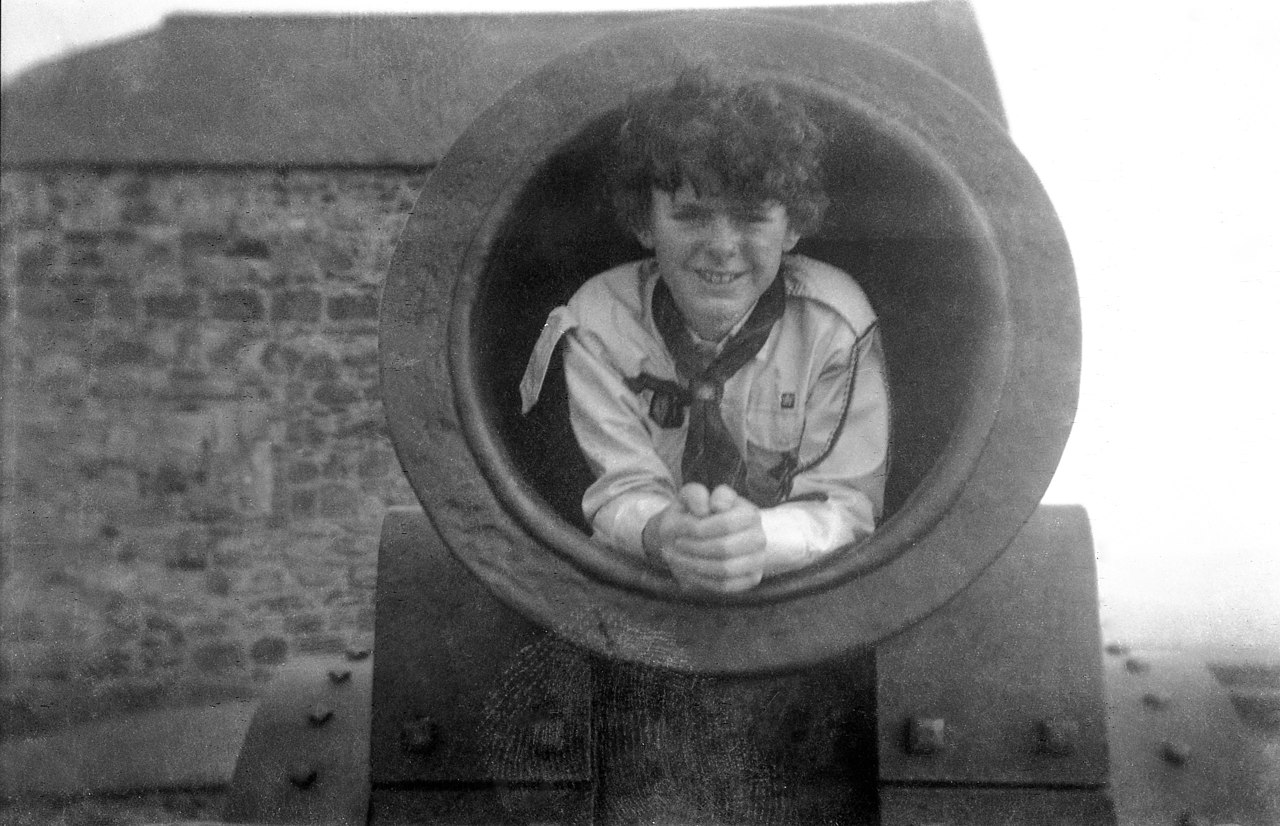
Mons Meg is a famous medieval artillery piece, often described as a large artillery or bombard. Built in the mid‑15th century, it represents the extreme of contemporary fortress‑breaching guns: heavy, short‑ranged and intended to batter stone walls rather than fire high‑velocity projectiles over long distances. Today Mons Meg is displayed at Edinburgh Castle in Scotland and attracts visitors as both a technological curiosity and a national antiquity.
Image gallery
6 Images




Design and specifications
The gun exemplifies the construction techniques and ballistic principles of late medieval bombards. It was assembled from wrought‑iron bars and strengthened with iron hoops, producing a short, wide barrel able to accommodate very large solid shot. Unlike modern shells, which may carry explosive charges and fuses, Mons Meg and similar pieces fired solid projectiles.
- Calibre: about 20 inches (roughly 510 mm), one of the largest bore diameters of surviving medieval guns.
- Length and weight: approximately 15 feet (4.6 m) long and weighing around 15,366 pounds (6,970 kg).
- Ammunition: large iron or stone balls (commonly described as iron shot) capable of causing severe damage to masonry.
- Cost and materials: contemporary records list a substantial cost for manufacture and delivery, reflecting the labour‑intensive forging and assembly.
Origin and service
Documentary evidence indicates Mons Meg was made for Philip the Good, Duke of Burgundy, in the mid‑15th century and was sent as a gift to King James II of Scotland some years later, along with other military stores and artillery supplies. As with many bombards of the period, it saw use in siege operations where its heavy balls could breach walls and towers, but it was not a precision or long‑range weapon by later standards.
Later history, conservation and significance
By the early modern period Mons Meg had become as much a ceremonial object as a weapon. It was fired for important events and royal occasions until a later firing caused serious structural failure; thereafter the gun was retired from active use and conserved as a monument. Its survival makes it one of the best known examples of medieval siege artillery and an important source for the study of pre‑gunpowder and early gunpowder warfare. The piece illustrates the difference between early ironwork gun construction and later cast bronze and steel artillery, and it remains a popular exhibit and symbol of royal and military history at the castle.
For visitors and researchers Mons Meg offers a tangible link to the changing face of warfare in the 15th century and to the diplomatic and military exchanges that shaped late medieval Europe. Further contextual information and images are available through museum displays and specialist publications; the object continues to be the subject of conservation work and historical study.
Additional references and resources: overview, technical descriptions, visitor information, national context, artillery evolution, comparative cannonry, materials, royal records, logistics, measurements, financial accounts.
Questions and answers
Q: When was Mons Meg made?
A: Mons Meg was made in 1449.
Q: What is Mons Meg?
A: Mons Meg is a mediaeval bombard or cannon.
Q: Where is Mons Meg located?
A: Mons Meg is currently located at Edinburgh Castle in Scotland.
Q: What did Mons Meg fire?
A: Mons Meg fired solid balls made of iron.
Q: Who was Mons Meg made for?
A: Mons Meg was made to the order of Philip the Good, Duke of Burgundy.
Q: When was Mons Meg gifted to King James II of Scotland?
A: Mons Meg was gifted to King James II of Scotland eight years after it was made, in 1457.
Q: How much did Mons Meg cost?
A: The final cost of Mons Meg was £1,536. 2s.
Related articles
Author
AlegsaOnline.com Mons Meg: a 15th‑century siege bombard preserved at Edinburgh Castle Leandro Alegsa
URL: https://en.alegsaonline.com/art/66165