
Monarchy of Ireland: historical development and contemporary status
Overview of monarchy in Ireland from Gaelic kingship and the Norman and Tudor periods to the union with Britain, 20th‑century partition and the modern divergence between the Republic and Northern Ireland.
The concept of monarchy in Ireland covers several distinct phases: indigenous Gaelic kingship, medieval lordships after the Norman invasion, the Tudor creation of a Crown Kingdom, union with the British monarchy, and the divergent constitutional arrangements that followed partition in the 20th century. Contemporary Ireland is divided between the sovereign Republic of Ireland and Northern Ireland, which remains within a United Kingdom that is a constitutional monarchy. For modern political geography see Ireland. The presence or absence of a monarchy therefore differs between those two polities; Northern Ireland is part of the United Kingdom and thus shares its monarch, currently Charles III, while the Republic has no monarch.
Image gallery
9 Images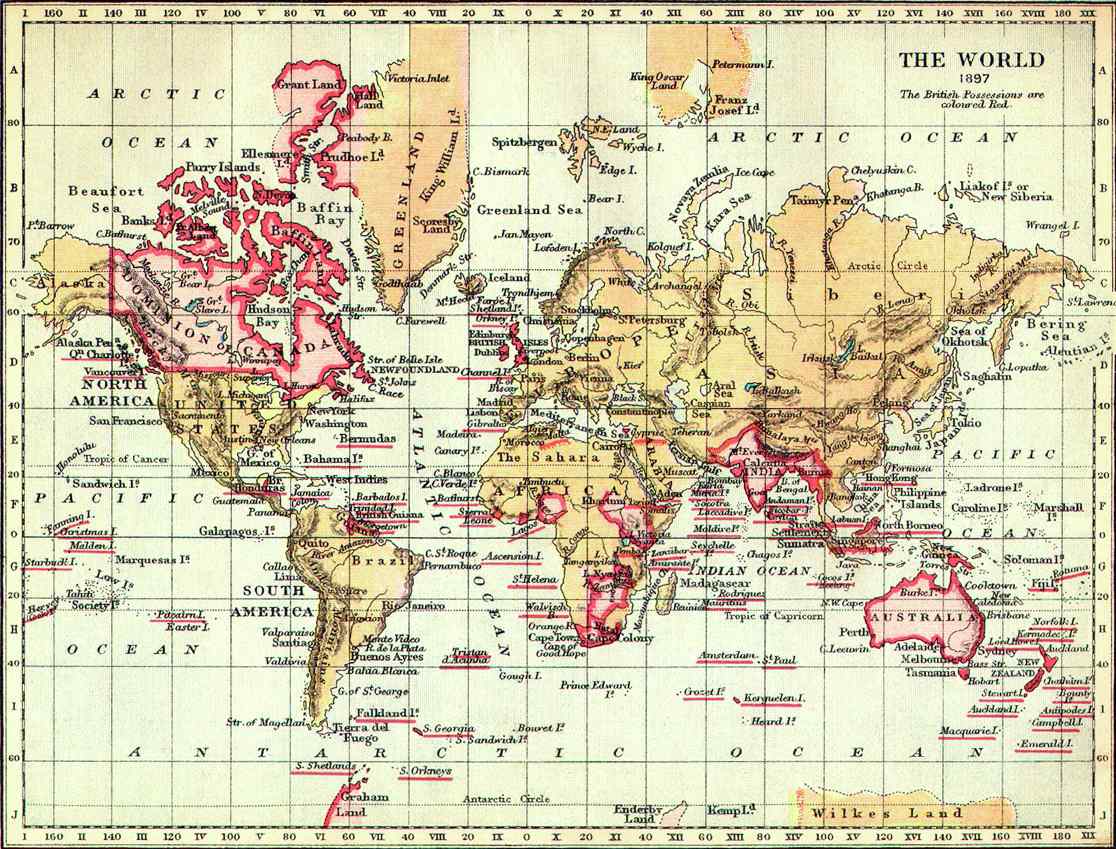


Gaelic kingship and early medieval rulers
Before the arrival of the Normans, power in Ireland was organized through a patchwork of Gaelic polities. Each small kingdom or túath had its own king (often called rí), and larger overkings ruled collections of these territories. Over time some rulers claimed the title of High King (Ard Rí) with symbolic primacy over the island; such claims were often contested and depended on dynastic strength, alliance patterns and military power. Gaelic kingship combined ritual, kinship, law and local custom, and it remained a living political framework into the later Middle Ages. Monarchies were therefore a recurrent feature of Irish political life in this indigenous form, reflecting local structures and traditions (see also).
Norman arrival and the Lordship of Ireland
The Norman invasion of Ireland began in the late 12th century and introduced feudal forms of lordship. English involvement increased when English monarchs and their agents established control over parts of the island, and the institution known as the Lordship of Ireland developed under the authority of the English crown. Papal diplomacy played a role in legitimating claims in the period, and Irish affairs were often described in terms used by continental and papal authorities (Papal States, Pope), though the precise medieval arrangements and their documentary foundations are the subject of historical study and occasional debate. The process of English governance over Irish lands was gradual and uneven, with Gaelic polities persisting alongside Anglo-Norman lordships.
Tudor centralization and the Kingdom of Ireland
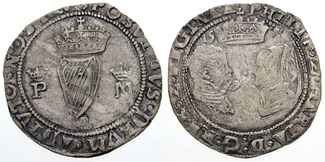
In the 16th century the English crown intensified efforts to establish a unified legal and administrative order across the island. During the Tudor period the Irish Parliament passed statutes that converted English claims into a new legal status: in 1542 the title Kingdom of Ireland was enacted in a statute by the Dublin parliament, making the English monarch also the monarch of Ireland under that title. Henry VIII is commonly identified as the first to be styled in this way (Henry VIII). Subsequent Tudor and early Stuart policies sought to extend central authority by plantation, law reform and reorganisation of local government, with significant social and cultural consequences.
Union of crowns and the British state
From 1603 the crowns of England and Scotland were held in personal union by James VI and I, who thereby became the first monarch to rule England, Scotland and Ireland personally. The 17th century witnessed major constitutional disruption, including civil wars and a republican interlude under Oliver Cromwell, when the British Isles experienced government as the Commonwealth for a period. Parliamentary unions and dynastic change in the 18th and early 19th centuries reshaped the relationship between Ireland and its neighbours: the 1707 union united England and Scotland into Great Britain under the same crown, while the Acts of Union around 1800 created the United Kingdom of Great Britain and Ireland in 1801 with George III as monarch of the new polity. This formal union meant that the British monarch was simultaneously the sovereign of the whole United Kingdom, including Ireland as then constituted.
- Key constitutional moments include the Tudor creation of the Kingdom of Ireland, the 1603 personal union under James VI and I, the 1707 union of England and Scotland, and the 1801 Act of Union forming the United Kingdom.
- The 17th century interruption of monarchy during the Commonwealth remains a defining exception to otherwise largely continuous monarchical rule across these centuries.
19th century developments and political context
The 19th century saw Ireland governed as part of the United Kingdom, with representation at Westminster and the extension of central institutions. Political movements for reform, greater autonomy or repeal of the union grew in different forms, and debates about land, religion and national identity were central to 19th‑century Irish politics. Monarchic rule continued as the constitutional backdrop, while social and political change set the stage for the decisive events of the early 20th century.
20th century: partition, dominion status, and the republic
Political changes associated with Irish nationalism and the struggle for self‑government produced a decisive break in the early 20th century. Following the Anglo‑Irish negotiations and settlement, most of Ireland left the United Kingdom to become the Irish Free State in 1922, a dominion within the wider British Empire, while six counties in the north remained as Northern Ireland within the United Kingdom. The Free State retained the monarch in limited constitutional and symbolic roles for a time, but subsequent constitutional change reduced the monarch's role in internal affairs. The 1937 constitution created new institutions for the state that later called itself the Republic of Ireland. In 1949 the state formally declared itself a republic and left the Commonwealth of Nations, removing the monarch as a constitutional officeholder in the territory that had become the Republic.
Modern status, symbols and legal distinctions
Today the island of Ireland is governed by two distinct constitutional orders. The Republic is a sovereign, non‑monarchical state whose head of state is a president selected under domestic law. Northern Ireland remains part of the United Kingdom and thus shares the British crown: the monarch is the same sovereign who is head of state of the UK, and in practice royal functions in Northern Ireland are exercised by UK ministers and representatives. This arrangement means that the historic office of king or queen has differing legal force, symbolism and public resonance depending on which jurisdiction is in view.
Monarchy in Ireland has left a complex cultural and institutional legacy: historic titles and claims, surviving medieval and early modern castles and seats, elements of the peerage, ceremonial uses of heraldry, and place names that recall old rulers. The transition from widespread monarchical governance to the present combination of a republic and a constituent part of a monarchy illustrates how constitutional forms can change over time through legislation, political settlement and popular contestation.
For more detailed study, researchers may consult specialist literature on medieval kingship, Norman and Anglo‑Norman lordship, Tudor state formation, the English Reformation, union legislation of 1707 and 1801, the High Middle Ages, the origins of the Kingdom of Ireland, and the 20th‑century constitutional developments that produced the Irish Free State and the later Republic. Other relevant topics and names in the historical narrative include Henry VIII, Elizabeth I, James VI and I, George III, the institutional formation of the United Kingdom, and the administrative exceptions such as the Isle of Man.
If you wish to explore administrative, cultural, or legal traces of monarchy in contemporary Ireland, further material is available that treats local titles, ceremonial uses of royal symbols, and the constitutional law that removed monarchical powers in the Republic while leaving them intact in Northern Ireland. For a concise review of the historical sequence and comparative context see works dealing with the personal union of crowns, the political geography of the British Isles, and the evolution of sovereignty and statehood in the British and Irish context.
Selected topical links: Kingdom of England, Kingdom of Scotland, reign, ownership claims, Anne, Oliver Cromwell, Commonwealth, British Isles, British Empire, Commonwealth of Nations.
Questions and answers
Q: What is the current monarch of Northern Ireland?
A: The current monarch of Northern Ireland is Charles III.
Q: When did the Kingdom of Ireland come into existence?
A: The Kingdom of Ireland came into existence in 1542 during the reign of Henry VIII.
Q: Who was the first to be both King of England and King of Ireland?
A: Henry VIII was the first to be both King of England and King of Ireland.
Q: How long did the Kingdom of Ireland share a monarch with England before 1603?
A: Before 1603, Ireland shared a monarch with the Kingdom of England in a personal union.
Q: Who was Queen when the United Kingdom was formed in 1707?
A: Anne was Queen when the United Kingdom was formed in 1707. She was Queen both in Ireland and Great Britain.
Q: When did most parts of Ireland leave to become part of Irish Free State?
A: Most parts if ireland left to become part if Irish Free State in December 1922.
Q: When did Republic Of Irelands stop having a monarchy entirely?
A:The Republic Of Irelands stopped having a monarchy entirely in April 1949, when it left Commonwealth Of Nations
Related articles
Author
AlegsaOnline.com Monarchy of Ireland: historical development and contemporary status Leandro Alegsa
URL: https://en.alegsaonline.com/art/65950
Sources
- legislation.gov.uk : "Act of Union (Ireland) 1800"
- legislation.gov.uk : "Union with Ireland Act 1800"
- irishstatutebook.ie : Executive Authority (External Relations) Act, 1936
- irishstatutebook.ie : "Statute Law Revision (Pre-Union Irish Statutes) Act, 1962, Schedule"
- irishstatutebook.ie : "Statute Law Revision Act, 1983, Schedule Part III: English and British Statutes Extended to Ireland, 1495-1800"