
Mohabbatein: 2000 Hindi musical romantic drama
Mohabbatein (2000) is a Hindi musical romantic film directed by Aditya Chopra, produced by Yash Chopra. It stars Amitabh Bachchan, Shah Rukh Khan and Aishwarya Rai and became a major commercial success.
Overview
Mohabbatein is a 2000 Hindi-language musical romantic drama directed by Aditya Chopra and produced under the Yash Raj Films banner by Yash Chopra. The film brought together two of Bollywood's most prominent stars—Amitabh Bachchan and Shah Rukh Khan—alongside Aishwarya Rai in a central role. It juxtaposes strict tradition and institutional discipline with youthful passion and the transformative power of love. The production is notable for mixing romantic storytelling with prominent musical sequences that are integral to the narrative.
Image gallery
2 Images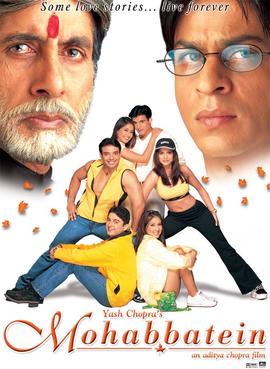

Plot themes and structure
The story unfolds largely around a conservative boarding-school environment governed by a stern headmaster who enforces rules that forbid romantic relationships among students. Into this environment arrives an outsider whose views on love and freedom challenge the headmaster's rigid philosophy. The film explores themes of love versus authority, generational conflict, individual choice, and redemption, and uses songs and performances to drive emotional beats and character development.
Cast, music and production
Mohabbatein features lead performances by Amitabh Bachchan and Shah Rukh Khan with Aishwarya Rai in a key role. The narrative also includes a group of younger actors who play students and represent different responses to the film's central moral questions. Music and song sequences play a major role in the film's storytelling and commercial appeal; the soundtrack and choreography helped popularize several of the film's numbers and contributed to its box-office performance. The movie was produced by one of Bollywood's most influential families and released with significant promotional backing.
Reception and legacy
On release, Mohabbatein was a commercial success and is widely regarded as one of the notable mainstream romantic films of the early 2000s in Indian cinema. Critics and audiences praised the performances and the musical elements, while some reviews pointed to a melodramatic tone and conventional plotting. The film received multiple award recognitions and is often remembered for its central conflict of heart versus discipline and for reinforcing the romantic screen persona of its leading stars.
Notable facts and distinctions
- The film places a classical boarding-school setting at the center of a modern romantic drama, using the institution as a foil for themes of personal freedom.
- Mohabbatein balanced star power with an ensemble of younger performers, providing a multi-generational appeal.
- Its combination of melodrama, romance and music typifies a strand of mainstream Hindi cinema that emphasizes emotional storytelling supported by songs and spectacle.
For more details about the film's production, cast and soundtrack consult the director's profile and the production company pages: Director information, Producer / production house. Further reading and filmography links: Lead actor profile, Principal cast and credits.
Questions and answers
Q: What is Mohabbatein?
A: Mohabbatein is a Hindi language musical romantic movie released in 2000, directed by Aditya Chopra and produced by Yash Chopra.
Q: Who are the lead actors in Mohabbatein?
A: The lead actors in Mohabbatein are Amitabh Bachchan, Shahrukh Khan, and Aishwarya Rai.
Q: Who played the supporting roles in Mohabbatein?
A: Six new debutants played the supporting roles in Mohabbatein.
Q: Was Mohabbatein successful at the box office?
A: Yes, Mohabbatein was a superhit at the box office.
Q: How many awards did Mohabbatein win?
A: Mohabbatein won two awards.
Q: Who directed Mohabbatein?
A: Aditya Chopra directed Mohabbatein.
Q: Who produced Mohabbatein?
A: Yash Chopra produced Mohabbatein.
Related articles
Author
AlegsaOnline.com Mohabbatein: 2000 Hindi musical romantic drama Leandro Alegsa
URL: https://en.alegsaonline.com/art/65764
Sources
- boxofficeindia.com : "Boxoffice 2000"
- filmfareawards.indiatimes.com : "Filmfare Awards 2000"