
M&Ms (chocolate-coated candy pieces)
Small, colorful, sugar-coated chocolate candies distinguished by a printed “m.” Varieties include plain, peanut, almond and flavored editions; used widely in confectionery, baking and pop culture.

Overview
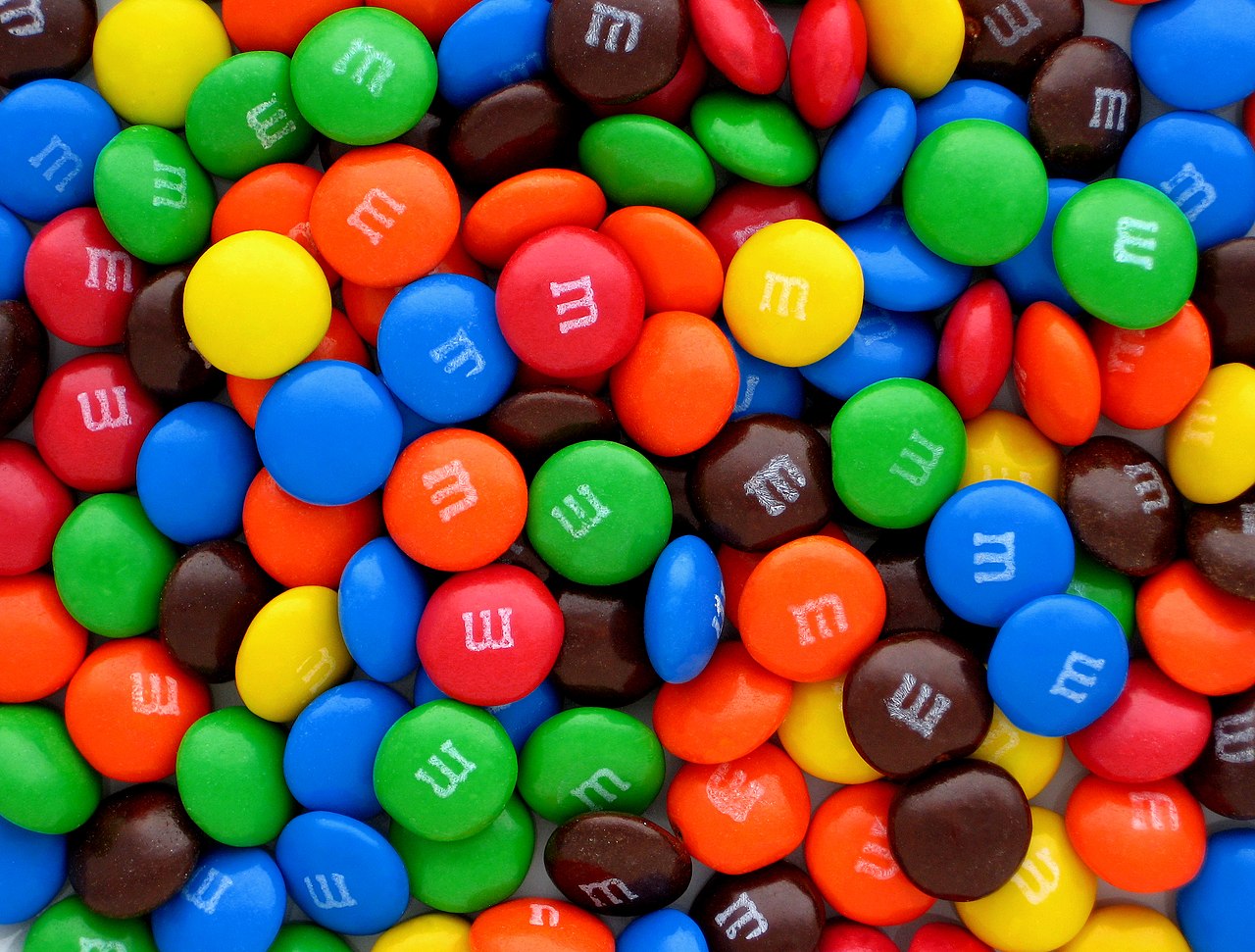
M&Ms are small, round pieces of chocolate enrobed in a hard sugar shell and marked with a lowercase "m" on one face. Sold in multiple colors and a wide range of flavors and formats, they are designed to be convenient, portable and visually distinctive. The combination of a chocolate core and a thin, colored coating gives them their characteristic crunch and resists melting in the hand for short periods.
Image gallery
10 Images





Composition and common varieties
The basic structure of an M&M is a chocolate center surrounded by a colored candy shell and a printed logo. Traditional varieties include plain milk chocolate and dark chocolate, while many other formulations are offered as separate product lines. Common examples are:
- milk chocolate
- mint and dark chocolate
- peanuts (peanut M&Ms)
- almonds
- orange-flavored editions
- peanut butter and other filled variants
History and development
M&Ms were developed in the 20th century as a coated chocolate product that could be handled more easily than uncoated chocolate. Over time the brand expanded from a simple milk chocolate candy into many flavors, sizes and specialty releases. The printed "m" and the colored shells helped set M&Ms apart from other coated candies, and the product has been adapted for seasonal promotions, limited editions and collaborations with other brands.
Uses, packaging and cultural role
M&Ms are sold in single-serve packages, sharing-sized bags and bulk formats. They are widely used in home baking, as ice cream mix-ins, toppings and components in trail mixes and snack mixes. Marketing and advertising have given M&Ms a strong cultural presence; the brand has used memorable characters and campaigns to maintain visibility across many markets. Special editions—such as color-specific packs or flavor tie-ins—are common promotional tools.
Notable distinctions and consumer notes
Unlike plain chocolate confections, M&Ms’ sugar shells provide a distinctive textural contrast and help limit melting during short handling. The brand offers a large number of permanent and rotating varieties, so available colors and fillings may change by market and over time. People with nut allergies should check packaging carefully because several popular formats contain peanuts or almonds or may be produced on shared equipment.
For information about particular flavors, seasonal releases or nutritional details, consult the product labeling or official product pages represented by the links above.
Questions and answers
Q: What are M&Ms?
A: M&Ms are round chocolates with an “m” printed on each one.
Q: How many different colors of M&Ms are available?
A: M&Ms are available in six different colors, which are green, yellow, blue, red, brown, and orange.
Q: What are the different flavors of M&Ms?
A: The different flavors of M&Ms include milk chocolate, dark chocolate, mint chocolate, peanuts, almonds, orange chocolate, coconut, and peanut butter.
Q: Have M&Ms been included in other candy products?
A: Yes, M&Ms have been included in many other candy products.
Q: What makes each M&M unique?
A: Each M&M is unique because it has an “m” printed on it.
Q: Can you buy M&Ms in bulk?
A: Yes, M&Ms are available for purchase in bulk.
Q: What is the significance of the “m” on each M&M?
A: The “m” on each M&M represents the candy maker, Mars, who developed the candy in 1941.
Related articles
Author
AlegsaOnline.com M&Ms (chocolate-coated candy pieces) Leandro Alegsa
URL: https://en.alegsaonline.com/art/65641