
Mjölnir: Thor's hammer in Norse myth, ritual, and culture
Mjölnir is the legendary hammer of the Norse god Thor—an emblem of storm, strength, protection and ritual power, known from medieval Icelandic sources and widespread archaeological amulets and modern popular culture.
Overview
Mjölnir (Old Norse Mjǫllnir) is the hammer wielded by the thunder-god Thor in the corpus of Norse myth. It is presented in the medieval Icelandic texts as a fearsome and magical weapon: able to crush foes and mountains, return to its wielder when thrown, and confer protection and blessing. Stories about Mjölnir survive chiefly in the Poetic and Prose Eddas, where its making, attributes, and uses are described alongside other elements of Norse mythology.
Image gallery
10 Images



Name and etymology
The form Mjölnir appears in Old Norse literature and inscriptions; modern spellings include Mjöllnir and Mjolnir. Scholars have variously glossed the name as related to crushing or grinding and have connected it with ideas of lightning and destructive force. The exact etymology is debated, but the hammer’s name in the sources conveys power and the capacity to pulverize.
Mythic accounts and characteristics
According to the best-known prose traditions, the hammer was forged by the dwarf-smiths Brokkr and Eitri (sometimes called Sindri) after a wager involving Loki. A mishap during the forging—commonly told as Loki’s mischief—left the hammer with a shortened handle, explaining why Mjölnir is often shown as a short-handled weapon in art and amulets. Mythic descriptions emphasize a set of extraordinary traits:
- Returns to Thor when thrown and never misses its mark.
- Can be used for protection as well as destruction—driving off giants and chaotically framed powers.
- Associated with thunder, lightning, and the maintenance of cosmic order.
Symbolism, ritual use, and social meaning
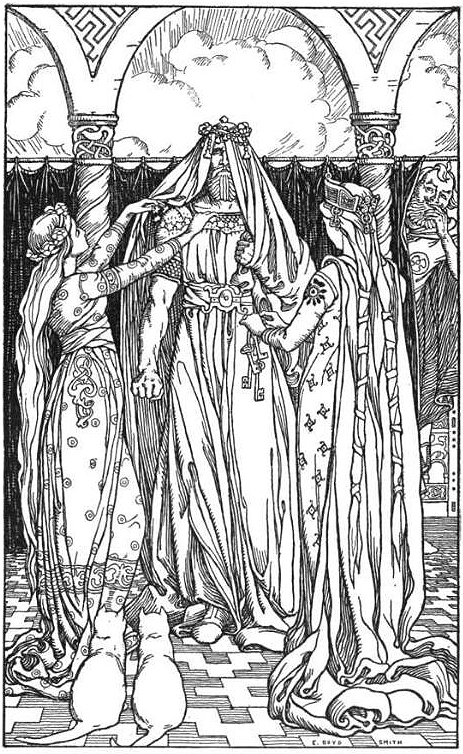
Beyond its role on the battlefield, Mjölnir functions as a symbol of consecration and protection. Medieval sources and later traditions portray the hammer used to bless marriages, sanctify oaths, and secure fertility. In these contexts it operates both as an emblem of masculine, martial authority and as a sacred instrument that marks social bonds and community order.
Archaeology and material culture
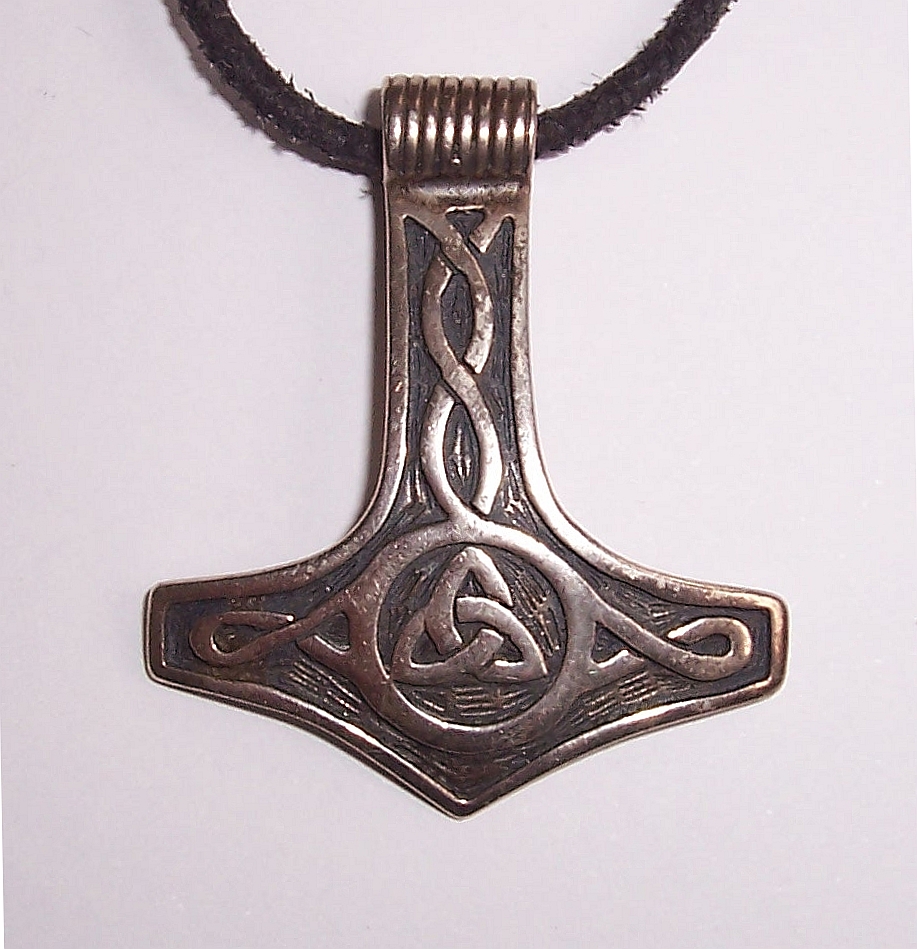
The symbol of Thor’s hammer appears on numerous small objects and amulets recovered from Scandinavia and Viking-age settlements. These objects, often worn as pendants, attest to the hammer’s importance as a protective and identifying symbol in everyday life. The archaeological record shows regional stylistic variety, and Mjölnir pendants are frequently found in contexts associated with burial and personal adornment, indicating a widespread popular devotion to Thor or the values he embodied.
Modern reception and notable facts
In modern times, Mjölnir has been widely adopted in art, literature, and popular culture; it appears in neo-pagan practice as a symbol of faith and identity, and it has been adapted in comics, films, and jewelry. Academic study tends to emphasize both the hammer’s literary role in saga and Eddaic poetry and its tangible presence in the archaeological record. Important distinguishing points include the hammer’s dual character—both destructive and protective—and the story of its imperfect handle, which explains much of its distinctive iconography.
Further reading and resources
For introductions to the textual and material evidence, consult overviews of the Norse mythic corpus and studies of Viking-Age artifact assemblages. Accounts of the forging appear in retellings of the Eddic narratives and in commentary on the dwarf-smiths; see treatments of Brokkr and Eitri under discussions of the dwarven smiths. For the hammer’s physical traces and regional finds, surveys of the archaeological record and typological catalogs of amulets are useful. Popular treatments emphasize cultural impact and adaptations of Thor and his hammer in modern media.
Questions and answers
Q: What is Mjölnir in Norse mythology?
A: It is the hammer of Thor, the god of thunder and lightning.
Q: Who forged Mjölnir?
A: Mjölnir was forged by the dwarven brothers Brokkr and Eitri.
Q: What is the meaning of Mjölnir in Norse mythology?
A: Mjölnir is a symbol of both fertility and destruction, and was thought to possess regenerative healing powers.
Q: What is the most distinctive feature of Mjölnir?
A: The most distinctive feature of Mjölnir is its ability to level entire mountains with only one hit.
Q: What is the special ability of Mjölnir when thrown?
A: When thrown, Mjölnir would return to Thor's after hitting its target.
Q: Does Mjölnir have any weakness or limitation?
A: No, Mjölnir is said to "never fail" and "never miss", and "when he [Thor] wanted, it would be so small that it could be carried inside his tunic."
Q: Who wrote the quote about Mjölnir's ability?
A: The quote about Mjölnir's ability was written by an unknown author, but it is recorded in Norse mythology.
Related articles
Author
AlegsaOnline.com Mjölnir: Thor's hammer in Norse myth, ritual, and culture Leandro Alegsa
URL: https://en.alegsaonline.com/art/65633