
Mirage (atmospheric optical phenomenon)
A mirage is an optical effect in which atmospheric refraction makes distant objects appear displaced, distorted, inverted, or like pools of water. It arises from light bending in layers of air with different temperatures.
A mirage is an atmospheric optical phenomenon in which light rays are bent by variations in air density so that the apparent position, shape, or orientation of a distant object differs from its true appearance. Mirages are physical, not psychological: they result from refraction and the changing refractive index of air caused by temperature gradients, and they can create convincing images such as inverted ships, shimmering pools on roads, or stacked columns of distant coastline.
Image gallery
10 Images
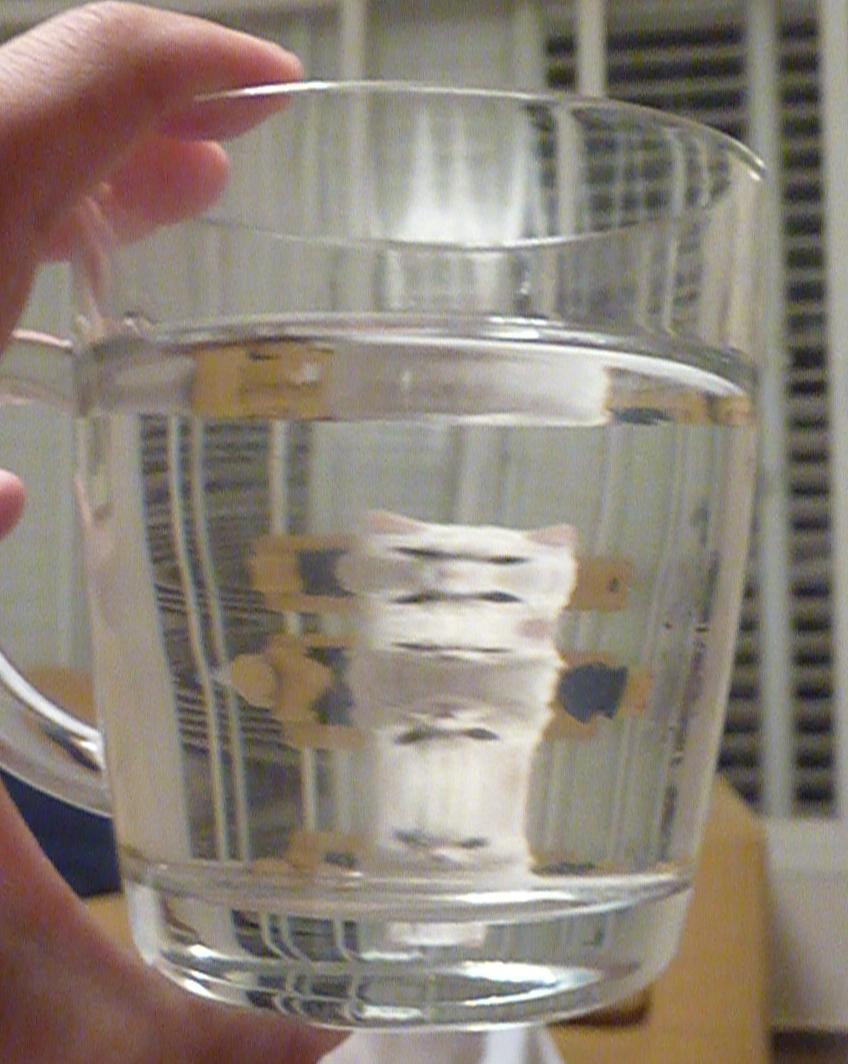


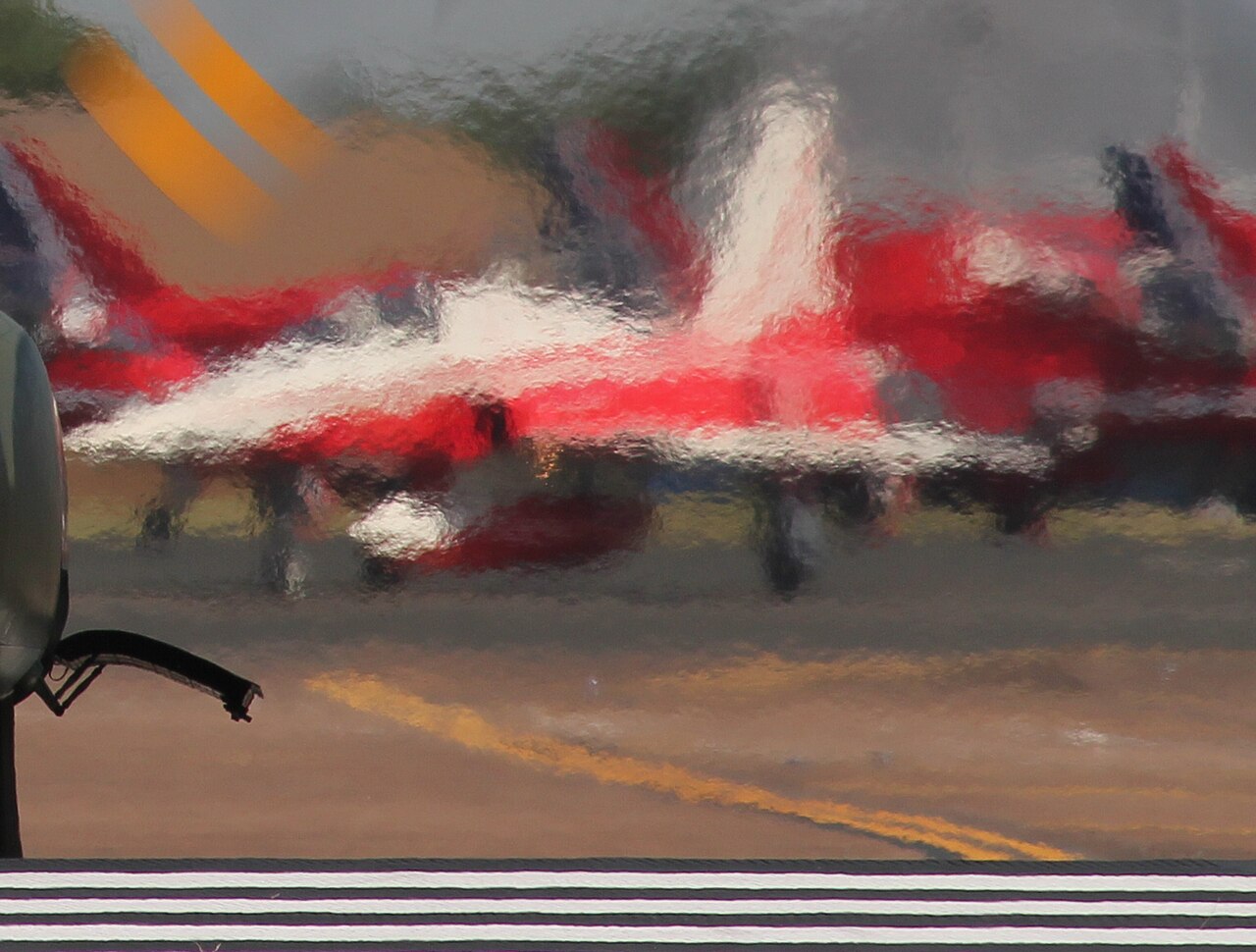
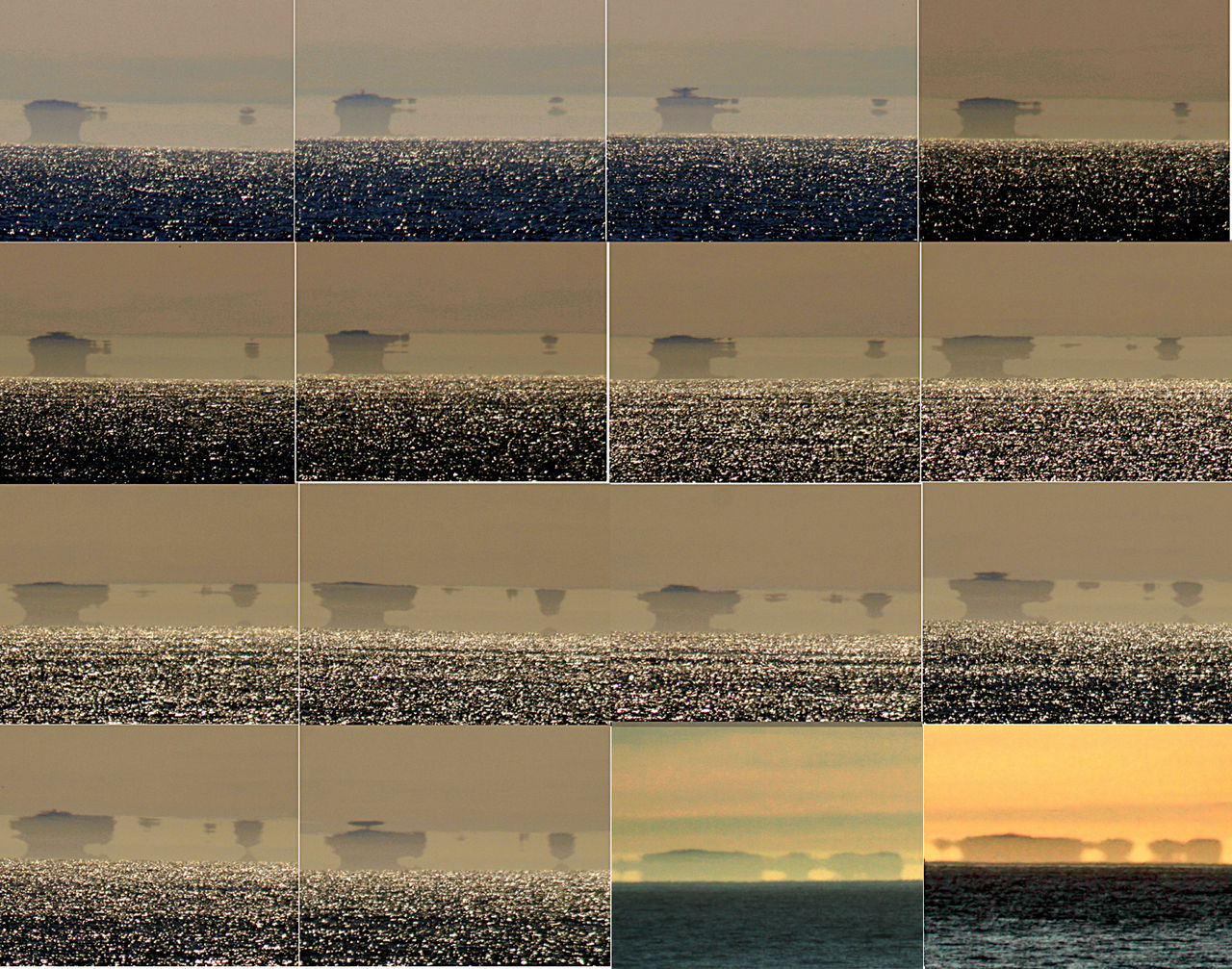
How mirages form
Light travels in straight lines in a uniform medium, but when it passes through layers of air with different temperatures the speed of light changes slightly and the rays curve. This continuous refraction can bend rays upward or downward so an observer receives light that appears to come from a different direction. The effect is governed by the same basic optics that explain refraction in glass or water; in practice, the degree and shape of bending depend on the temperature profile near the ground or water surface and on viewing geometry.
Common types
- Inferior mirage: Occurs when the air close to the surface is much hotter than the air above (common above roads or desert sand). Distant objects or the sky may appear as a bright, waterlike patch below the true object.
- Superior mirage: Forms when a layer of cooler air lies near the surface with warmer air above (a temperature inversion). Distant objects may appear raised, stretched, or even inverted; this is often seen over cold seas or ice.
- Fata Morgana: A complex, rapidly changing set of superior mirage effects that can produce multiple stacked, distorted images. Its dramatic appearance led to associations with fairy tales and legends.
History, terminology and cultural notes
The word "mirage" reflects its association with visual surprise and illusion; it shares an etymological root with the term mirror and ultimately derives from a root meaning "to look at" (root meaning). Mariners, desert travelers, and polar explorers recorded striking mirage sightings long before the optical mechanisms were fully explained. The fanciful quality of some mirages—especially the Fata Morgana—gave rise to folklore linking the images to enchantment and false promises.
Practical importance and distinctions
Understanding mirages matters in navigation, remote sensing and meteorology because they can mislead observers about the location of objects or create false waterlike reflections. Mirages are distinct from reflections (which result from light bouncing off surfaces) and from hallucinations (which are perceptual experiences without an external optical cause). Related terms used by observers include "looming" (apparent elevation of an object) and "sinking" (apparent lowering), which describe how refractive gradients change perceived altitude.
Examples and observation tips
Common everyday examples include the shimmering "water" seen on highways on hot days (an inferior mirage) and elevated or inverted images of ships seen from shoreline vantage points on cold nights (superior mirages). To study or photograph a mirage, look for strong temperature contrasts near the ground or surface, steady viewing positions, and distant targets with clear outlines: these conditions increase the likelihood of noticeable refractive bending.
Questions and answers
Q: What is a mirage?
A: A mirage is an image that is distorted by the atmosphere, causing its form and location to appear different from the actual object.
Q: What causes a mirage?
A: A mirage is caused by the way light bends as it passes through layers of air with different temperatures.
Q: Can a mirage alter the shape of an object?
A: Yes, a mirage can alter the shape of an object because of the way light is refracted as it passes through different layers of air.
Q: What is the root word for "mirage" and "mirror"?
A: The root word for both "mirage" and "mirror" means "to look at."
Q: Why do objects appear distorted in a mirage?
A: Objects appear distorted in a mirage because the light passing through the layers of air with different temperatures causes the image to refract, giving it a distorted appearance.
Q: What is the relationship between the atmosphere and mirages?
A: The atmosphere is responsible for creating mirages, as the varying temperatures in different layers of air cause the light to bend and create the illusion of an image.
Q: Is a mirage a real image of an object?
A: No, a mirage is not a real image of an object. It is an optical illusion caused by the way light bends and refracts as it passes through different layers of air with different temperatures.
Related articles
Author
AlegsaOnline.com Mirage (atmospheric optical phenomenon) Leandro Alegsa
URL: https://en.alegsaonline.com/art/65350