
Minnehaha County, South Dakota
Minnehaha County in eastern South Dakota contains Sioux Falls and the state's largest population center; overview of geography, name origin, economy, government, and notable facts.
Overview
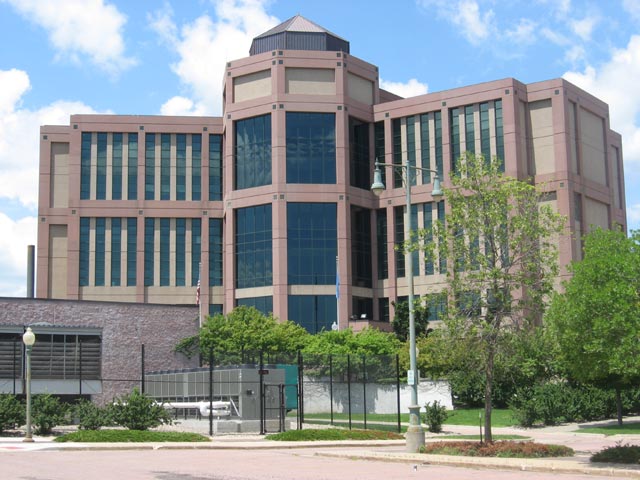
Minnehaha County is a county in eastern South Dakota, in the United States. It is the most populous county in the state and serves as the core of the Sioux Falls metropolitan area. According to the 2010 census the county had more than 169,000 residents; the population has continued to grow since then and the county remains the largest by population in South Dakota. The county government and many regional services center on its county seat and principal city, Sioux Falls, while numerous smaller towns and rural areas surround the urban core.
Image gallery
4 Images

Geography and features
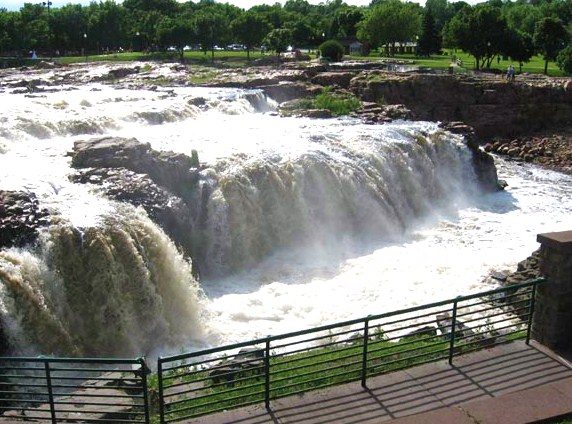
Minnehaha County lies in the southeastern quadrant of the state and is crossed by the Big Sioux River, which contributes to the area's valleys, parks, and wetlands. The river and a series of falls near Sioux Falls are local landmarks and have shaped settlement and industry. The landscape mixes urban neighborhoods, agricultural land, and preserved natural areas. Transportation corridors that link the region to neighboring states and to other South Dakota communities make the county an important regional hub.
History and name
The county's name derives from a Sioux word often rendered as "Mnihaha," referring to rapid water or a waterfall. This origin relates directly to the falls on the Big Sioux River that attracted early settlement. The name is frequently—and incorrectly—translated as "laughing water"; that mistaken meaning has been popularized in literature and song, but linguists note the more literal sense is tied to swift water. The spelling was later anglicized to Minnehaha to simplify pronunciation for English speakers. The name also reflects the presence and influence of the Dakota (Sioux) peoples in the region, a reminder of the county's Indigenous history (Sioux).
Economy, communities and services
The county's economy combines private industry, health care, education, retail, and manufacturing. Sioux Falls hosts much of the county's employment, major hospitals, and cultural institutions, while outlying towns and rural areas contribute agriculture and local businesses. Examples of communities and types of services include:
- Sioux Falls as the primary urban center and service hub (county seat).
- Smaller municipalities and townships that support regional agriculture and residential life.
- Public and private institutions providing education, health care, and transportation links to surrounding states (county information).
Government, planning and regional role
Minnehaha County is administered by elected officials and departments that handle roads, law enforcement, public records, and social services. Planning and zoning efforts coordinate growth around Sioux Falls to manage suburban expansion, economic development, and preservation of open spaces. As the population center for southeastern South Dakota, the county plays a leading role in regional planning, commerce, and cultural events (common local references).
Notable facts and distinctions
Minnehaha County's combination of urban growth and natural features—especially the falls and the Big Sioux River—gives it both economic importance and recreational opportunities. Its name ties the landscape to Indigenous language and history, even as the county continues to evolve demographically and economically. For maps, demographic updates, and county services see the main county resources and regional guides (population data, census details, Sioux Falls, Native American heritage).
Questions and answers
Q: Where is Minnehaha County located?
A: Minnehaha County is located in South Dakota in the United States.
Q: How many people lived in Minnehaha County according to the 2010 census?
A: According to the 2010 census, 169,468 people lived in Minnehaha County.
Q: Is Minnehaha County the most populous county in South Dakota?
A: Yes, Minnehaha County is the most populous county in South Dakota.
Q: What is the county seat of Minnehaha County?
A: The county seat of Minnehaha County is Sioux Falls.
Q: What does the Sioux Indian word "Mnihaha" mean?
A: The Sioux Indian word "Mnihaha" means "rapid water" or "waterfall."
Q: Is it true that the word "Mnihaha" is often incorrectly translated as "laughing water"?
A: Yes, it is true that the word "Mnihaha" is often incorrectly translated as "laughing water."
Q: Is Minnehaha County part of the Sioux Falls, SD, Metropolitan Statistical Area?
A: Yes, Minnehaha County is part of the Sioux Falls, SD, Metropolitan Statistical Area.
Related articles
Author
AlegsaOnline.com Minnehaha County, South Dakota Leandro Alegsa
URL: https://en.alegsaonline.com/art/65262
Sources
- naco.org : "Find a County"
- census.gov : "U.S. Decennial Census"
- factfinder2.census.gov : "Annual Estimates of the Resident Population: April 1, 2010 to July 1, 2012"
- census.gov : "Annual Estimates of the Resident Population for Incorporated Places in South Dakota"