
Mimosa (plant genus)
Mimosa is a genus of about 400 species of herbs and shrubs in the legume family Fabaceae, known for sensitive leaves, puffball flowers, and uses in ornament, medicine, and traditional practice.
Mimosa is a genus of flowering plants in the legume family Fabaceae, placed in the subfamily Mimosoideae. The group contains roughly 400 species of herbs and shrubs distributed mainly across tropical and subtropical regions. The name derives from the Greek μιμος (mimos), meaning "mimic," a reference to the sensitive movement of some species' leaves.
Image gallery
9 Images


Characteristics
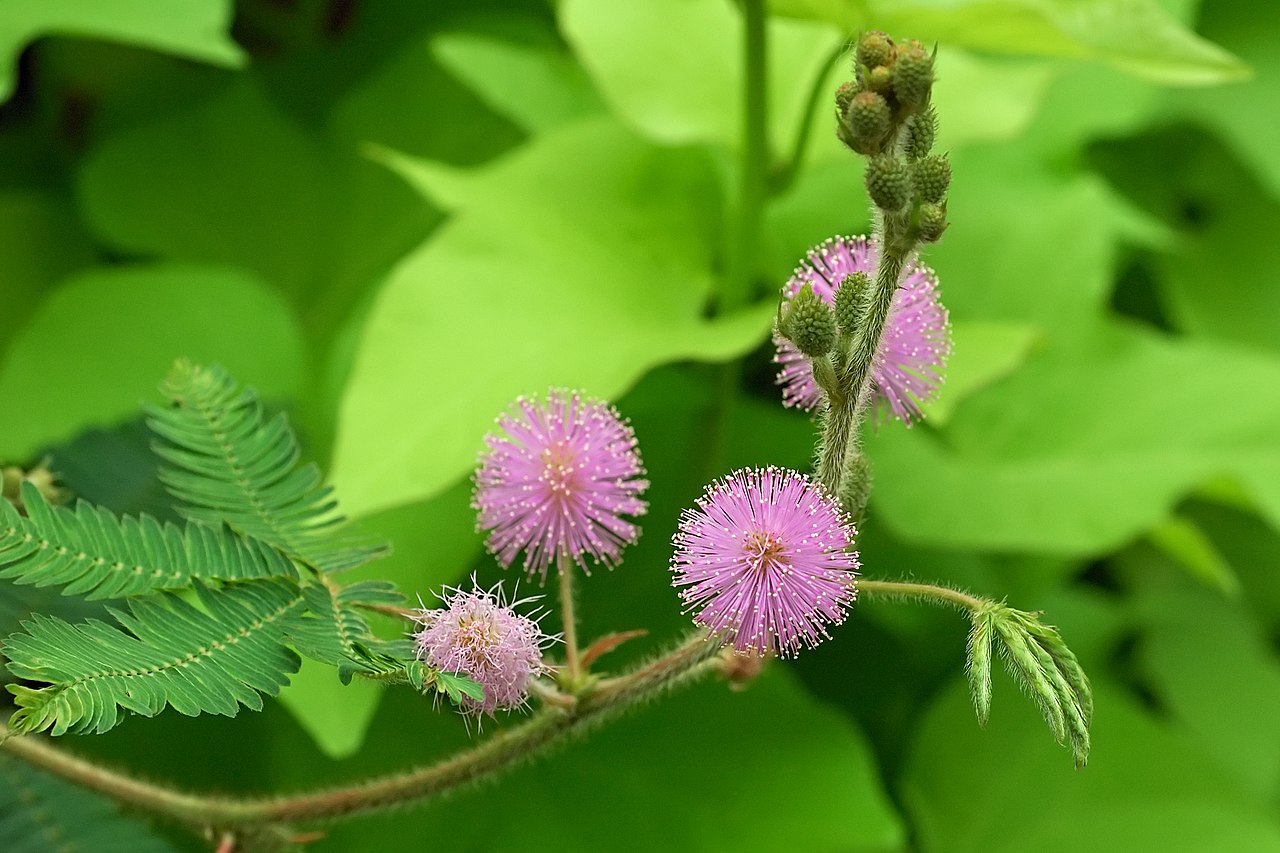
Plants in this genus typically have pinnate (feather-like) compound leaves and produce small flowers aggregated into characteristic globose or elongated clusters; these may appear as soft, puffball blooms that are pink, white or cream. Several species exhibit rapid leaflet movement in response to touch, heat or other stimuli — a phenomenon called thigmonasty — with Mimosa pudica (the "sensitive plant" or "touch‑me‑not") being the best-known example. As members of Fabaceae, many mimosas form symbiotic relationships with nitrogen‑fixing bacteria in their roots, contributing to soil fertility.
Distribution and history
Mimosas occur mainly in the Americas but are also present in Africa, Asia and Australia. The genus has been recognized by botanists since classical times and was more fully described during the era of botanical exploration. Taxonomic boundaries have shifted as plant systematics advanced; closely related genera such as Acacia and Albizia are sometimes confused with or separated from Mimosa in different classifications.
Uses and cultural significance
Several mimosa species are cultivated as ornamentals for their attractive foliage and flowers. Some have traditional medicinal uses; for example, particular species have been used in folk remedies and ritual contexts. Mimosa tenuiflora (also called Desmanthus in some treatments) is noted for compounds in its roots that have been used in certain traditional spiritual preparations. Conversely, a few species can be invasive outside their native ranges and may impact wetlands or disturbed habitats.
Species and notable facts
Prominent species include Mimosa pudica (sensitive plant) and Mimosa tenuiflora. Common names are sometimes applied loosely, so the term "mimosa" may refer to several different mimosoid plants in horticulture and commerce. In botanical writing, the genus name is italicized to indicate scientific usage.
Further reading
- Overview of the genus
- Family Fabaceae context
- Species list and diversity
- Herbaceous mimosas
- Shrubby species details
- Taxonomic placement
- Subfamily Mimosoideae
- Legume family information
- Fabaceae resources
- Etymology of 'mimosa'
- Mimosa pudica profile
- Central American occurrences
- South American distribution
- Leaf movement (thigmonasty)
- Responses to heat and stimuli
- Traditional and ritual uses
- Chemical constituents of roots
Questions and answers
Q: What is Mimosa?
A: Mimosa is a genus of plants with around 400 different species of herbs and shrubs.
Q: What family does Mimosa belong to?
A: Mimosa is classified in the subfamily Mimosoideae of the legume family Fabaceae.
Q: What is the meaning of the word "mimosa"?
A: The word "mimosa" comes from the Greek word μιμος that means "mimic".
Q: What are the best known species of mimosa?
A: The best known species of mimosa are Mimosa pudica and Mimosa tenuiflora.
Q: Where is Mimosa pudica found?
A: Mimosa pudica is found in Central and South America.
Q: What happens when Mimosa pudica is touched or heated?
A: When touched or heated, Mimosa pudica folds its leaves.
Q: What is Mimosa tenuiflora used for?
A: Mimosa tenuiflora is used by shamans (traditional magical healers) and is used in ayahuasca brews because of the psychedelic drug N,N-Dimethyltryptamine DMT in its roots.
Related articles
Author
AlegsaOnline.com Mimosa (plant genus) Leandro Alegsa
URL: https://en.alegsaonline.com/art/65127
Sources
- commons.wikimedia.org : Mimosa
- species.wikimedia.org : Mimosa
- books.google.com : The names of plants