
Milot, Haiti — town in the northern foothills and gateway to Citadelle Laferrière
Milot is a town in northern Haiti known for agriculture and as the site of Sans-Souci Palace and the Citadelle Laferrière, part of a UNESCO World Heritage ensemble tied to Haiti’s independence.
Overview
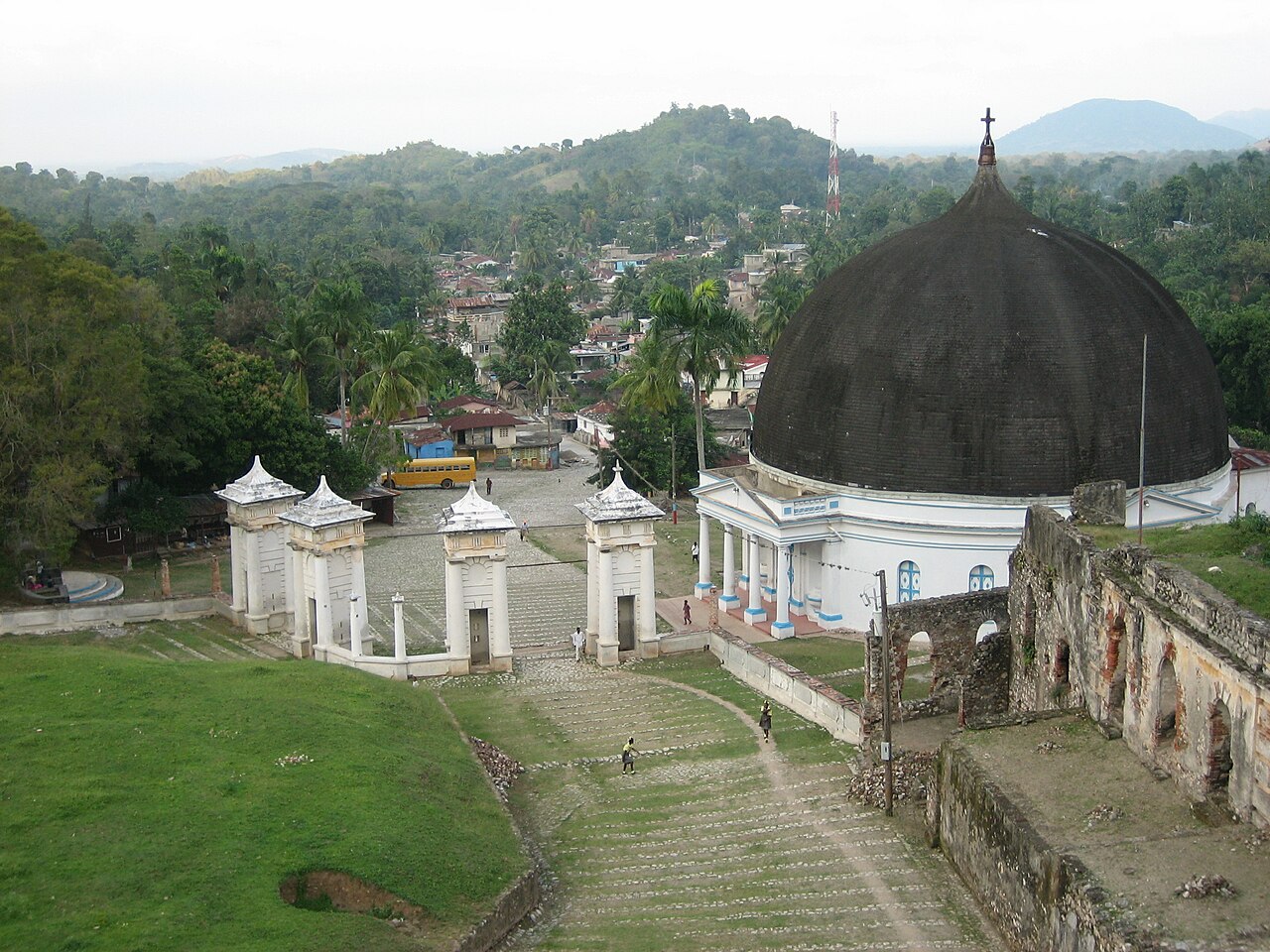
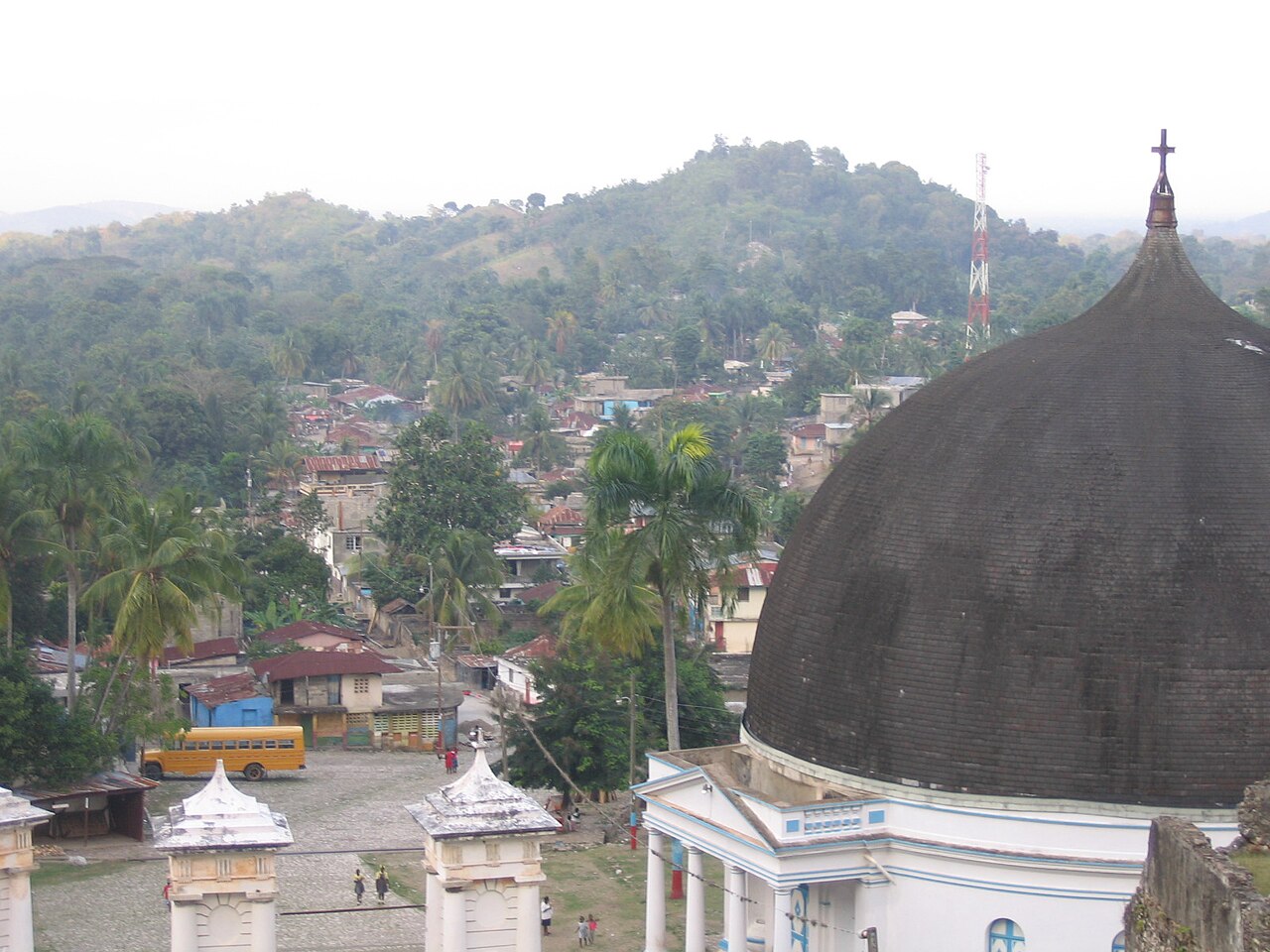
Milot (Kréyòl: Milo) is a small historic town in northern Haiti, situated at about 19°37′N 72°13′W. It lies on the lower slopes of the Massif du Nord, overlooking agricultural plains and serving as a local market and administrative centre within the Nord department. The town functions as a rural hub where traditional life and the memory of early national history intersect.
Image gallery
6 Images



Geography and administration
Milot occupies a position at the transition from mountainous terrain to coastal plains, a setting that influences both its climate and land use. The town is part of the Acul-du-Nord arrondissement and is reached by road from Cap-Haïtien and other regional centres. Its location near the Massif du Nord makes Milot an access point for visitors climbing toward the impressive mountaintop fortifications above.
Economy and local life
The town’s economy is primarily agricultural: local livelihoods depend on farming, small-scale trade and services. Common crops include cacao, tobacco, sugar cane and a variety of citrus fruits. Oranges are a familiar sight in markets and orchards (orange). Household agriculture, seasonal markets and artisanal activities shape daily rhythms, while remittances and small-scale tourism also contribute to the local economy.
History and monuments
Milot is best known for its close association with Henri Christophe, a leader in the Haitian Revolution who became ruler of the northern part of the country after independence. He established a royal court there when the north functioned as a separate kingdom. Christophe built the royal residence called the Sans-Souci Palace in the town and ordered the construction of the massive Citadelle Laferrière on a mountain summit roughly 8 km away, together with smaller fortifications along the access routes. These buildings formed a defensive and ceremonial ensemble that reflected both strategic concerns and royal ambition.
World Heritage and significance
Sans-Souci and the Citadelle, together with surrounding fortifications, were inscribed as a World Heritage Site in recognition of their cultural and historical importance. The designation highlights the sites’ role as symbols of Haitian independence, engineering achievement and national identity. The listing also brought international attention to preservation needs; organizations and local authorities work to maintain these stone structures and to interpret their history for visitors, with support from cultural heritage networks including UNESCO.
Visiting and notable facts
- Milot serves as the principal base for visitors heading to the Citadelle; the climb rewards the traveler with panoramic views and a sense of the fort's scale.
- Sans-Souci Palace, once lavish and elaborate, was damaged in later earthquakes and remains an evocative ruin that recalls early 19th-century architecture and court life.
- The Citadelle is among the largest fortifications in the Americas, notable for its massive walls and artillery emplacements built to deter a return by colonial forces.
Today Milot combines day-to-day agricultural life with the responsibilities and opportunities of stewarding national monuments. Its landscape, markets and historic sites make it an important destination for students of Caribbean history, for heritage tourism and for those interested in how built places can embody a nation's formative struggles and aspirations.
Questions and answers
Q: What are the coordinates of Milot?
A: The coordinates of Milot are 19°37′N 72°13′W / 19.617°N 72.217°W / 19.617; -72.217.
Q: What is the most important economic activity in Milot?
A: The most important economic activity in Milot is farming, with crops such as sugar cane, cacao, tobacco and citrus fruits like oranges being grown there.
Q: What happened after Haitian independence?
A: After Haitian independence, the country was divided in two parts and the northern part was made a kingdom by Henri Christophe and he made Milot the capital of his kingdom.
Q: What did Henri Christophe build in Milot?
A: In Milot, Henri Christophe built a palace named Sans-Souci where he and his family lived as well as a fort called Citadelle Laferrière high in the mountains at about 8 km from Milot, and some smaller forts in Ramiens on the road to Citadelle Laferrière.
Q: Is this area part of any World Heritage Site?
A: Yes, these buildings are now part of the Natural History Park - Citadel, Sans Souci, Ramiers which has been designated by UNESCO as a World Heritage Site since 1982.
Q: Where is Massif du Nord mountain range located?
A: Massif du Nord mountain range is located north of Milot town in Haiti's Nord department.
Related articles
Author
AlegsaOnline.com Milot, Haiti — town in the northern foothills and gateway to Citadelle Laferrière Leandro Alegsa
URL: https://en.alegsaonline.com/art/65074
Sources
- whc.unesco.org : "National History Park – Citadel, Sans Souci, Ramiers"
- commons.wikimedia.org : Milot