
Mikoyan-Gurevich MiG-17 (Fresco) — Soviet subsonic jet fighter
The Mikoyan-Gurevich MiG-17 (NATO: Fresco) is a 1950s-era Soviet jet fighter noted for low-speed agility, widespread export use, and service in conflicts such as Vietnam. It evolved from the MiG-15 and later became a trainer.
Overview
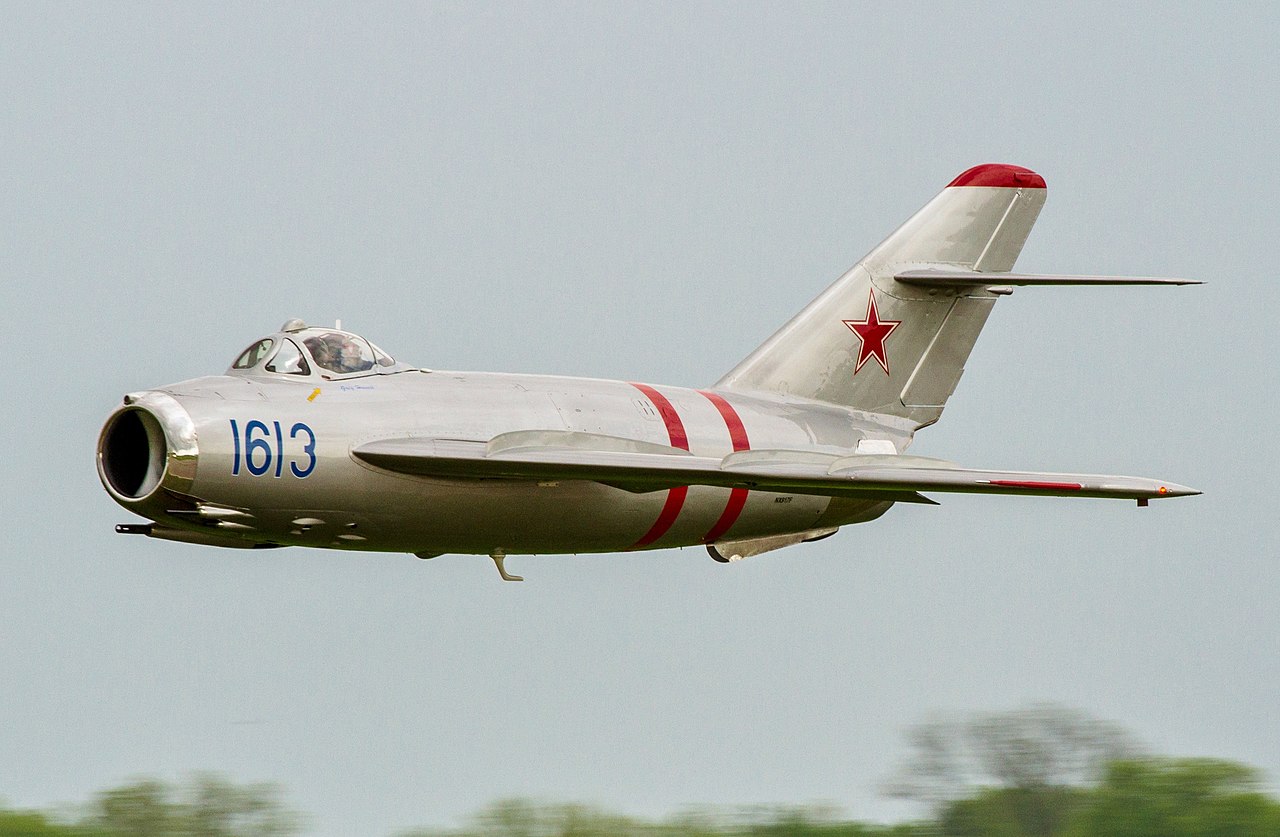
The Mikoyan-Gurevich MiG-17, known to NATO as the "Fresco," is a single-seat, subsonic jet fighter developed in the Soviet Union after World War II. Designed as an improvement on the earlier MiG-15, the MiG-17 first flew in 1950 and entered operational service in the early 1950s. It was intended to replace the MiG-15 in front-line units, but production and delivery timing meant it did not influence the Korean War significantly. Over time it became one of the most widely exported fighters of its era and saw combat in several regional conflicts.
Image gallery
10 Images


Design and characteristics
The MiG-17 combines a swept-wing planform with a relatively simple, robust airframe that emphasizes maneuverability at low and transonic speeds. Early models were armed primarily with cannon armament—typically a mix of 23 mm and 37 mm guns—and later versions were adapted to carry short-range, infrared-homing air-to-air missiles and improved avionics. Incremental development produced variants with more powerful engines, afterburning capability, strengthened structures for higher-load maneuvers, and dual-control trainer versions.
- Airframe: swept wings and tail for improved transonic handling
- Powerplant: single turbojet, later models with afterburner options
- Armament: cannon-focused initially; later retrofits added missiles
- Role: air superiority/interceptor and ground-attack in export service
Operational history
The MiG-17 served with numerous air forces across Asia, Africa and the Middle East. Though it missed a combat debut in Korea as a front-line replacement, it gained renown during the Vietnam War where North Vietnamese pilots used its agility to good effect against more modern opponents. The type also saw action in several Middle Eastern and African conflicts during the 1950s–1970s. For technical summaries and preserved examples see technical overview and manufacturer history.
Contemporary summaries of Soviet aviation programs provide context for the MiG-17's development: see a general account of Soviet design bureaus at Soviet aviation, and specific wartime histories at Korean War studies and combat histories that include engagements in Indochina at Vietnam War. The MiG-17's service with North Vietnam is often discussed separately; for that perspective consult material on the aircraft's use by North Vietnamese forces at North Vietnamese use.
Variants, training and legacy
Producers and operators developed multiple variants for interception, ground attack, and pilot conversion. Two-seat trainer versions extended the airframe's service life, and by the late 20th century many air forces retained MiG-17s in training, reserve, or ceremonial roles. For information on modern training conversions and surviving airframes see operator summaries at training and preservation.
The MiG-17's combination of simplicity, ruggedness and close-range fighting capability ensured it a long post‑war career and a notable place in the history of jet combat aircraft.
Questions and answers
Q: What company made the MiG-17 Fresco?
A: The MiG-17 Fresco was made by Mikoyan, a Russian company.
Q: When did the MiG-17 Fresco first fly?
A: The MiG-17 Fresco first flew in 1950.
Q: What war was the MiG-17 Fresco supposed to be used in?
A: The MiG-17 Fresco was originally intended to replace the MiG-15 in the Korean War, but it did not arrive fast enough.
Q: Where was the MiG-17 Fresco used during the Vietnam War?
A: The MiG-17 Fresco was used by North Vietnam during the Vietnam War.
Q: How many guns were carried on board of a standard version of this aircraft?
A: A standard version of this aircraft carried three guns on board.
Q: Were there any later versions with different weapons systems than guns?
A: Later versions of this aircraft carried missiles instead of guns.
Q: Is it still being used today and if so, what for?
A: Today, it is primarily used as a trainer in other air forces.
Related articles
Author
AlegsaOnline.com Mikoyan-Gurevich MiG-17 (Fresco) — Soviet subsonic jet fighter Leandro Alegsa
URL: https://en.alegsaonline.com/art/64893