
Migratory locust (Locusta migratoria) — overview, biology, and impact
The migratory locust (Locusta migratoria) is a swarming grasshopper found across Africa, Asia, Australia and New Zealand; notable for phase changes, wide distribution, economic impact and complex control challenges.
Overview
The migratory locust (Locusta migratoria) is a grasshopper species capable of forming large, migrating swarms. It is the only species retained in the genus Locusta and is often termed the world’s most widespread locust. Its ability to shift from a solitary to a gregarious phase — with profound changes in appearance and behaviour — is central to its status as an agricultural pest.
Image gallery
10 Images





Biology and behaviour
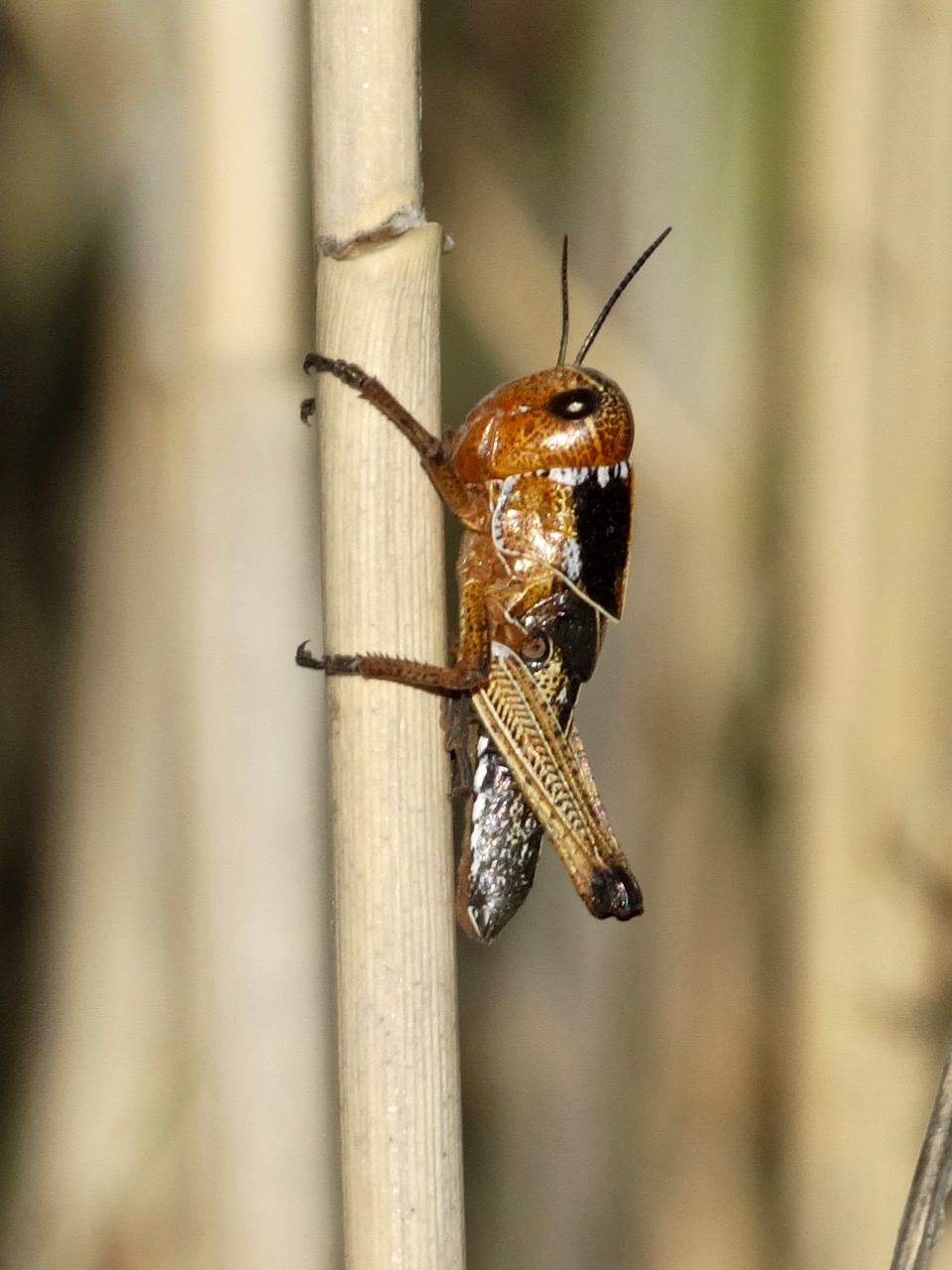
Like other locusts, the migratory locust undergoes incomplete metamorphosis: eggs hatch into wingless nymphs (called hoppers), which pass through several instars before becoming winged adults. Crowding and repeated tactile stimulation trigger physiological and behavioural changes known as phase polyphenism. In the gregarious phase individuals become more active, tolerant of one another, change in colour and form cohesive marching or flying swarms capable of long-distance movement.
Lifecycle and key characteristics
- Eggs: laid in soil in pods; development influenced by temperature and moisture.
- Hoppers: wingless, often form bands that consume local vegetation.
- Adults: capable of sustained flight and directed migration; sexes are separate.
Distribution, subspecies and taxonomy
The species has a broad native range that includes much of Africa (Africa), Asia (Asia), Australia (Australia) and New Zealand (New Zealand). It was formerly common in parts of Europe (Europe) but is now rare there. Because the species occupies diverse ecological zones, many regional forms and subspecies have been described; taxonomists do not always agree on which of these constitute valid subspecies, so some classifications remain unsettled.
Economic importance and management
Migratory locusts can cause substantial crop loss when they form swarms feeding on cereals, forage and other vegetation. Management approaches combine surveillance, early warning, and control. Typical measures include targeted application of insecticides, biological agents (such as fungal pathogens) in some settings, habitat management to reduce breeding sites, and coordinated regional monitoring. Because swarms can cross borders, international collaboration and timely data-sharing are important to limit outbreaks.
Notable distinctions and facts
The name "locust" is applied to several unrelated grasshopper species that display similar gregarious and migratory behaviour; the migratory locust is one prominent example. Its wide distribution, dramatic phase shifts, and historical role in agriculture have made it a model organism for studies of behavioural ecology, population dynamics and pest management.
For further basic information and regional details see resources linked above or specialist pest-management literature; research and monitoring continue to refine knowledge of subspecies boundaries, migratory patterns and effective control methods.
Questions and answers
Q: What is the migratory locust?
A: The migratory locust (Locusta migratoria) is the most widespread species of locust and the only species in the genus Locusta.
Q: Where can the migratory locust be found?
A: The migratory locust can be found throughout Africa, Asia, Australia and New Zealand. It used to be common in Europe but has now become rare there.
Q: How many subspecies have been described for this species?
A: Numerous subspecies have been described for this species due to its vast geographic area which comprises many different ecological zones.
Q: Are all experts in agreement about these subspecies?
A: Not all experts agree on the validity of some of these subspecies.
Q: Are there other species with similar behavior as the migratory locust?
A: Yes, there are many other species of Orthoptera with gregarious and migratory behavior that are indicated with the name of 'locusts'.
Q: Is Locusta a genus or a species?
A: Locusta is a genus containing one species -the migratory locust (Locusta Migratoria).
Related articles
Author
AlegsaOnline.com Migratory locust (Locusta migratoria) — overview, biology, and impact Leandro Alegsa
URL: https://en.alegsaonline.com/art/64792