
Microraptor — a small four-winged feathered dinosaur
Microraptor was a small, feathered dromaeosaurid from Early Cretaceous China, notable for long flight feathers on both arms and legs and its role in understanding the origins of avian flight.
Microraptor is a genus of small, feathered theropod dinosaur known from the Early Cretaceous of northeastern China. Often described as a four‑winged animal, Microraptor possessed long pennaceous feathers on both its forelimbs and hindlimbs. It is classified among the dromaeosaurid theropods and is important to studies of feather evolution, arboreal locomotion, and the origins of flight. Early reports characterize it as a feathered dinosaur and as a basal member of small predatory theropods (basal theropod) related in broader terms to better-known genera such as Velociraptor and Deinonychus.
Image gallery
10 Images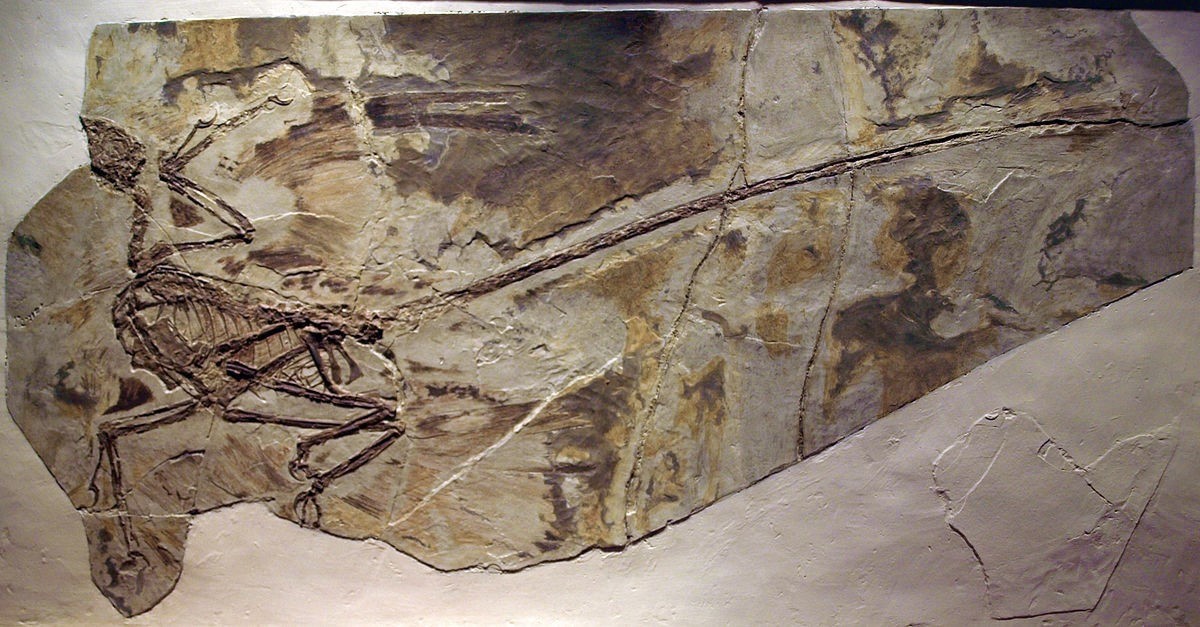





Anatomy and flight adaptations
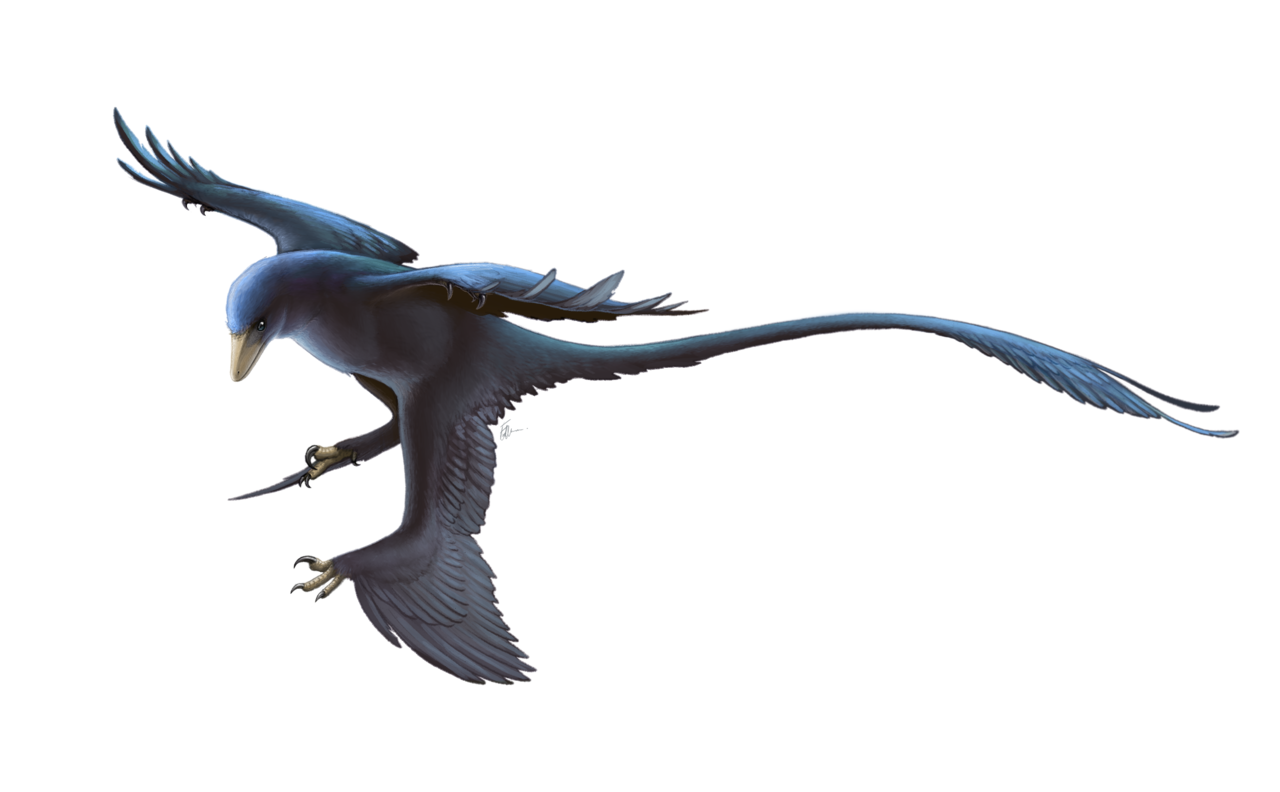
Adult Microraptor specimens ranged from about 42 to 83 centimetres in total body length, making them some of the smallest non-avian dinosaurs. Distinctive features include long, vane-bearing feathers attached to the arms and legs, a long stiffened tail with a feathered fan, and grasping hands and feet. These features suggest a lifestyle that combined climbing, gliding, and possibly powered flight. Reconstructions based on fossil feather impressions support a wing layout with paired surfaces on both fore- and hindlimbs, leading to the informal description of a "four‑winged" planform.
Discovery and fossil record
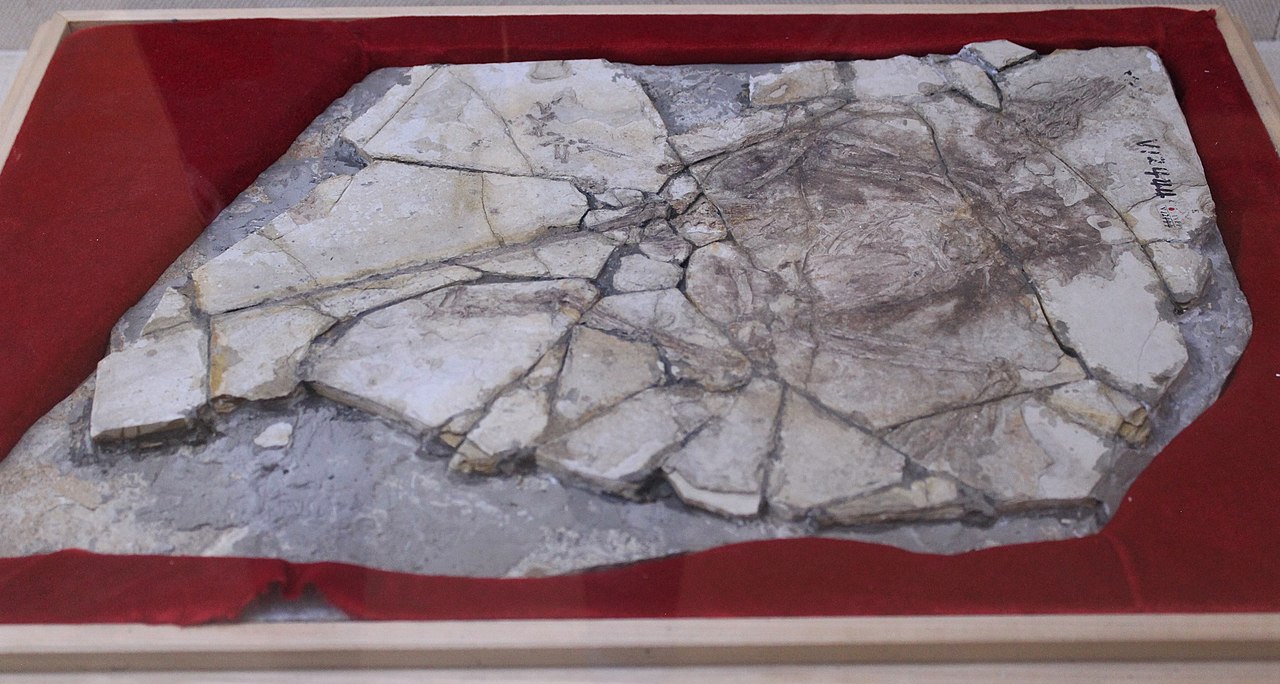
About two dozen well-preserved specimens have been recovered from the Jehol Group, primarily the Jiufotang Formation, in Liaoning Province, China. These fossils, preserved in fine lake‑bed sediments dated to roughly 125 million years ago, show exceptional feather detail and body outlines. The finds are often cited in discussions of early paravian diversity and have been described and illustrated in a variety of studies and summaries (key specimens, collected near Liaoning in China from the Lower Cretaceous Jiufotang beds).
Paleobiology and ecology
Microraptor is generally interpreted as a small predator or opportunistic feeder that hunted insects, small vertebrates and possibly scavenged. Its limb proportions and feather arrangement support an arboreal or scansorial habit—capable of climbing and launching from branches—although some researchers have proposed more complex locomotor capabilities including short‑distance powered flight. Functional studies and aerodynamic models have produced differing reconstructions; consensus holds that Microraptor demonstrates a stage in which feathers were used for both insulation and aerodynamic control.
Significance and debates
Microraptor has had outsized influence on ideas about the origin of flight because it shows strong aerodynamic features in a non‑avian theropod. Debates continue about the exact posture of the hindlimb feathers (whether held sprawled like a biplane or tucked), the animal's habitual habitat (tree‑dwelling versus ground‑active), and whether its aerial behaviour was primarily gliding or included flapping flight. These issues make Microraptor a focal taxon in discussions of how modern birds evolved from feathered theropods.
- Notable facts: Four‑wing morphology; exceptional feather preservation; important Early Cretaceous Chinese fossils.
- Research uses: Studies of aerodynamics, feather evolution, paravian phylogeny, and paleoecology.
- Further reading: For specimen descriptions and technical studies see sources linked above and specialist literature via museum and academic repositories (overview, classification, comparative taxa). Additional primary fossil reports and regional stratigraphy summaries are available through paleontological indexes (related genera, specimen records, locality, country, formation).
Overall, Microraptor remains one of the most visually striking and scientifically valuable fossil reptiles for understanding the transition from ground‑running theropods to the first flyers among birds.
Questions and answers
Q: What is Microraptor?
A: Microraptor is a small feathered dinosaur that could glide and probably fly.
Q: What is Microraptor related to?
A: Microraptor is related to Velociraptor and Deinonychus.
Q: Where were the fossil specimens of Microraptor found?
A: The fossil specimens of Microraptor were found in Liaoning, China.
Q: How old are the fossil specimens of Microraptor?
A: The fossil specimens of Microraptor are 125 million years old, from the Lower Cretaceous Jiufotang Formation.
Q: How long were adult specimens of Microraptor?
A: Adult specimens of Microraptor were 42-83 centimeters (1.4-2.7 ft) long.
Q: Is Microraptor one of the smallest dinosaurs?
A: Yes, Microraptor is one of the smallest dinosaurs.
Q: How many well-preserved fossil specimens of Microraptor were found?
A: About two dozen well-preserved fossil specimens of Microraptor were found.
Related articles
Author
AlegsaOnline.com Microraptor — a small four-winged feathered dinosaur Leandro Alegsa
URL: https://en.alegsaonline.com/art/64612
Sources
- pnas.org : pnas.org/cgi/reprint/0609975104v1.pdf