
Micronation: self-declared small entities and their characteristics
Micronations are self-declared entities created by individuals or groups that claim independence but are not recognized as sovereign states by the international community.
Overview
A micronation is an entity created by one person or a group that claims to be an independent state but lacks recognition from established international bodies. These projects range from playful or artistic experiments to serious claims of sovereignty. The United Nations generally does not treat them as sovereign states, and most operate without formal diplomatic recognition (United Nations).
Image gallery
9 Images





Typical characteristics
- Declared territory: often very small — a private property, an artificial platform, or a single structure.
- Symbols and institutions: founders commonly create flags, coats of arms, constitutions, currencies, stamps or passports to reinforce identity.
- Governing style: some mimic traditional state institutions, while others are informal or symbolic communities.
- Public presence: many maintain websites, social media, or physical visitor experiences to promote their claim.
History and development
Micronational activity has varied over time. Small secessionist and personal fiefdom experiments have existed in different forms for centuries, but the modern phenomenon grew noticeably in the 20th century and expanded with the internet. Online platforms have lowered the barriers to creating and publicizing a micronation, allowing founders to reach global audiences and attract participants.
Motivations and uses
People start micronations for many reasons: political protest or satire, artistic or social commentary, hobbyist role-playing, tourism and publicity, legal or tax experiments, or educational projects that teach students about government. Some projects aim only to amuse friends; others persist for decades and develop a small but committed following.
Legal status and recognition
Micronations are distinct from recognized microstates (small countries that are members of the international community). Recognition typically requires diplomacy, treaty relationships and acceptance by other states. Most micronations lack these connections and therefore do not enjoy the legal protections or responsibilities of recognized states. Interactions with nearby national authorities may be cooperative, indifferent, or adversarial depending on the claim and local law.
Notable examples and distinctions
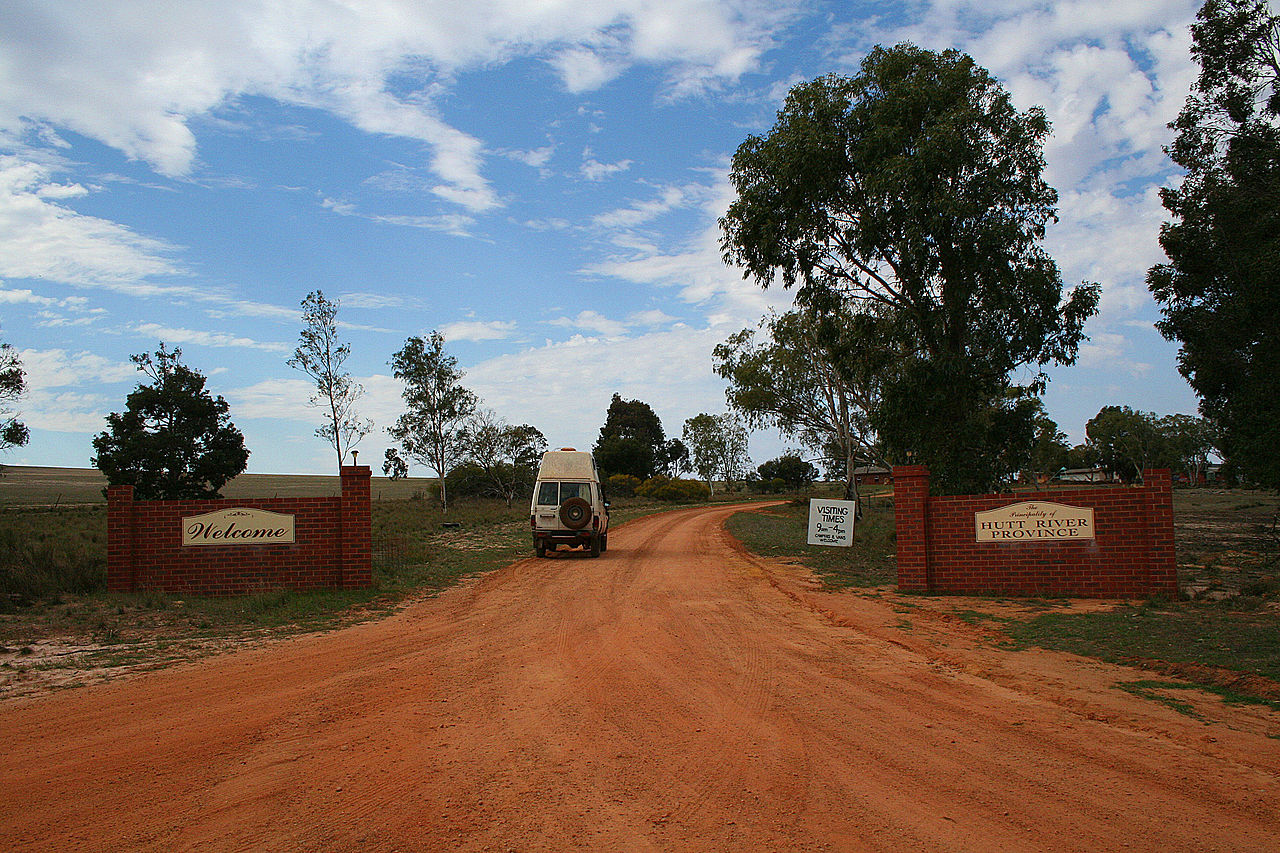
Familiar examples often cited in discussions include self-styled entities like the Principality of Sealand (a platform off the coast of the United Kingdom), Republic of Molossia, and a number of privately declared provinces that have since ended their claims. Some projects exist primarily online, while others maintain physical sites and welcome visitors. Micronations occupy a niche between political statement, hobby activity and cultural performance, and they illustrate how people experiment with the idea of statehood on a small scale.
Questions and answers
Q: What are micronations?
A: Micronations are countries created by one person or a group of people, which are not recognized as actual countries by the United Nations.
Q: Why are micronations created?
A: Micronations are created for various reasons such as to express dissatisfaction with their main country, to make money or to use it as a place for themselves.
Q: Are micronations recognized by the United Nations?
A: No, micronations are not recognized as legitimate countries by the United Nations.
Q: Can anyone create a micronation?
A: Yes, anyone can create a micronation.
Q: How are micronations mostly used?
A: Micronations are mostly used in people's imaginations or on the internet.
Q: What is an example of a reason why someone would create a micronation?
A: Someone may create a micronation to express their dissatisfaction with their main country, such as the United Kingdom.
Q: Is there any legal or political power associated with micronations?
A: Generally, micronations do not have any legal or political power.
Related articles
Author
AlegsaOnline.com Micronation: self-declared small entities and their characteristics Leandro Alegsa
URL: https://en.alegsaonline.com/art/64604